


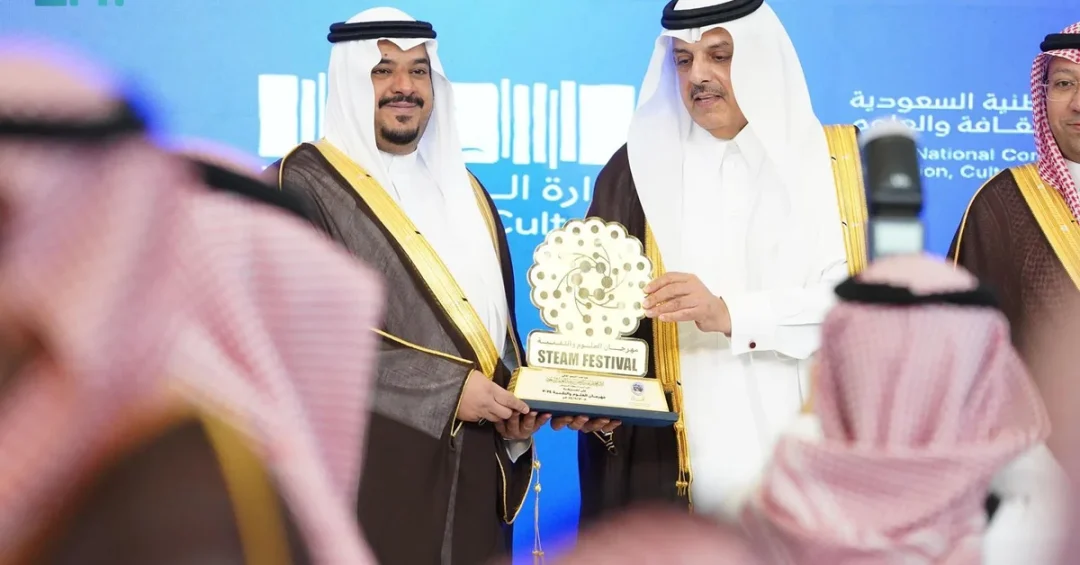
Prince Dr. Abdulaziz bin Mohammed bin Ayyaf, Vice Chairman of the Riyadh Charitable Foundation for Science, expressed his gratitude to the Custodian of the Two Holy Mosques King Salman bin Abdulaziz Al Saud for establishing the foundation in 1999. His remarks came during the inauguration ceremony of the Science, Technology, Engineering, Art, and Math (STEAM) Festival 2024, held at the King Salman Science Oasis in Riyadh. The vice chairman underscored the foundation’s developmental role in meeting global standards and advancing Saudi Arabia’s scientific and educational landscape.
Context and Background
The Riyadh Charitable Foundation for Science was founded in 1999 by the Custodian of the Two Holy Mosques, King Salman bin Abdulaziz Al Saud, to promote scientific research and education across the Kingdom. Under the foundation’s umbrella, several landmark projects have been launched, including the King Salman Science Oasis and Prince Sultan University. These initiatives are designed to cultivate a culture of innovation and entrepreneurship in priority sectors, preparing citizens to compete on a global scale in alignment with Saudi Vision 2030.
The STEAM Festival 2024, hosted by the King Salman Science Oasis, exemplifies the foundation’s commitment to fostering curiosity and creativity among the youth. By bringing together experts, educators, and students, the festival highlights the importance of integrating science, technology, engineering, arts, and mathematics in modern education. Such events are part of broader efforts to empower human capital and drive sustainable development.
Key Details
In his statement, Prince Dr. Abdulaziz highlighted the foundation’s collaborative approach with various sectors to keep pace with global standards and implement best practices. He emphasized the importance of supporting research, serving the community, and activating sustainable programs that empower human capital. The foundation’s work includes creating modern models for institutional educational work, providing educational, cultural, and advisory services, and building contemporary expertise in the scientific field.
Prince Abdulaziz also praised the exceptional leadership of His Royal Highness Prince Mohammed bin Salman bin Abdulaziz Al Saud, Crown Prince and Prime Minister, in guiding Saudi Vision 2030. He noted that the foundation’s projects are designed to prepare globally competitive citizens who can contribute to the Kingdom’s strategic national objectives. The vice chairman expressed his appreciation for the support and guidance provided by the Saudi leadership, which has been instrumental in the foundation’s success.
Implications and Impact
The Riyadh Charitable Foundation for Science plays a pivotal role in Saudi Arabia’s educational and scientific ecosystem. Its projects, such as the King Salman Science Oasis and Prince Sultan University, serve as models for integrating research, education, and community service. By fostering innovation and entrepreneurship, the foundation helps diversify the economy and reduce dependence on oil, a key goal of Vision 2030.
Moreover, the foundation’s emphasis on global standards and best practices positions Saudi Arabia as a regional leader in science and technology. Its initiatives not only benefit the Kingdom but also extend to the broader region, promoting knowledge exchange and collaboration. This aligns with Saudi Arabia’s aspirations to be a hub for innovation and a source of inspiration for the Arab world and beyond.
Vision 2030 Alignment
The Riyadh Charitable Foundation for Science’s efforts are deeply intertwined with Saudi Vision 2030, the comprehensive plan to transform the Kingdom’s economy and society. By nurturing human capital, supporting research, and promoting sustainable development, the foundation contributes directly to the vision’s objectives of building a diversified, knowledge-based economy. As Saudi Arabia continues its journey towards a brighter future, the foundation’s role in meeting global standards and empowering the next generation remains indispensable.
20 Questions
Q1. What is the Riyadh Charitable Foundation for Science?
A1. The Riyadh Charitable Foundation for Science is a Saudi institution established in 1999 by King Salman bin Abdulaziz Al Saud to promote scientific research, education, and innovation across the Kingdom.
Q2. Who is Prince Dr. Abdulaziz bin Mohammed bin Ayyaf?
A2. Prince Dr. Abdulaziz bin Mohammed bin Ayyaf is the Vice Chairman of the Riyadh Charitable Foundation for Science. He plays a key role in overseeing its projects and initiatives.
Q3. What was the occasion for Prince Abdulaziz’s statement?
A3. He spoke during the inauguration ceremony of the STEAM Festival 2024 at the King Salman Science Oasis in Riyadh, highlighting the foundation’s developmental role.
Q4. What does STEAM stand for?
A4. STEAM stands for Science, Technology, Engineering, Art, and Math. It represents an educational approach that integrates these disciplines to foster innovation and creativity.
Q5. What is the King Salman Science Oasis?
A5. The King Salman Science Oasis is a major project of the Riyadh Charitable Foundation for Science. It serves as a center for scientific exploration and learning.
Q6. What is Prince Sultan University?
A6. Prince Sultan University is a private university in Riyadh established by the Riyadh Charitable Foundation for Science. It offers programs in various fields and promotes academic excellence.
Q7. How does the foundation support Saudi Vision 2030?
A7. The foundation supports Vision 2030 by fostering innovation, preparing globally competitive citizens, and contributing to a knowledge-based economy through education and research.
Q8. What are priority sectors mentioned by Prince Abdulaziz?
A8. Priority sectors refer to key areas identified for development under Vision 2030, such as technology, renewable energy, healthcare, and education, where innovation can drive economic growth.
Q9. What role does the foundation play in empowering human capital?
A9. The foundation empowers human capital by providing educational and cultural services, supporting research, and creating modern models for institutional educational work.
Q10. How does the foundation collaborate with other sectors?
A10. The foundation collaborates with various sectors to implement best practices, support research, and activate sustainable programs that serve the community and advance scientific knowledge.
Q11. What is the significance of the STEAM Festival?
A11. The STEAM Festival showcases the importance of integrating science, technology, engineering, arts, and mathematics in education. It inspires youth and promotes creativity and innovation.
Q12. Where is the King Salman Science Oasis located?
A12. The King Salman Science Oasis is located in Riyadh, Saudi Arabia. It is a prominent scientific and educational center under the foundation.
Q13. When was the Riyadh Charitable Foundation for Science established?
A13. The foundation was established in 1999 by the Custodian of the Two Holy Mosques, King Salman bin Abdulaziz Al Saud, to promote science and education.
Q14. What are some of the foundation’s knowledge-driven initiatives?
A14. Initiatives include the King Salman Science Oasis and Prince Sultan University, among others. These projects foster innovation and entrepreneurship in priority sectors.
Q15. How does the foundation keep pace with global standards?
A15. The foundation collaborates with various sectors, implements best practices, and supports research to meet global standards in education and science.
Q16. What is the foundation’s role in serving the community?
A16. The foundation serves the community by providing educational, cultural, and advisory services, and by activating sustainable programs that benefit society.
Q17. Who is the Crown Prince and Prime Minister of Saudi Arabia?
A17. His Royal Highness Prince Mohammed bin Salman bin Abdulaziz Al Saud is the Crown Prince and Prime Minister of Saudi Arabia. He leads Vision 2030.
Q18. How does the foundation contribute to Saudi Arabia’s global role?
A18. By promoting scientific excellence and innovation, the foundation helps position Saudi Arabia as a leader in science and technology regionally and globally.
Q19. What is the foundation’s approach to education?
A19. The foundation adopts modern models for institutional educational work, integrating research, community service, and sustainable programs to prepare competitive citizens.
Q20. Why is the foundation’s work important for the region?
A20. The foundation’s work extends beyond Saudi Arabia, promoting knowledge exchange and collaboration, and serving as a model for scientific and educational development in the region.
Reader Feedback
We value your thoughts. Please share your feedback on this article.
Your feedback helps us improve our coverage.
Related articles
 Riyadh’s Global AI Summit Explores Human-AI Interaction
 Tuwaiq Academy Launches 160+ Tech Bootcamps
 SAMA’s Financial Resilience Focus Fuels Fintech Growth
 PNU Students Visit University of Tokyo for Renewable Energy Exchange
 SDAIA Showcases Latest Speech Recognition Solutions
 NCM Forecasts Rain and Wind Across Saudi Regions