


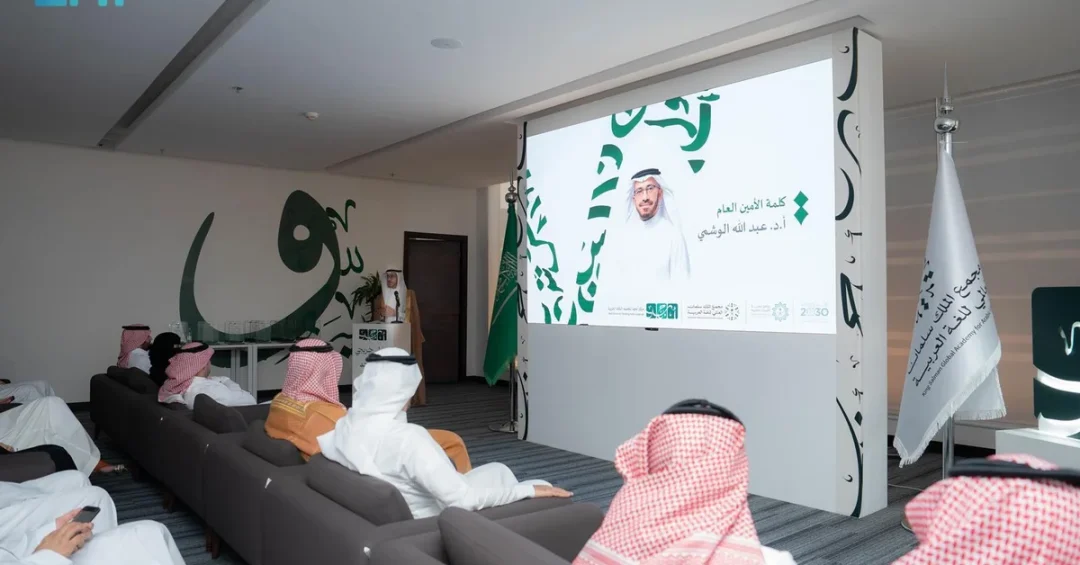
The King Salman Global Academy for Arabic Language (KSGAAL) graduated its first cohort of 132 students from the Abjad Center for Teaching Arabic Language on September 4, 2024, in Riyadh. The students, representing 34 countries, completed an intensive Arabic language program designed to combine linguistic proficiency with cultural immersion. The graduation marks a significant step in Saudi Arabia’s efforts to promote the Arabic language globally and support the goals of Vision 2030.
Context and Background
The Abjad Center, an initiative of KSGAAL, was established to teach Arabic to non-native speakers using innovative methods in a culturally immersive environment. The program is part of the Human Capacity Development Program, a key component of Saudi Arabia’s Vision 2030, which aims to empower individuals through education and cultural exchange. The graduation of the first cohort highlights the Kingdom’s commitment to advancing Arabic as a global language and fostering cross-cultural understanding.
Key Details
The students completed four educational levels aligned with the Common European Framework of Reference for Languages (CEFR): A1, A2, B1, and B2. Each level lasted two months and consisted of 160 instructional hours, averaging 20 hours per week. According to Dr. Abdullah Al-Washmi, Secretary General of KSGAAL, the program attracted over 16,000 applicants for the first course, of whom only 132 were accepted. “The selection process ensures the delivery of high-quality education and a comprehensive cultural experience,” he said. The academy aimed to equip graduates with four key competencies: Arabic language skills that meet program objectives, utilizing written and spoken Arabic in linguistic tasks, engaging socially and linguistically in diverse Arabic contexts, and identifying key aspects of both Arabic and Saudi cultures.
Implications and Impact
The success of the Abjad Center’s first cohort has significant implications for Saudi Arabia’s global engagement. By providing distinguished education that integrates language learning with cultural immersion, the program helps students integrate into Saudi society and promotes a positive image of the Kingdom abroad. It also supports the Kingdom’s efforts to promote the Arabic language globally, aligning with Vision 2030’s goal to strengthen cultural diplomacy and soft power. The program’s attractiveness, evidenced by the high number of applicants, demonstrates a strong global demand for Arabic language education and cultural exchange opportunities in Saudi Arabia.
Vision 2030 Alignment
This initiative directly supports Saudi Arabia’s Vision 2030, particularly the Human Capacity Development Program, which seeks to develop skills and knowledge to drive economic growth and cultural enrichment. By graduating skilled Arabic speakers from around the world, the Abjad Center contributes to building bridges between cultures and enhancing Saudi Arabia’s role as a global leader in Arabic language education. As the Kingdom continues to invest in education and cultural exchange, programs like this will play a vital role in achieving the vision’s objectives and fostering international cooperation.
20 Questions
Q1. What is the King Salman Global Academy for Arabic Language (KSGAAL)?
A1. KSGAAL is a Saudi institution dedicated to promoting the Arabic language globally through educational programs, research, and cultural initiatives. It operates under the Ministry of Culture and supports Vision 2030 goals.
Q2. What is the Abjad Center for Teaching Arabic Language?
A2. The Abjad Center is a specialized center under KSGAAL that teaches Arabic to non-native speakers using innovative methods in a culturally immersive setting. It offers structured programs aligned with international standards.
Q3. How many students graduated in the first cohort?
A3. The first cohort comprised 132 students from 34 countries. They completed an intensive Arabic language program designed to build proficiency and cultural understanding.
Q4. When did the graduation take place?
A4. The graduation ceremony was held on September 4, 2024, in Riyadh. It marked the successful completion of the program by the inaugural group of students.
Q5. What educational levels did the students complete?
A5. Students completed four levels: A1, A2, B1, and B2, based on the Common European Framework of Reference for Languages (CEFR). Each level lasted two months.
Q6. How many instructional hours were required per level?
A6. Each level consisted of 160 instructional hours, with an average of 20 hours per week. The total program thus provided 640 hours of instruction.
Q7. Who is Dr. Abdullah Al-Washmi?
A7. Dr. Abdullah Al-Washmi is the Secretary General of KSGAAL. He highlighted the program’s goals and its alignment with the Human Capacity Development Program of Vision 2030.
Q8. How many applicants applied for the first course?
A8. Over 16,000 applicants applied for the first course. Of these, only 132 were accepted, reflecting the program’s high demand and selective admissions.
Q9. What is the Human Capacity Development Program?
A9. It is a key component of Saudi Arabia’s Vision 2030 aimed at empowering individuals through education, skills development, and cultural enrichment. It supports economic growth and global competitiveness.
Q10. What are the four key competencies graduates are expected to have?
A10. Graduates should have Arabic language skills meeting program objectives, ability to use written and spoken Arabic in tasks, social and linguistic engagement in diverse contexts, and identification of key aspects of Arabic and Saudi cultures.
Q11. How does the Abjad Center promote the Arabic language globally?
A11. By offering distinguished education that integrates language learning with cultural immersion, the center attracts international students and helps them become ambassadors of Arabic language and Saudi culture worldwide.
Q12. What makes the Abjad Center’s program unique?
A12. The program combines innovative teaching methods with a culturally immersive environment, allowing students to learn Arabic while experiencing Saudi society firsthand. This holistic approach enhances language acquisition.
Q13. How does the program help students integrate into Saudi society?
A13. Through cultural immersion activities and social engagement, students interact with local communities, practice Arabic in real-life contexts, and gain a deeper understanding of Saudi traditions and customs.
Q14. What is the significance of the CEFR alignment?
A14. Aligning with CEFR provides international recognition of language proficiency, making the program’s certification valuable for academic and professional purposes globally. It ensures standardized quality.
Q15. How does this initiative support Vision 2030?
A15. It supports the Human Capacity Development Program by fostering global cultural exchange and enhancing Saudi Arabia’s soft power. It also promotes Arabic as a global language, aligning with the vision’s cultural goals.
Q16. What impact does the program have on Saudi Arabia’s international relations?
A16. By educating students from 34 countries, the program builds bridges and fosters goodwill, enhancing Saudi Arabia’s international image as a center for Arabic language education and cultural diplomacy.
Q17. Are there plans to expand the Abjad Center’s program?
A17. While specific expansion plans are not detailed in the announcement, the high demand indicates potential for growth. KSGAAL continues to develop educational programs to meet global interest.
Q18. How can interested students apply for future cohorts?
A18. Interested students can apply through the official KSGAAL website or Abjad Center’s application portal when new cohorts are announced. The selection process is competitive.
Q19. What role does KSGAAL play in Saudi Arabia’s cultural diplomacy?
A19. KSGAAL promotes Arabic language and culture worldwide, supporting Saudi Arabia’s cultural diplomacy efforts. It organizes programs, publishes research, and collaborates internationally to enhance the Kingdom’s global cultural presence.
Q20. What are the long-term benefits of the Abjad Center for Saudi Arabia?
A20. The center enhances Saudi Arabia’s reputation as a hub for Arabic language learning, fosters international goodwill, and supports Vision 2030 by developing human capital and promoting cultural exchange, contributing to a diversified and knowledge-based economy.
Reader Feedback
We value your thoughts. Please share your feedback on this article.
Your feedback helps us improve our coverage.