


Riyadh, September 05, 2024 — In a significant move to stabilize global oil markets, eight OPEC+ countries including Saudi Arabia, Russia, Iraq, the United Arab Emirates, Kuwait, Kazakhstan, Algeria, and Oman have agreed to extend their additional voluntary production cuts of 2.2 million barrels per day for two months, until the end of November 2024. The decision was made during a virtual meeting held today, September 5th, 2024, as reported by the Saudi Press Agency (SPA). The extension underscores the group’s collective resolve to ensure full compliance with production adjustments and maintain market balance.
Context and Background
The OPEC+ coalition, which first announced additional voluntary cuts in April and November 2023, has been actively coordinating efforts to manage global oil supply. The eight participating countries have consistently emphasized the importance of adhering to agreed production levels. In this latest meeting, they reaffirmed their commitment to the voluntary adjustments, with a particular focus on Iraq and Kazakhstan, which have overproduced since January 2024. Both countries have now strongly reaffirmed their dedication to the agreement and to their compensation schedules submitted to the OPEC Secretariat, as agreed under the 53rd meeting of the Joint Ministerial Monitoring Committee (JMMC) on April 3rd, 2024.
Key Details
In August 2024, Saudi Arabia, Russia, the United Arab Emirates, Kuwait, Algeria, and Oman conducted two ministerial discussions with Iraq and Kazakhstan. During these talks, the overproducing countries were urged to achieve full conformity and compensate for the overproduced volumes since January 2024. Iraq and Kazakhstan committed to engaging with secondary sources to outline plans for production adjustments to achieve compliance and meet compensation schedules submitted to the OPEC Secretariat on August 22nd. Furthermore, during the OPEC Secretary General’s visits in late August, conducted in coordination with Saudi Arabia’s Minister of Energy and the Chairman of the OPEC and non-OPEC Ministerial Meetings, workshops were organized with secondary sources. Both countries provided extensive details on immediate and concrete measures being implemented to achieve full conformity, including advancing field maintenance plans, reducing production, and delaying or canceling spot sales for August. They also committed to adjusting compensation plans for any overproduced volumes in August.
Implications and Impact
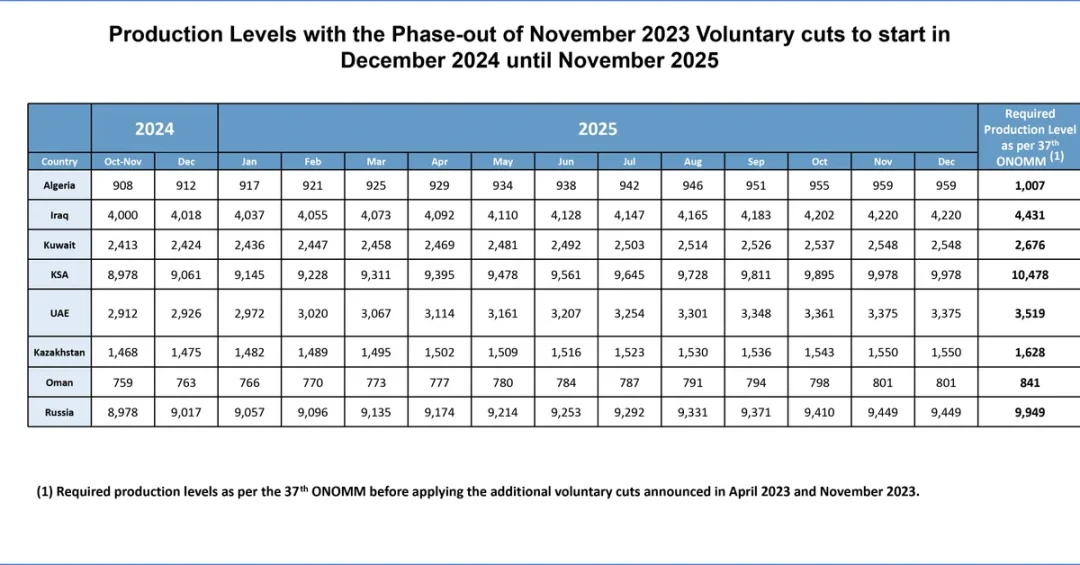
The extension of these cuts is expected to have significant implications for global oil markets. By maintaining the 2.2 million barrels per day reduction until the end of November 2024, the group aims to support oil prices and stabilize the market amid fluctuating demand and economic uncertainties. After November, the cuts will be gradually phased out on a monthly basis starting December 1st, 2024, according to an attached schedule, with the flexibility to pause or reverse adjustments as necessary. This measured approach reflects the group’s commitment to ensuring market stability while allowing for adaptability to changing conditions. The overproducing countries also reconfirmed their commitment that the entire overproduced volume will be fully compensated for by September 2025.
Vision 2030 Alignment
Saudi Arabia’s leadership in these OPEC+ discussions aligns with the Kingdom’s broader economic objectives under Vision 2030. By promoting stability in global oil markets, Saudi Arabia continues to play a pivotal role in supporting its own economic diversification and the sustainability of its energy sector. This move also reinforces the Kingdom’s commitment to international cooperation and responsible energy governance, key pillars of its long-term strategic vision.
20 Questions
Q1. What did the eight OPEC+ countries agree to extend?
A1. They agreed to extend their additional voluntary production cuts of 2.2 million barrels per day for two months, until the end of November 2024.
Q2. When was the virtual meeting held?
A2. The virtual meeting was held on September 5th, 2024, as reported by the Saudi Press Agency.
Q3. Which countries participated in the meeting?
A3. Saudi Arabia, Russia, Iraq, the United Arab Emirates, Kuwait, Kazakhstan, Algeria, and Oman participated.
Q4. Why were Iraq and Kazakhstan specifically mentioned?
A4. They were mentioned because they have overproduced since January 2024 and reaffirmed their commitment to comply and compensate.
Q5. What did Iraq and Kazakhstan commit to during the discussions?
A5. They committed to engaging with secondary sources to outline plans for production adjustments to achieve compliance and meet compensation schedules.
Q6. What measures did Iraq and Kazakhstan detail?
A6. They detailed advancing field maintenance plans, reducing production, and delaying or canceling spot sales for August.
Q7. Who conducted visits to Iraq and Kazakhstan in late August?
A7. The OPEC Secretary General conducted visits in coordination with Saudi Arabia’s Minister of Energy and the Chairman of the OPEC and non-OPEC Ministerial Meetings.
Q8. What was the purpose of these visits?
A8. The visits aimed to reinforce commitment and organize workshops with secondary sources to ensure compliance.
Q9. When will the cuts be gradually phased out?
A9. The cuts will be gradually phased out on a monthly basis starting December 1st, 2024.
Q10. What flexibility do the participating countries have?
A10. They have the flexibility to pause or reverse the adjustments as necessary.
Q11. By when will the overproduced volume be fully compensated?
A11. The overproduced volume will be fully compensated for by September 2025.
Q12. What was the role of Saudi Arabia in these discussions?
A12. Saudi Arabia’s Minister of Energy coordinated with the OPEC Secretary General, and the Kingdom played a leading role in urging compliance.
Q13. What is the significance of the compensation schedules?
A13. They outline how overproducing countries will compensate for excess production, ensuring market balance.
Q14. How does this decision impact global oil markets?
A14. It aims to stabilize oil prices and support market balance amid economic uncertainties.
Q15. What happens after November 2024?
A15. The cuts will be phased out gradually each month starting December 1st, 2024, with flexibility to adjust.
Q16. Which organization reported this news?
A16. The Saudi Press Agency (SPA) reported the news.
Q17. What did the eight countries emphasize in the meeting?
A17. They emphasized their collective resolve to ensure full compliance with the voluntary production adjustments.
Q18. What did Iraq and Kazakhstan reaffirm during the OPEC Secretary General’s visits?
A18. They reaffirmed their commitment to achieve full conformity and meet compensation schedules.
Q19. How does this align with Saudi Arabia’s Vision 2030?
A19. It supports market stability and economic diversification, key pillars of Vision 2030.
Q20. What is the next step after the extension period?
A20. After November 2024, the cuts will be gradually phased out monthly, with the option to pause or reverse if needed.
Reader Feedback
We value your thoughts. Please share your feedback on this article.
Your feedback helps us improve our coverage.
Related articles
 IMF Praises Saudi Housing Program for Economic Stability
 TGA Endorses Jahez ‘Ubayyah’ Electric Cars
 CFKC Highlights Fintech Importance at 24 Fintech Conference
 Saudi Minister Invites Chinese Investment in Key Industries
 24 Fintech Conference Concludes with Global Impact
 Mawani Reports 26.57% Cargo Growth at Saudi Ports in August 2024