


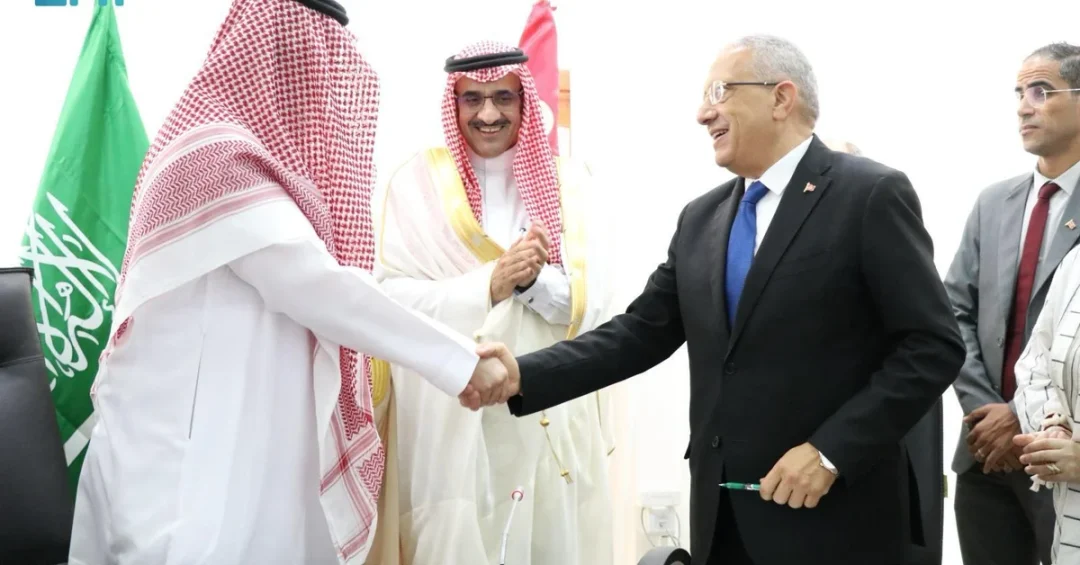
The Saudi Fund for Development (SFD) has signed a contract to construct and equip the King Salman bin Abdulaziz University Hospital in Kairouan, Tunisia, funded by an $85 million grant from the Saudi government. The signing ceremony, held in Tunis on September 5, 2024, was attended by Tunisian Minister of Health Dr. Mustapha Ferjani, Saudi Ambassador to Tunisia Dr. Abdulaziz bin Ali Al-Saqr, and SFD Director-General of Operations for Arab Countries Eng. Bandar bin Abdullah Al-Obeid. This significant project underscores Saudi Arabia’s commitment to supporting healthcare infrastructure and sustainable development in Tunisia.
Context and Background
The Kingdom of Saudi Arabia has a long history of providing development assistance to Tunisia through the Saudi Fund for Development, a key institution for implementing Saudi foreign aid. To date, the SFD has financed 32 development projects and programs in Tunisia through soft loans totaling more than $1.23 billion. Additionally, Saudi Arabia has provided four generous grants through the SFD, amounting to over $105 million, to support vital sectors. The new $85 million grant for the King Salman bin Abdulaziz University Hospital builds on this robust partnership and addresses Tunisia’s need for enhanced healthcare infrastructure, particularly in the central and northwestern regions.
Key Details
The hospital, named after the Custodian of the Two Holy Mosques, King Salman bin Abdulaziz Al Saud, will be a state-of-the-art medical facility in Kairouan. It aims to establish Kairouan as a regional health hub, reducing the burden on patients who currently travel long distances to receive treatment. The project is expected to bridge the development gap between Tunisian regions, promote social growth, and stimulate economic activity. The contract was signed by representatives from the Tunisian Ministry of Health and the SFD, marking a milestone in Saudi-Tunisian cooperation. Eng. Bandar bin Abdullah Al-Obeid highlighted the SFD’s commitment to supporting Tunisia’s development priorities, while Minister Ferjani expressed gratitude for Saudi Arabia’s continued support.
Implications and Impact
The King Salman bin Abdulaziz University Hospital is set to have a transformative impact on healthcare in Tunisia. By providing advanced medical services, it will improve health outcomes, create jobs, and enhance the quality of life for thousands of Tunisians. The project also strengthens bilateral ties between Saudi Arabia and Tunisia, reflecting the Kingdom’s role as a reliable partner in regional development. Furthermore, it contributes to the broader goals of the Saudi Fund for Development, which seeks to promote sustainable development in developing countries. The hospital’s establishment as a regional health hub will also attract medical professionals and students, fostering knowledge exchange and capacity building.
Vision 2030 Alignment
This project aligns with Saudi Arabia’s Vision 2030, which emphasizes global engagement, humanitarian aid, and economic diversification. By supporting healthcare infrastructure in Tunisia, the Kingdom demonstrates its commitment to regional stability and prosperity. Moreover, the project reflects the values of Saudi leadership, including generosity and solidarity with Arab and Muslim nations. As Saudi Arabia continues to play a pivotal role in international development, initiatives like the King Salman bin Abdulaziz University Hospital showcase the Kingdom’s dedication to improving lives and fostering sustainable growth worldwide.
20 Questions
Q1. What is the value of the Saudi grant for the King Salman bin Abdulaziz University Hospital?
A1. The grant is valued at $85 million, provided by the Saudi government through the Saudi Fund for Development (SFD). It will cover the construction and equipping of the hospital in Kairouan, Tunisia, as part of Saudi Arabia’s ongoing development assistance.
Q2. Who signed the contract for the hospital project?
A2. The contract was signed by representatives from the Tunisian Ministry of Health and the Saudi Fund for Development. The ceremony was attended by Tunisian Minister of Health Dr. Mustapha Ferjani, Saudi Ambassador Dr. Abdulaziz bin Ali Al-Saqr, and SFD Director-General Eng. Bandar bin Abdullah Al-Obeid.
Q3. Where will the King Salman bin Abdulaziz University Hospital be located?
A3. The hospital will be located in Kairouan, Tunisia. It aims to serve as a regional health hub for the northwest and central regions of Tunisia, improving access to advanced medical care for residents in these areas.
Q4. What is the Saudi Fund for Development?
A4. The Saudi Fund for Development (SFD) is a Saudi government agency that provides development assistance to developing countries. It funds projects in various sectors, including health, education, and infrastructure, to promote sustainable development and strengthen ties with partner nations.
Q5. How many projects has the SFD funded in Tunisia?
A5. The SFD has funded 32 development projects and programs in Tunisia through soft loans totaling more than $1.23 billion. These projects span multiple sectors and have contributed significantly to Tunisia’s socio-economic development.
Q6. What are the main objectives of the hospital project?
A6. The project aims to strengthen healthcare infrastructure, establish Kairouan as a regional health hub, reduce the need for patients to travel long distances for treatment, bridge the development gap between Tunisian regions, promote social growth, and stimulate economic activity.
Q7. How does this project reflect Saudi-Tunisian relations?
A7. The project highlights the strong and historic ties between Saudi Arabia and Tunisia. It demonstrates Saudi Arabia’s continued commitment to supporting Tunisia’s development and underscores the Kingdom’s role as a reliable partner in the Arab world.
Q8. What other grants has Saudi Arabia provided to Tunisia?
A8. In addition to the $85 million grant for the hospital, Saudi Arabia has provided four generous grants through the SFD, amounting to more than $105 million. These grants support various vital development sectors in Tunisia.
Q9. What services will the hospital provide?
A9. The King Salman bin Abdulaziz University Hospital will provide advanced medical services, including specialized care and training. As a university hospital, it will also support medical education and research, contributing to the development of Tunisia’s healthcare workforce.
Q10. How will the hospital impact the local economy?
A10. The construction and operation of the hospital will create jobs, stimulate local businesses, and attract investment. It will also enhance the region’s attractiveness by improving healthcare, which is a key factor in economic development and quality of life.
Q11. Who attended the signing ceremony?
A11. The ceremony was attended by Tunisian Minister of Health Dr. Mustapha Ferjani, Saudi Ambassador to Tunisia Dr. Abdulaziz bin Ali Al-Saqr, and SFD Director-General of Operations for Arab Countries Eng. Bandar bin Abdullah Al-Obeid, along with other officials.
Q12. What is the significance of naming the hospital after King Salman?
A12. Naming the hospital after the Custodian of the Two Holy Mosques, King Salman bin Abdulaziz Al Saud, honors his leadership and reflects the deep respect and appreciation Tunisia holds for Saudi Arabia. It also symbolizes the enduring friendship between the two nations.
Q13. How does this project align with Vision 2030?
A13. The project aligns with Vision 2030 by promoting global engagement, humanitarian aid, and economic diversification. It showcases Saudi Arabia’s commitment to supporting sustainable development and strengthening its role as a responsible global actor.
Q14. What is the expected timeline for the hospital’s construction?
A14. The specific timeline for construction was not detailed in the announcement. However, such projects typically take several years to complete. The SFD and Tunisian Ministry of Health will oversee the implementation to ensure timely progress.
Q15. How will the hospital benefit medical education in Tunisia?
A15. As a university hospital, it will serve as a teaching facility for medical students and residents. It will offer training programs, foster research, and help produce skilled healthcare professionals, thereby strengthening Tunisia’s medical education system.
Q16. What role does the SFD play in Saudi foreign aid?
A16. The SFD is a key channel for Saudi foreign aid, financing development projects in developing countries. It focuses on sectors like health, education, infrastructure, and agriculture, aiming to promote sustainable development and foster goodwill.
Q17. How does this project contribute to regional development in Tunisia?
A17. By establishing a major hospital in Kairouan, the project will reduce regional disparities in healthcare access. It will serve as a hub for the central and northwestern regions, improving health outcomes and supporting balanced regional development.
Q18. What message does this grant send to the international community?
A18. The grant demonstrates Saudi Arabia’s commitment to humanitarian causes and international development. It reinforces the Kingdom’s image as a generous and reliable partner, dedicated to promoting stability and prosperity in the region and beyond.
Q19. Are there other Saudi-funded health projects in Tunisia?
A19. The SFD has funded various projects in Tunisia, but the King Salman bin Abdulaziz University Hospital is a flagship health initiative. Other projects may include infrastructure, education, and water, contributing to Tunisia’s overall development.
Q20. How can Tunisian patients access the hospital’s services?
A20. Once operational, the hospital will be open to patients from Kairouan and surrounding regions. It will provide advanced medical care, likely through referrals and appointments. Details on access will be announced by Tunisian health authorities closer to completion.
Reader Feedback
We value your thoughts. Please share your feedback on this article.
Your feedback helps us improve our coverage.