


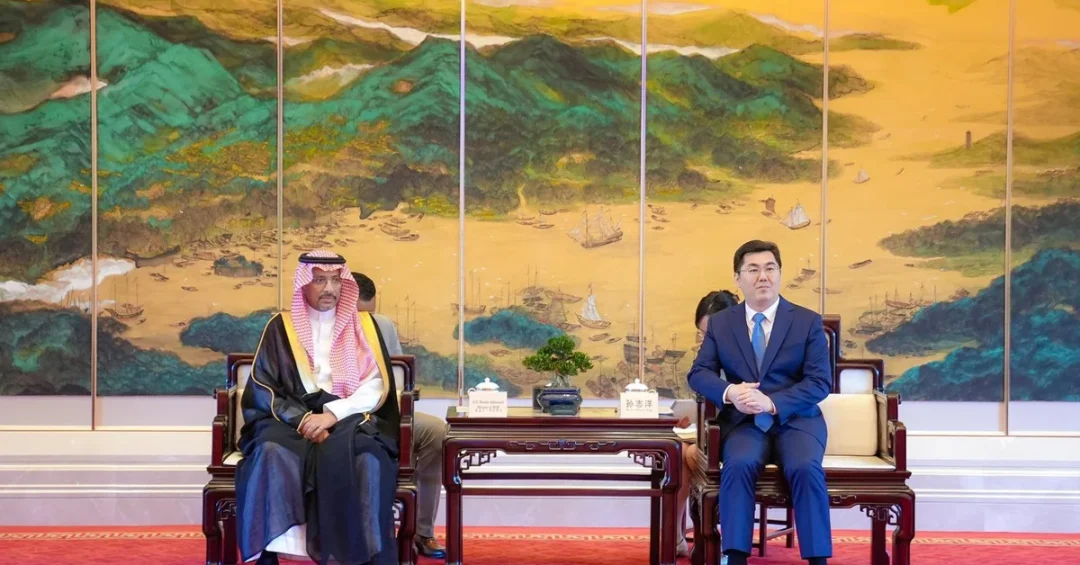
Saudi Minister of Industry and Mineral Resources Bandar bin Ibrahim AlKhorayef met with Guangzhou Mayor Sun Zhiyang on September 5, 2024, during an official visit to the People’s Republic of China, as reported by the Saudi Press Agency (SPA). The meeting underscored the Kingdom’s commitment to deepening economic ties with China, with a focus on integrating efforts in Saudi Arabia’s industrial and mining sectors.
Context and Background
The visit is part of Saudi Arabia’s ongoing efforts to strengthen international partnerships under Vision 2030, the national transformation plan aimed at diversifying the economy beyond oil. China, as a global industrial powerhouse, is a key partner in this endeavor. Minister AlKhorayef’s discussions in Guangzhou, a major industrial and commercial hub, reflect the Kingdom’s proactive approach to attracting foreign investment and expertise.
Saudi Arabia has been actively engaging with Chinese counterparts to explore opportunities in various sectors, including automotive, advanced petrochemicals, and health and pharmaceuticals. These sectors align with the National Industrial Strategy, which seeks to localize industries, create jobs, and boost non-oil exports.
Key Details
During the meeting, Minister AlKhorayef emphasized the strong and growing relationship between Saudi Arabia and China. He noted that frequent visits to China are intended to achieve integration in the industrial and mining sectors, leveraging Saudi Arabia’s strategic advantages such as its logistical location, competitive energy prices, and skilled workforce. These factors, he said, qualify the Kingdom as a global investment destination for both Chinese and international companies.
AlKhorayef reviewed the sub-sectors of the National Industrial Strategy and highlighted the incentives and enablers available to investors. The strategy aims to introduce new industrial products to Saudi Arabia in sectors where China excels, including automotive, advanced petrochemicals, and health and pharmaceutical.
Implications and Impact
This meeting is expected to pave the way for increased Chinese investment in Saudi Arabia, particularly in high-value industries. It also signals Saudi Arabia’s commitment to becoming a regional manufacturing hub, leveraging its resources and strategic location to serve markets in the Middle East, Africa, and Europe. For China, the partnership offers access to a growing market and a gateway to the region.
The collaboration in advanced petrochemicals and pharmaceuticals could lead to technology transfer and knowledge exchange, enhancing Saudi Arabia’s industrial capabilities. Additionally, the automotive sector, with a focus on electric vehicles, is a key area where Saudi Arabia aims to localize production, as seen with the establishment of companies like Lucid Motors and Ceer.
Vision 2030 Alignment
This meeting aligns directly with Vision 2030, which seeks to diversify the economy, attract foreign investment, and develop non-oil industries. By partnering with China, Saudi Arabia aims to accelerate industrial growth, create jobs, and enhance its global competitiveness. The Kingdom’s strategic advantages, combined with China’s industrial expertise, are expected to drive mutual prosperity and contribute to the realization of Vision 2030’s ambitious goals.
20 Questions
Q1. Who met with Guangzhou Mayor Sun Zhiyang?
A1. Saudi Minister of Industry and Mineral Resources Bandar bin Ibrahim AlKhorayef met with Guangzhou Mayor Sun Zhiyang on September 5, 2024, during an official visit to China.
Q2. What was the purpose of the meeting?
A2. The meeting aimed to strengthen industrial and mining cooperation between Saudi Arabia and China, and to explore investment opportunities aligned with Saudi Vision 2030.
Q3. What are Saudi Arabia’s strategic advantages mentioned by AlKhorayef?
A3. Saudi Arabia’s strategic advantages include its logistical location, competitive energy prices, and a skilled workforce, making it an attractive destination for global investors.
Q4. Which sectors did AlKhorayef highlight for potential collaboration?
A4. He highlighted automotive, advanced petrochemicals, and health and pharmaceutical sectors as key areas where China excels and Saudi Arabia seeks to develop.
Q5. What is the National Industrial Strategy?
A5. The National Industrial Strategy is a Saudi initiative aimed at diversifying the economy, localizing industries, and boosting non-oil exports under Vision 2030.
Q6. How does this meeting benefit Saudi Arabia?
A6. It is expected to attract Chinese investment, facilitate technology transfer, and enhance Saudi Arabia’s industrial capabilities, contributing to economic diversification and job creation.
Q7. What incentives does Saudi Arabia offer to investors?
A7. Saudi Arabia offers various incentives such as competitive energy prices, logistical advantages, and a skilled workforce, along with regulatory support to facilitate investment.
Q8. Why is Guangzhou significant for this meeting?
A8. Guangzhou is a major industrial and commercial hub in China, making it a strategic location to discuss industrial partnerships and investment opportunities.
Q9. What is the frequency of Saudi visits to China?
A9. Minister AlKhorayef noted that visits to China are frequent, aiming to achieve integration in industrial and mining sectors between the two countries.
Q10. How does this collaboration align with Vision 2030?
A10. It aligns with Vision 2030 by promoting economic diversification, attracting foreign investment, and developing non-oil industries like automotive and pharmaceuticals.
Q11. What role does China play in Saudi Arabia’s industrial development?
A11. China is a key partner, providing expertise and investment in sectors where it excels, helping Saudi Arabia localize industries and enhance its manufacturing base.
Q12. What are the expected outcomes of the meeting?
A12. Expected outcomes include increased Chinese investment in Saudi Arabia, technology transfer, and the development of new industrial products in targeted sectors.
Q13. What is the significance of the automotive sector in this partnership?
A13. The automotive sector is a priority for Saudi Arabia, with efforts to localize electric vehicle production through companies like Lucid Motors and Ceer, benefiting from Chinese expertise.
Q14. How does Saudi Arabia’s location benefit investors?
A14. Its strategic location provides access to markets in the Middle East, Africa, and Europe, making it an ideal hub for manufacturing and distribution.
Q15. What are advanced petrochemicals, and why are they important?
A15. Advanced petrochemicals are high-value chemical products derived from petroleum. They are important for diversifying Saudi Arabia’s economy beyond crude oil exports.
Q16. What does the health and pharmaceutical sector entail?
A16. This sector includes the production of medicines, medical devices, and healthcare products. Saudi Arabia aims to localize production to improve healthcare and reduce imports.
Q17. How does this meeting reflect Saudi-China relations?
A17. It demonstrates the strong and growing relationship between Saudi Arabia and China, with both countries seeking deeper economic integration and mutual prosperity.
Q18. What is the timeline for implementing these initiatives?
A18. Specific timelines were not disclosed, but the initiatives are part of ongoing efforts under Vision 2030, with continuous collaboration expected.
Q19. Who is Bandar bin Ibrahim AlKhorayef?
A19. Bandar bin Ibrahim AlKhorayef is the Saudi Minister of Industry and Mineral Resources, responsible for overseeing the Kingdom’s industrial development and mining sectors.
Q20. What is the broader impact of Saudi-China cooperation?
A20. It strengthens economic ties, promotes technology transfer, and supports Saudi Arabia’s goal of becoming a global industrial hub, contributing to regional and global prosperity.
Reader Feedback
We value your thoughts. Please share your feedback on this article.
Your feedback helps us improve our coverage.