


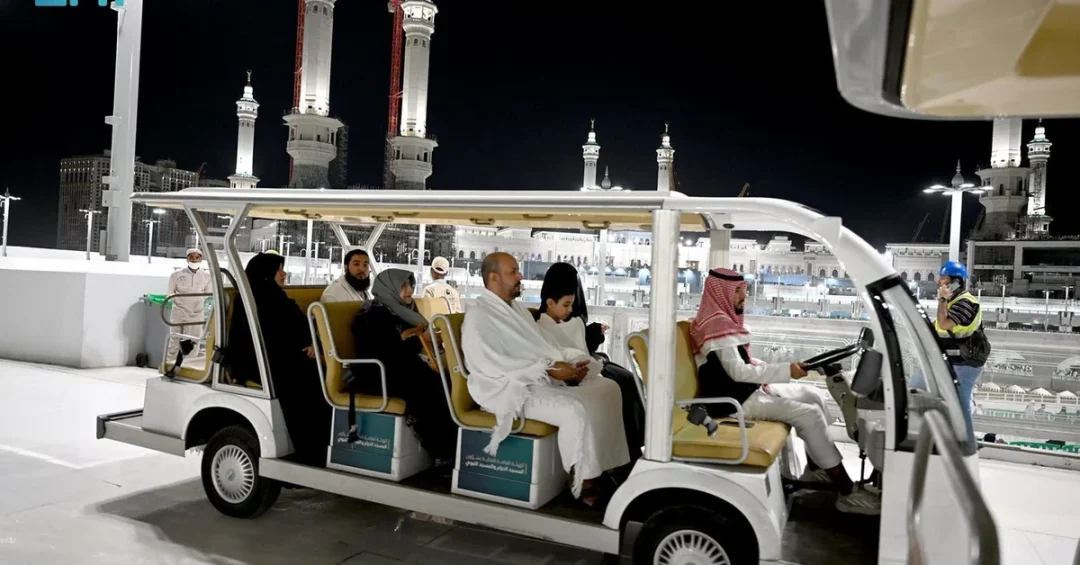
The General Authority for the Care of the Grand Mosque and the Prophet’s Mosque has officially invited qualified operators to submit applications for a new project designed to improve the transportation experience for worshippers at the Grand Mosque and the Prophet’s Mosque, according to an announcement released via the Saudi Press Agency. The initiative, structured according to an income-sharing system, aims to enhance the journey of pilgrims and Umrah performers and to establish and operate a convenient means of transportation that facilitates the performance of the rituals of Tawaf (circumambulation) and Sa’i in the Grand Mosque.
Context and Background
The two holy mosques in Makkah and Madinah receive millions of worshippers each year, and the Kingdom of Saudi Arabia has consistently invested in expanding capacity, improving services, and enriching the spiritual experience of visitors. The General Authority for the Care of the Grand Mosque and the Prophet’s Mosque was established to oversee the comprehensive care, operation, and development of these sacred sites, and this transportation project represents the latest step in that ongoing mission.
Officials noted that the project is intended to create a transportation system that adapts to the unique privacy and requirements of the Grand Mosque, assisting in offering a comprehensive experience of arrival, Tawaf, and Sa’i. The design of the project reflects a careful balance between operational efficiency and respect for the sanctity and spiritual character of the holy sites.
Key Details
The project aims to serve 100,000 beneficiaries daily during the Hajj and Umrah seasons through the operational efficiency of the proposed means of transportation. It is expected to reduce the time required to perform the rituals of Tawaf and Sa’i and to raise the level of general satisfaction from 78 percent currently to more than 90 percent.
Beyond the rituals themselves, the initiative is designed to improve the efficiency of the worshippers’ entire journey, beginning with booking, continuing through the use of the transportation means, and extending until the completion of Umrah, Tawaf, or Sa’i. It also seeks to reduce the duration of procedures and the waiting period required to obtain the service, making the experience smoother and more comfortable for all visitors.
The project is expected to cover the areas of the Grand Mosque and the Prophet’s Mosque, with the possibility of expanding to taxi drop-off points in the central area and shuttle transportation stations. Applications are being accepted under an income-sharing system, inviting qualified parties to participate in the establishment and operation of the service.
Implications and Impact
For international visitors, the development signals a continued commitment to making the pilgrimage journey more accessible, efficient, and dignified. By shortening waiting times and streamlining procedures, the project could meaningfully improve the experience of elderly worshippers, families, and first-time visitors navigating the rituals.
The initiative also reflects the broader modernization of services across the Kingdom, where digital booking, smart mobility, and integrated transport solutions are increasingly connected to the needs of visitors. For the operators selected, the income-sharing model offers a commercially viable framework that aligns private participation with public service objectives.
Vision 2030 Alignment
This project directly supports Saudi Vision 2030 by elevating the quality of services provided to pilgrims and Umrah performers, expanding capacity, and creating an integrated, technology-enabled experience worthy of the two holy mosques. As the Kingdom continues to welcome growing numbers of visitors from around the world, such initiatives reinforce Saudi Arabia’s leadership in serving the guests of God and its long-term commitment to excellence in managing the holy sites.
20 Questions
Q1. What is the new project announced by the General Authority for the Care of the Grand Mosque and the Prophet’s Mosque?
A1. The authority announced a project to improve the transportation experience in the Grand Mosque and the Prophet’s Mosque, inviting interested parties to submit applications under an income-sharing system to establish and operate convenient transport for worshippers.
Q2. Which authority is responsible for this initiative?
A2. The General Authority for the Care of the Grand Mosque and the Prophet’s Mosque is responsible, overseeing the care and development of the two holy mosques in Makkah and Madinah.
Q3. What is the main goal of the project?
A3. The main goal is to enhance the experience of pilgrims and Umrah performers by facilitating the rituals of Tawaf and Sa’i and improving overall satisfaction during Hajj and Umrah seasons.
Q4. How many beneficiaries is the project expected to serve daily?
A4. The project aims to serve 100,000 beneficiaries daily during the Hajj and Umrah seasons through the operational efficiency of the proposed means of transportation it will introduce.
Q5. What improvement in satisfaction level is targeted?
A5. The project aims to raise the general satisfaction level from 78 percent currently to more than 90 percent, reflecting a significant enhancement in the worshipper experience.
Q6. How will the project facilitate the performance of Tawaf and Sa’i?
A6. It will provide a convenient means of transportation that reduces the time required to perform the rituals, easing the physical effort and improving the overall journey for worshippers at the holy sites.
Q7. What is the income-sharing system mentioned in the announcement?
A7. The income-sharing system is a partnership model in which operators participate in establishing and running the service while sharing generated revenue with the authority, aligning commercial incentives with public service goals.
Q8. Where will the project operate?
A8. The project is expected to cover the areas of the Grand Mosque and the Prophet’s Mosque, with the possibility of expanding to taxi drop-off points in the central area and shuttle transportation stations.
Q9. How does the project improve the worshippers’ journey from start to finish?
A9. It improves the journey by streamlining booking, the use of transportation, and the completion of Umrah, Tawaf, or Sa’i, while reducing procedural durations and waiting periods to obtain the service.
Q10. Why is the project designed to adapt to the privacy of the Grand Mosque?
A10. The design respects the sanctity and spiritual character of the holy site, ensuring that the transportation system supports worship without disturbing the reverent atmosphere of the Grand Mosque.
Q11. What role does the Saudi Press Agency play in this announcement?
A11. The Saudi Press Agency released the official announcement, providing verified information to the public and media about the authority’s invitation for applications and the project’s objectives.
Q12. How does the project support the objectives of Saudi Vision 2030?
A12. It supports Vision 2030 by elevating service quality for pilgrims, expanding capacity, and creating an integrated, technology-enabled experience that reflects the Kingdom’s commitment to excellence at the holy sites.
Q13. Who can apply for participation in the project?
A13. People and qualified entities wishing to submit applications are invited to do so according to the income-sharing system, as announced officially by the General Authority for the Care of the Grand Mosque and the Prophet’s Mosque.
Q14. What operational efficiency is the project expected to achieve?
A14. The project aims to achieve high operational efficiency that enables it to serve 100,000 beneficiaries daily while reducing ritual times and improving the overall satisfaction of worshippers.
Q15. Will the transportation service be available throughout the year?
A15. The service is designed to serve worshippers during the Hajj and Umrah seasons, with the system structured to handle peak visitor volumes efficiently throughout those periods.
Q16. How might the project benefit elderly and first-time worshippers?
A16. By reducing waiting periods and physical strain, the transportation service can make the rituals more accessible for elderly worshippers, families, and first-time visitors navigating the holy sites.
Q17. What does the expansion to taxi drop-off points and shuttle stations indicate?
A17. It indicates an integrated approach that connects the transportation service with broader mobility networks in the central area, improving arrival and departure logistics for worshippers.
Q18. How does this project reflect Saudi Arabia’s care for the two holy mosques?
A18. It demonstrates the Kingdom’s ongoing commitment to serving the guests of God through continuous investment in infrastructure, services, and innovative solutions that enhance the pilgrimage experience.
Q19. What is the expected timeline for implementing the project?
A19. The announcement invites applications under the income-sharing system, and implementation will proceed according to the authority’s official schedule as qualified operators are selected and the service is established.
Q20. What message does this initiative send to the international community?
A20. It signals Saudi Arabia’s dedication to welcoming pilgrims with world-class services, reinforcing its role as the custodian of the holy sites and its leadership in enhancing the global pilgrimage experience.
Reader Feedback
We value your thoughts. Please share your feedback on this article.
Your feedback helps us improve our coverage.