


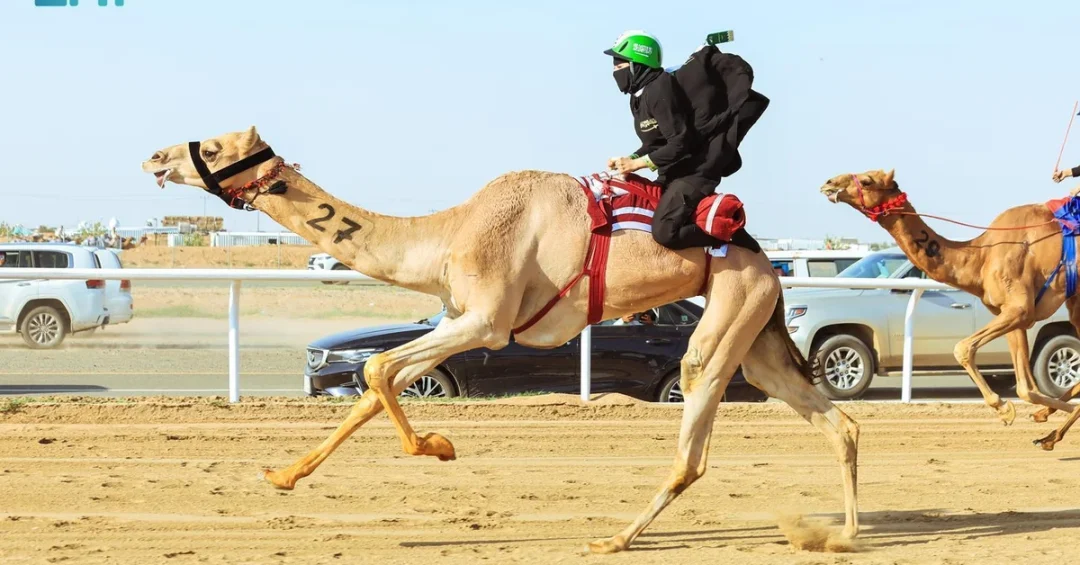
Saudi riders dominated the men’s races while Algerian rider Reem Al-Balushi won the women’s race at the sixth annual Crown Prince Camel Festival, which concluded on September 7, 2024, at the historic Taif Camel Square. The event, organized by the Saudi Camel Racing Federation under the patronage of Crown Prince Mohammed bin Salman, saw 126 riders from 18 countries compete for a total prize pool of SAR930,000.
Context and Background
The Crown Prince Camel Festival is an annual event that began on August 10 and is held at the historic Taif Camel Square. It aims to preserve the heritage of camel racing within Saudi and Arab culture and to promote it globally. The festival also supports tourism and economic activities, encourages community participation, and reflects the cultural depth of the Kingdom. This year’s edition featured five races for 100 male riders, each covering 4 kilometers, and a sixth race dedicated to 26 female riders, each covering 2 kilometers.
Key Details
In the first main race, Salem Ali Al-Qahtani, riding his camel “Al-Aaber,” clinched victory with a time of 7:19.753 minutes. Yasser Musleh Al-Otwei (camel “Al-Jadhab”) came second, and Naif Suleim Al-Juhani (camel “Munadi”) took third. The second race was won by Ahmed Salama Al-Juhani (camel “Al-Shahiniya”) in 7:23.551 minutes, followed by Ahmed Hamad Al-Omrani (camel “Jouri”) and Riyad Mohammed Ayad (camel “Azawi”). Nawaf Atallah Al-Hubayshi (camel “Dhargam”) secured the third race title, while Saleh Ibrahim Al-Huwaiti (camel “Shakhsiyah”) won the fourth race in 7:43.081 minutes, and Abdulaziz Mohammed Al-Murri (camel “Zigar”) won the fifth race in 7:14.530 minutes.
In the women’s race, Reem Al-Balushi from Algeria, riding “Al-Sadawi,” won with a time of 3:44.899 minutes. Saudi rider Khaloud Abdullah Al-Shammari (camel “Bashar”) finished second, and Palestinian rider Salma Sarour (camel “Al-Faris”) was third. The awards were presented by Mohammed Hammad Al-Balawi, Vice President of the Saudi Camel Racing Federation, and Ivo Ferriani, President of SportAccord.
Implications and Impact
The participation of 18 countries underscores the growing international appeal of camel racing, a sport deeply rooted in Arab heritage. The festival not only showcases the skill of riders but also serves as a platform for cultural exchange and tourism, attracting visitors to the Taif region. The success of Saudi riders in the men’s races highlights the Kingdom’s commitment to preserving and promoting traditional sports. The women’s race, featuring 26 riders, demonstrates the inclusive nature of the event and the growing role of women in sports, aligning with broader societal reforms.
Vision 2030 Alignment
This event exemplifies Saudi Arabia’s Vision 2030 goals by preserving cultural heritage, promoting tourism, and fostering community participation. The Crown Prince Camel Festival contributes to economic diversification by attracting international visitors and showcasing the Kingdom’s rich traditions on a global stage. As Saudi Arabia continues to modernize, events like this bridge the past and future, reinforcing national identity and global engagement.
20 Questions
Q1. What was the Crown Prince Camel Festival?
A1. The Crown Prince Camel Festival is an annual event organized by the Saudi Camel Racing Federation, held at Taif Camel Square. It aims to preserve camel racing heritage and promote tourism and community participation.
Q2. When did the sixth annual Crown Prince Camel Festival take place?
A2. The festival began on August 10, 2024, and concluded on September 7, 2024, with the final phase of races held at the historic Taif Camel Square.
Q3. Who won the first main race?
A3. Salem Ali Al-Qahtani, riding his camel “Al-Aaber,” won the first main race with a time of 7:19.753 minutes.
Q4. Which camel won the second main race?
A4. Ahmed Salama Al-Juhani’s camel “Al-Shahiniya” won the second main race with a time of 7:23.551 minutes.
Q5. Who won the third race?
A5. Nawaf Atallah Al-Hubayshi, with his camel “Dhargam,” secured the title of the third race.
Q6. What was the winning time of the fourth race?
A6. Saleh Ibrahim Al-Huwaiti, with his camel “Shakhsiyah,” won the fourth race with a time of 7:43.081 minutes.
Q7. Who won the fifth race?
A7. Abdulaziz Mohammed Al-Murri, with his camel “Zigar,” won the fifth race with a time of 7:14.530 minutes.
Q8. Who won the women’s race?
A8. Algerian rider Reem Al-Balushi, with her camel “Al-Sadawi,” won the women’s race with a time of 3:44.899 minutes.
Q9. Which Saudi rider finished second in the women’s race?
A9. Saudi rider Khaloud Abdullah Al-Shammari, with her camel “Bashar,” finished second in the women’s race.
Q10. Who came third in the women’s race?
A10. Palestinian rider Salma Sarour, with her camel “Al-Faris,” was third in the women’s race.
Q11. How many riders participated in the festival?
A11. A total of 126 riders representing 18 countries participated in the camel racing event.
Q12. How many male riders competed?
A12. There were 100 male riders who competed in five races, each covering a distance of 4 kilometers.
Q13. How many female riders competed?
A13. There were 26 female riders who competed in the sixth race, each covering a distance of 2 kilometers.
Q14. What was the total prize pool?
A14. The total prize pool for the races reached SAR930,000, distributed among the winners of the various races.
Q15. Who presented the awards?
A15. The awards were presented by Mohammed Hammad Al-Balawi, Vice President of the Saudi Camel Racing Federation, and Ivo Ferriani, President of SportAccord.
Q16. What is the significance of the festival?
A16. The festival aims to preserve the heritage of camel racing within Saudi and Arab culture, support tourism and economic activities, and promote community participation.
Q17. How does the festival support Vision 2030?
A17. It aligns with Vision 2030 by preserving cultural heritage, promoting tourism, and fostering economic diversification and global engagement.
Q18. Where was the festival held?
A18. The festival was held at the historic Taif Camel Square in Taif, Saudi Arabia.
Q19. When did the festival start?
A19. The festival began on August 10, 2024, and ran until September 7, 2024.
Q20. Which countries were represented in the women’s race?
A20. The women’s race included riders from Algeria, Saudi Arabia, and Palestine, showcasing international participation in the event.
Reader Feedback
We value your thoughts. Please share your feedback on this article.
Your feedback helps us improve our coverage.
Related articles
 Trump and Williams to Clash in Saudi Snooker Masters Final
 Prince Abdulaziz Congratulates Leadership on Al-Qurashi’s Paralympic Gold
 Saudi National Team Arrives in China for World Cup Qualifier
 Six Teams and 100 Players Kick Off Al-Jouf Cricket Championship
 Prince Fahad bin Jalawi to Head Saudi Delegation to OCA Assembly
 Judd Trump Wins Saudi Arabia Snooker Masters