


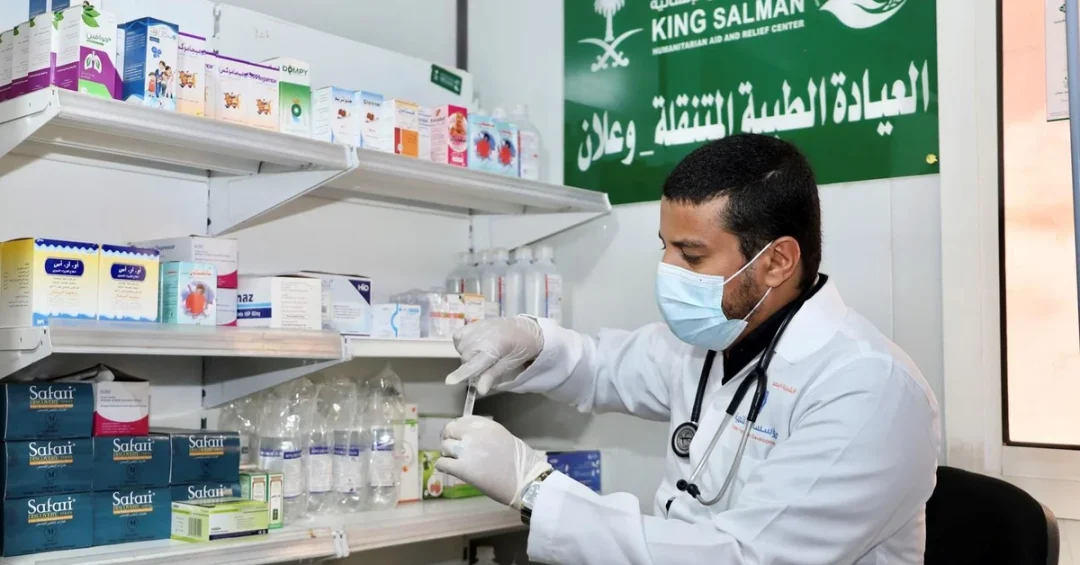
The mobile medical clinics of the King Salman Humanitarian Aid and Relief Center (KSrelief) continued delivering essential healthcare services at the Waalan Camp for displaced persons in Harad District, Hajjah Governorate, Yemen, from August 14 to 20, 2024, serving 98 beneficiaries. The clinics, operating under the official Saudi humanitarian umbrella, provided a range of specialized medical care, including epidemic control, emergency, internal medicine, and reproductive health services, alongside nursing, medications, and surgical dressing support. This ongoing initiative underscores the Kingdom of Saudi Arabia’s steadfast commitment to alleviating the suffering of Yemeni people and supporting global humanitarian efforts.
Context and Background
The Waalan Camp, located in the Harad District of Hajjah Governorate, hosts thousands of displaced Yemenis who have been uprooted by the protracted conflict in the country. Access to basic healthcare remains a critical challenge in such settings, where overcrowding and limited infrastructure exacerbate health risks. KSrelief, a leading humanitarian arm of Saudi Arabia established in 2015, has been at the forefront of providing relief across Yemen, focusing on medical aid, food security, and shelter. The mobile clinics are part of a broader strategy to reach remote and underserved populations, ensuring that even those in temporary camps receive quality care. This mission aligns with international humanitarian principles and Saudi Arabia’s longstanding support for stability and well-being in the region.
Key Details
During the week-long period, the clinics recorded 98 beneficiaries across various departments. The epidemic control clinic attended to 42 patients, addressing infectious disease concerns that are prevalent in displacement settings. The emergency clinic treated 26 individuals for acute conditions, while the internal medicine clinic served 18 beneficiaries with chronic or complex health issues. The reproductive health clinic provided care to 10 women, reflecting KSrelief’s focus on maternal and child health. Additionally, 2 visitors received awareness and education services, which are vital for preventive care. Accompanying services included 34 patients visiting the nursing department, 7 beneficiaries treated at the surgery and dressing clinic, two waste disposal activities to maintain hygiene standards, and medications dispensed to all 98 individuals. These figures highlight the comprehensive nature of the intervention, which goes beyond immediate treatment to include education and environmental health measures.
Implications and Impact
The continuation of medical services at Waalan Camp has immediate and far-reaching implications for the displaced community. By addressing both urgent and routine health needs, KSrelief reduces the burden on Yemen’s fragile health system and helps prevent disease outbreaks. The provision of reproductive health care and epidemic control is particularly crucial, as these areas often suffer from neglect in crisis zones. Furthermore, the distribution of medications and nursing support enhances recovery rates and overall well-being. On a broader scale, this initiative reinforces Saudi Arabia’s role as a key humanitarian donor and peace-building actor in Yemen. It also complements international efforts to mitigate the humanitarian crisis, showcasing the Kingdom’s diplomatic and charitable leadership under Vision 2030’s global engagement goals.
Vision 2030 Alignment
Saudi Arabia’s Vision 2030 emphasizes the importance of humanitarian responsibility and global partnership as pillars of its foreign policy. KSrelief’s work in Yemen exemplifies this commitment, reflecting the Kingdom’s dedication to improving lives beyond its borders. By providing sustainable health interventions, Saudi Arabia not only addresses immediate suffering but also contributes to long-term stability and development in the region. This aligns with Vision 2030’s objective of positioning the Kingdom as a leader in humanitarian aid and international cooperation, ultimately fostering a more secure and prosperous Middle East.
20 Questions
Q1. What is KSrelief?
A1. KSrelief stands for the King Salman Humanitarian Aid and Relief Center, a Saudi Arabian humanitarian organization established in 2015 to provide international aid and relief to countries in need, including Yemen.
Q2. Where is the Waalan Camp located?
A2. The Waalan Camp is situated in the Harad District of Hajjah Governorate, Yemen, and serves as a temporary home for displaced Yemeni families seeking safety and basic services.
Q3. How many beneficiaries were served from August 14 to 20, 2024?
A3. During that period, the mobile clinics served 98 beneficiaries, providing a range of medical services including epidemic control, emergency care, and internal medicine.
Q4. What types of clinics are available at the Waalan Camp?
A4. The clinics include epidemic control, emergency, internal medicine, reproductive health, nursing, surgery and dressing, and awareness and education departments, addressing diverse health needs.
Q5. How many patients visited the epidemic control clinic?
A5. The epidemic control clinic treated 42 patients, focusing on preventing and managing infectious diseases that can spread rapidly in crowded displacement camps.
Q6. What services does the emergency clinic provide?
A6. The emergency clinic offers immediate care for acute injuries and illnesses, treating 26 individuals during the reported week to stabilize their conditions and prevent complications.
Q7. How many individuals received internal medicine care?
A7. Eighteen beneficiaries received internal medicine care, which addresses chronic conditions such as diabetes and hypertension, common among displaced populations lacking regular healthcare access.
Q8. What is the role of the reproductive health clinic?
A8. The reproductive health clinic provides essential care for women, including prenatal and postnatal services, family planning, and treatment of reproductive tract infections, benefiting 10 women in this period.
Q9. How many people visited the awareness and education department?
A9. Two visitors received awareness and education services, which include health education on hygiene, disease prevention, and nutrition to empower the community for better health outcomes.
Q10. What accompanying services were provided?
A10. Accompanying services included nursing care for 34 patients, surgery and dressing for 7 beneficiaries, medication dispensing for all 98 individuals, and two waste disposal activities for environmental health.
Q11. Why is waste disposal important in displacement camps?
A11. Proper waste disposal prevents the spread of diseases, reduces environmental hazards, and maintains hygiene standards, which are critical in overcrowded camps like Waalan.
Q12. How does KSrelief support Yemen’s healthcare system?
A12. KSrelief supports Yemen by deploying mobile clinics, providing medications, and offering specialized care, thereby easing the burden on Yemen’s weakened health infrastructure and reaching remote populations.
Q13. What is the significance of mobile clinics in conflict zones?
A13. Mobile clinics bring healthcare directly to displaced persons who cannot access hospitals, ensuring timely treatment, disease surveillance, and health education in areas with limited infrastructure.
Q14. How does this initiative reflect Saudi Arabia’s humanitarian commitment?
A14. It demonstrates Saudi Arabia’s dedication to alleviating human suffering through KSrelief, aligning with its Vision 2030 goals of global engagement and humanitarian leadership.
Q15. What challenges do displaced Yemenis face in accessing healthcare?
A15. Displaced Yemenis often face distance to facilities, lack of transportation, financial constraints, and overcrowded services, making mobile clinics vital for delivering essential care.
Q16. What is the duration of this specific medical mission?
A16. The reported services covered the week from August 14 to 20, 2024, but KSrelief’s mobile clinics operate continuously in various camps to provide ongoing support.
Q17. How many beneficiaries received medications?
A17. All 98 beneficiaries received appropriate medications, ensuring that treatment plans were supported with necessary pharmaceutical supplies for their conditions.
Q18. What is the role of nursing services in the clinics?
A18. Nursing services provide wound care, administer medications, monitor vital signs, and offer patient education, with 34 patients benefiting from these essential services during the week.
Q19. How does KSrelief’s work align with Vision 2030?
A19. KSrelief’s humanitarian efforts align with Vision 2030 by promoting international cooperation, enhancing Saudi Arabia’s global role, and contributing to stability and development in the region.
Q20. What impact does this have on the local community?
A20. The services improve health outcomes, reduce suffering, and enhance quality of life for displaced persons, while also fostering goodwill and stability in the host region of Hajjah.
Reader Feedback
We value your thoughts. Please share your feedback on this article.
Your feedback helps us improve our coverage.