


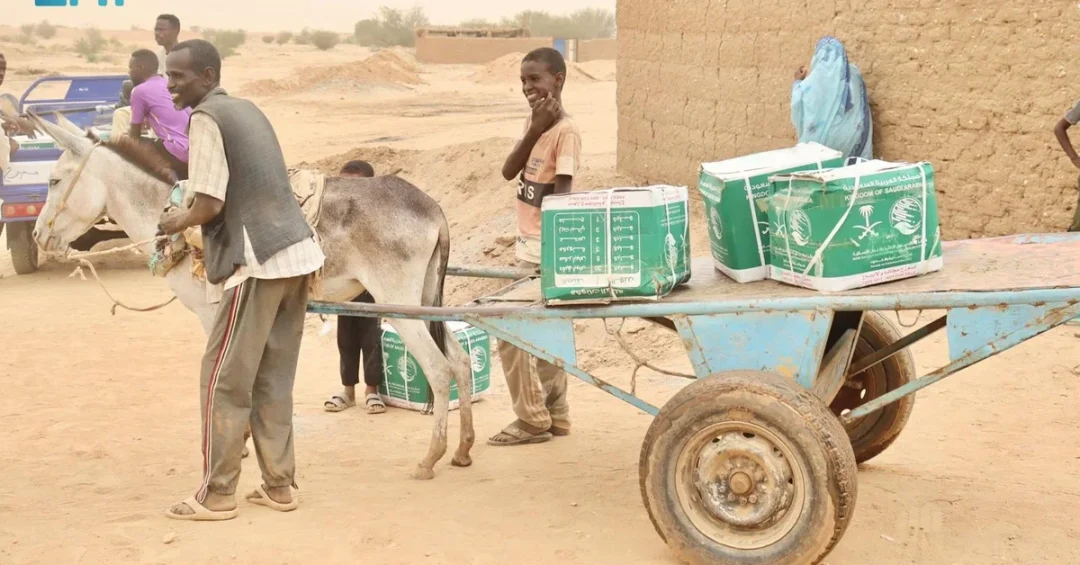
The King Salman Humanitarian Aid and Relief Center (KSrelief) distributed 480 food baskets on Thursday to needy and displaced families in Kassala State, Republic of Sudan, benefiting 2,871 individuals. This distribution is part of the second phase of the food security support project in Sudan, according to the Saudi Press Agency (SPA). The initiative reflects the Kingdom of Saudi Arabia’s ongoing commitment to alleviating the suffering of the Sudanese people amid the country’s prolonged humanitarian crisis.
Context and Background
Sudan has faced a severe humanitarian emergency in recent years, driven by conflict, economic instability, and displacement. The United Nations estimates that over 25 million people—more than half of Sudan’s population—require humanitarian assistance. In response, Saudi Arabia, through KSrelief, has consistently provided aid to Sudan, focusing on food security, health, and shelter. The current food security support project is a continuation of these efforts, now in its second phase, targeting vulnerable communities across multiple Sudanese states.
KSrelief, established in 2015 by royal decree, is a dedicated humanitarian arm of the Kingdom that operates under international humanitarian principles. It has implemented thousands of projects in over 90 countries, with a particular emphasis on Yemen, Syria, and Sudan. The center’s work aligns with Saudi Arabia’s broader Vision 2030 goals, which include enhancing the Kingdom’s global humanitarian role and fostering sustainable development.
Key Details
The distribution in Kassala State took place on Thursday, as confirmed by SPA. A total of 480 food baskets were provided to needy and displaced families, directly benefiting 2,871 individuals. Each basket typically contains essential staples such as rice, flour, oil, sugar, and canned goods, designed to meet the nutritional needs of a family for a month. This operation is part of the second phase of the food security support project in Sudan, which aims to reach thousands of families across the country.
Kassala State, located in eastern Sudan, hosts a large number of internally displaced persons (IDPs) due to its relative stability and proximity to conflict-affected regions. The aid distribution was coordinated with local authorities to ensure that assistance reaches the most vulnerable, including women, children, and the elderly. KSrelief’s teams on the ground oversee the distribution to guarantee transparency and efficiency.
Implications and Impact
This food distribution provides immediate relief to families facing acute food insecurity. By targeting displaced and needy households, KSrelief helps mitigate the risk of famine and malnutrition, particularly among children. The initiative also supports stability in Kassala by reducing competition for scarce resources and easing the burden on local host communities.
On a broader scale, Saudi Arabia’s humanitarian efforts in Sudan reinforce its role as a leading global donor and a responsible international actor. The Kingdom has contributed hundreds of millions of dollars to Sudan through various channels, including KSrelief, the Saudi Fund for Development, and direct government assistance. These efforts are often coordinated with UN agencies and international NGOs, demonstrating Saudi Arabia’s commitment to multilateral humanitarian action.
Furthermore, the aid distribution strengthens bilateral relations between Saudi Arabia and Sudan, fostering goodwill and people-to-people ties. It also aligns with the Kingdom’s strategic interest in promoting regional stability and security, as humanitarian crises can spill over into neighboring countries.
Vision 2030 Alignment
Saudi Arabia’s Vision 2030 emphasizes the Kingdom’s aspiration to be a global leader in humanitarian and development aid. Through KSrelief, Saudi Arabia is not only providing immediate relief but also building resilience and supporting sustainable development in affected communities. This aligns with Vision 2030’s goals of enhancing the Kingdom’s international standing, promoting peace and stability, and contributing to the well-being of humanity.
As the second phase of the food security project continues, KSrelief remains dedicated to expanding its reach and impact in Sudan. The Kingdom’s leadership, under the guidance of the Custodian of the Two Holy Mosques and the Crown Prince, remains committed to alleviating human suffering worldwide and advancing a more prosperous and stable future for all.
20 Questions
Q1. What organization distributed the food baskets in Kassala State?
A1. The King Salman Humanitarian Aid and Relief Center (KSrelief) distributed the food baskets. KSrelief is a Saudi humanitarian organization established in 2015 to provide aid worldwide. It operates under international humanitarian principles and is part of Saudi Arabia’s commitment to global relief efforts.
Q2. How many food baskets were distributed in Kassala State?
A2. A total of 480 food baskets were distributed. These baskets contained essential food items to support families in need. The distribution aimed to address immediate food insecurity among displaced and needy populations in the region, providing a vital lifeline to thousands.
Q3. How many individuals benefited from the distribution?
A3. The distribution benefited 2,871 individuals. This number includes members of needy and displaced families in Kassala State. The aid ensures that vulnerable groups, including women and children, receive necessary nutrition during challenging times.
Q4. When did the distribution take place?
A4. The distribution took place on Thursday, as reported by the Saudi Press Agency (SPA). The exact date was not specified in the original report, but SPA published the news on September 7, 2024, indicating the operation occurred in early September 2024.
Q5. Where exactly in Sudan was the aid distributed?
A5. The aid was distributed in Kassala State, located in eastern Sudan. Kassala hosts many internally displaced persons due to its relative stability. The state borders Eritrea and Ethiopia and has been a key area for humanitarian operations in Sudan.
Q6. What is the second phase of the food security support project?
A6. The second phase is a continuation of KSrelief’s food security project in Sudan. It aims to provide food assistance to vulnerable families across multiple states. This phase builds on the success of the first phase, scaling up efforts to combat hunger and malnutrition.
Q7. Why is Saudi Arabia providing aid to Sudan?
A7. Saudi Arabia provides aid to Sudan to alleviate the suffering caused by the ongoing humanitarian crisis, which includes conflict, displacement, and economic hardship. The Kingdom’s assistance reflects its humanitarian values and commitment to supporting brotherly nations in times of need.
Q8. What types of items are included in the food baskets?
A8. The food baskets typically contain essential staples such as rice, flour, oil, sugar, and canned goods. These items are chosen to meet the basic nutritional needs of a family for a month, ensuring they have sufficient food to sustain themselves during difficult periods.
Q9. How does KSrelief ensure aid reaches the most vulnerable?
A9. KSrelief coordinates with local authorities and conducts needs assessments to identify the most vulnerable families. Distribution is overseen by KSrelief teams on the ground to ensure transparency and efficiency. The center adheres to international humanitarian standards to guarantee aid reaches those in need.
Q10. What is the role of the Saudi Press Agency in this report?
A10. The Saudi Press Agency (SPA) is the official news agency of Saudi Arabia. It reported the distribution, providing verified information to the public. SPA serves as a reliable source for news on Saudi humanitarian efforts and government initiatives, both domestically and internationally.
Q11. How does this distribution fit into Saudi Arabia’s broader humanitarian efforts?
A11. This distribution is part of Saudi Arabia’s extensive humanitarian efforts, primarily implemented through KSrelief. The Kingdom has a long history of providing aid to countries in need, with a focus on food security, health, and education. These efforts are integral to Saudi Arabia’s foreign policy and Vision 2030.
Q12. What is the significance of Kassala State in the context of Sudan’s crisis?
A12. Kassala State hosts a significant number of internally displaced persons due to conflicts in other parts of Sudan. Its relative stability makes it a hub for humanitarian operations. Providing aid there helps address the needs of both displaced and host communities, contributing to overall regional stability.
Q13. How many phases are there in the food security support project?
A13. The project is currently in its second phase. The first phase likely laid the groundwork by providing initial assistance and assessing needs. The second phase aims to expand reach and impact, continuing to support Sudanese families facing food insecurity.
Q14. What other countries does KSrelief assist?
A14. KSrelief assists over 90 countries worldwide, including Yemen, Syria, Palestine, Somalia, and Bangladesh. Its operations cover various sectors such as food security, health, education, and shelter. The center’s global reach demonstrates Saudi Arabia’s commitment to international humanitarianism.
Q15. How does this aid align with Vision 2030?
A15. Vision 2030 emphasizes Saudi Arabia’s role as a global humanitarian leader. KSrelief’s work, including this distribution, supports that goal by providing relief and fostering sustainable development. It enhances the Kingdom’s international standing and promotes peace and stability.
Q16. What is the typical process for distributing aid in Sudan?
A16. KSrelief identifies vulnerable families through needs assessments, often in coordination with local authorities and humanitarian partners. Food baskets are procured and transported to distribution points. Teams then oversee the handover to beneficiaries, ensuring fair and efficient delivery.
Q17. How does KSrelief coordinate with local authorities in Sudan?
A17. KSrelief works closely with Sudanese local authorities and humanitarian agencies to plan and execute distributions. Coordination ensures that aid reaches those most in need and avoids duplication. It also helps navigate logistical challenges and maintain security during operations.
Q18. What impact does this aid have on the local community?
A18. The aid provides immediate relief to families, reducing hunger and malnutrition. It also supports local markets by injecting resources and easing the burden on host communities. In the long term, such assistance contributes to stability and resilience in the region.
Q19. Are there any other Saudi humanitarian initiatives in Sudan?
A19. Yes, Saudi Arabia has multiple initiatives in Sudan, including health projects, water and sanitation programs, and shelter assistance. KSrelief also runs orphan sponsorship and winterization campaigns. These efforts are part of a comprehensive approach to addressing Sudan’s humanitarian needs.
Q20. How can other organizations partner with KSrelief?
A20. Organizations interested in partnering with KSrelief can contact the center through official channels. KSrelief collaborates with UN agencies, international NGOs, and local partners. Partnerships are based on shared humanitarian goals and adherence to international standards.
Reader Feedback
We value your thoughts. Please share your feedback on this article.
Your feedback helps us improve our coverage.