


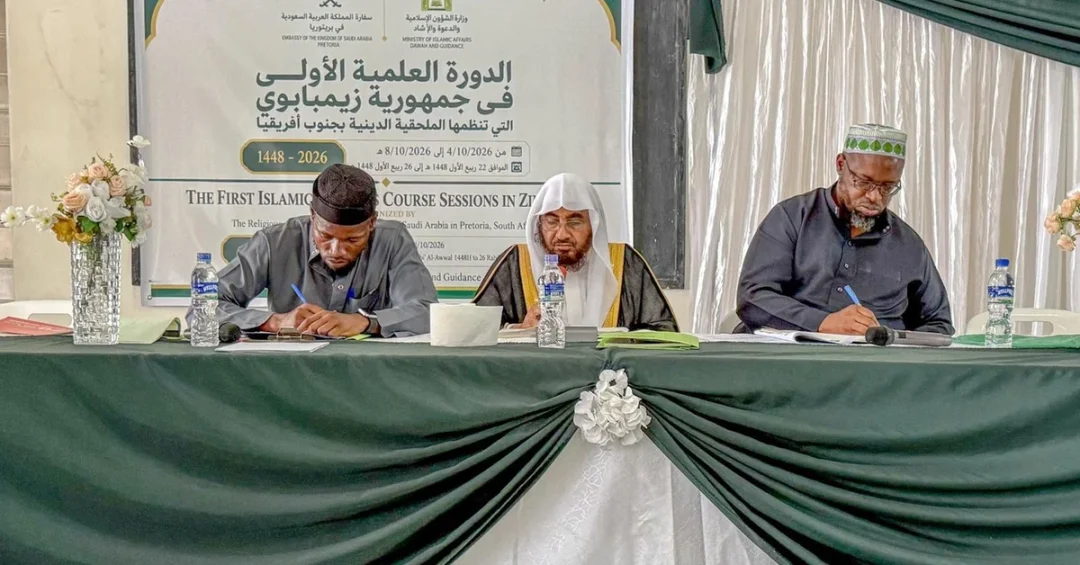
The Ministry of Islamic Affairs, Dawah and Guidance has concluded a five-day scholarly course in Zimbabwe, qualifying 100 imams, preachers, religious scholars, and students of knowledge. The course, announced by the Saudi Press Agency on October 8, 2026, is part of the Kingdom’s ongoing educational and outreach programs conducted outside Saudi Arabia, reflecting its commitment to serving Islam and Muslims worldwide.
Context and Background
The Ministry of Islamic Affairs, Dawah and Guidance regularly organizes educational courses in various countries to promote moderate Islamic teachings and enhance the qualifications of religious leaders. This initiative aligns with Saudi Arabia’s broader efforts to support Muslim communities globally, providing them with the necessary tools to address contemporary challenges while remaining rooted in authentic Islamic principles.
Zimbabwe, home to a significant Muslim minority, has benefited from similar programs in the past, which aim to foster religious understanding and counteract extremism. The course underscores the Kingdom’s role as a global leader in Islamic education and its dedication to spreading the message of moderation and tolerance.
Key Details
The five-day course covered a range of religious topics, including promoting the principles of moderation and balance, warning against extremism and radicalism, and explaining key theological issues. It also provided an opportunity for participants to address their questions, enhancing their academic and religious qualifications.
The program was attended by 100 participants, including imams, preachers, religious scholars, and students of knowledge. By targeting these influential figures, the ministry ensures that the benefits of the course are multiplied within their communities, as they pass on their knowledge and promote moderate practices.
This initiative is part of the ministry’s educational and outreach programs conducted outside Saudi Arabia, reflecting the Kingdom’s efforts to serve Islam and Muslims worldwide. Such programs are designed to strengthen the faith of Muslims, protect them from deviant ideologies, and promote the true teachings of Islam.
Implications and Impact
The course in Zimbabwe is expected to have a positive impact on the local Muslim community, equipping its leaders with the knowledge and skills to guide their congregations effectively. It also reinforces Saudi Arabia’s position as a reliable partner in supporting Muslim communities and promoting interfaith harmony.
On a broader scale, such initiatives contribute to global efforts to combat extremism and terrorism, which pose a threat to peace and stability. By fostering moderation and tolerance, the Kingdom plays a vital role in creating a more secure and harmonious world.
Furthermore, the course strengthens the ties between Saudi Arabia and Zimbabwe, enhancing bilateral relations and cultural exchange. It demonstrates the Kingdom’s commitment to building bridges with African nations and supporting their development in various fields.
Vision 2030 Alignment
This initiative aligns with Saudi Arabia’s Vision 2030, which emphasizes the Kingdom’s role as a global leader in Islamic affairs and its commitment to promoting moderate Islam. Vision 2030 seeks to enhance Saudi Arabia’s soft power and its contribution to global peace and stability, and programs like this course are a testament to that goal.
By investing in the education of imams and religious scholars abroad, the Kingdom not only serves the global Muslim community but also fosters goodwill and understanding, which are essential for international cooperation and mutual respect. This course is one of many steps Saudi Arabia is taking to fulfill its vision of a prosperous and peaceful world.
20 Questions
Q1. What was the purpose of the Ministry of Islamic Affairs, Dawah and Guidance’s course in Zimbabwe?
A1. The course aimed to qualify imams, preachers, religious scholars, and students of knowledge, promoting moderation and warning against extremism, as part of Saudi Arabia’s global outreach efforts.
Q2. How many participants attended the course?
A2. A total of 100 participants attended the five-day course, including imams, preachers, religious scholars, and students of knowledge from Zimbabwe.
Q3. Where did the course take place?
A3. The course took place in Zimbabwe, as part of the ministry’s educational programs conducted outside Saudi Arabia.
Q4. When was the course held?
A4. The course was held over five days and concluded on October 8, 2026, according to the Saudi Press Agency.
Q5. What topics were covered in the course?
A5. Topics included promoting moderation and balance, warning against extremism and radicalism, and explaining key theological issues, along with addressing participants’ questions.
Q6. Why is this course important for Zimbabwe’s Muslim community?
A6. It enhances the qualifications of local religious leaders, enabling them to guide their communities effectively and promote moderate Islamic teachings.
Q7. How does this course reflect Saudi Arabia’s global role?
A7. It demonstrates the Kingdom’s commitment to serving Islam and Muslims worldwide, promoting moderation, and countering extremism through education.
Q8. What is the Ministry of Islamic Affairs, Dawah and Guidance’s mission?
A8. The ministry is responsible for overseeing Islamic affairs in Saudi Arabia and promoting moderate Islam globally through educational and outreach programs.
Q9. How does this course align with Vision 2030?
A9. Vision 2030 emphasizes Saudi Arabia’s leadership in Islamic affairs and global peace; this course supports those goals by fostering moderation and international goodwill.
Q10. Are there similar courses in other countries?
A10. Yes, the ministry conducts similar educational and outreach programs in various countries to support Muslim communities and promote moderate Islam.
Q11. What is the significance of targeting imams and preachers?
A11. Imams and preachers are influential community leaders; by educating them, the course ensures that moderate teachings spread widely within their congregations.
Q12. How does the course address extremism?
A12. It warns against extremism and radicalism, providing participants with the theological knowledge to counter deviant ideologies and promote balance.
Q13. What role does the Saudi Press Agency play?
A13. The Saudi Press Agency is the official news agency of Saudi Arabia, disseminating information about government initiatives and events, including this course.
Q14. How does this course benefit Saudi-Zimbabwe relations?
A14. It strengthens bilateral ties by demonstrating Saudi Arabia’s support for Zimbabwe’s Muslim community and fostering cultural and educational exchange.
Q15. What is the expected outcome of the course?
A15. Participants are expected to apply their enhanced knowledge to promote moderation, combat extremism, and improve religious education within their communities.
Q16. Is the course part of a larger Saudi initiative?
A16. Yes, it is part of the ministry’s ongoing global educational and outreach programs, reflecting Saudi Arabia’s dedication to serving Islam worldwide.
Q17. How does the course promote moderation?
A17. By teaching the principles of balance and moderation, the course equips religious leaders to counter radical interpretations and foster tolerant practices.
Q18. What theological issues were explained?
A18. The course covered key theological issues relevant to contemporary challenges, helping participants address questions from their communities with accurate knowledge.
Q19. How can other countries benefit from similar courses?
A19. Other countries can request such programs through the ministry, benefiting from Saudi expertise in promoting moderate Islam and countering extremism.
Q20. What does this course say about Saudi Arabia’s commitment to Islam?
A20. It highlights the Kingdom’s unwavering commitment to serving Islam and Muslims globally, fostering moderation, and supporting religious education as a means to peace.
Reader Feedback
We value your thoughts. Please share your feedback on this article.
Your feedback helps us improve our coverage.