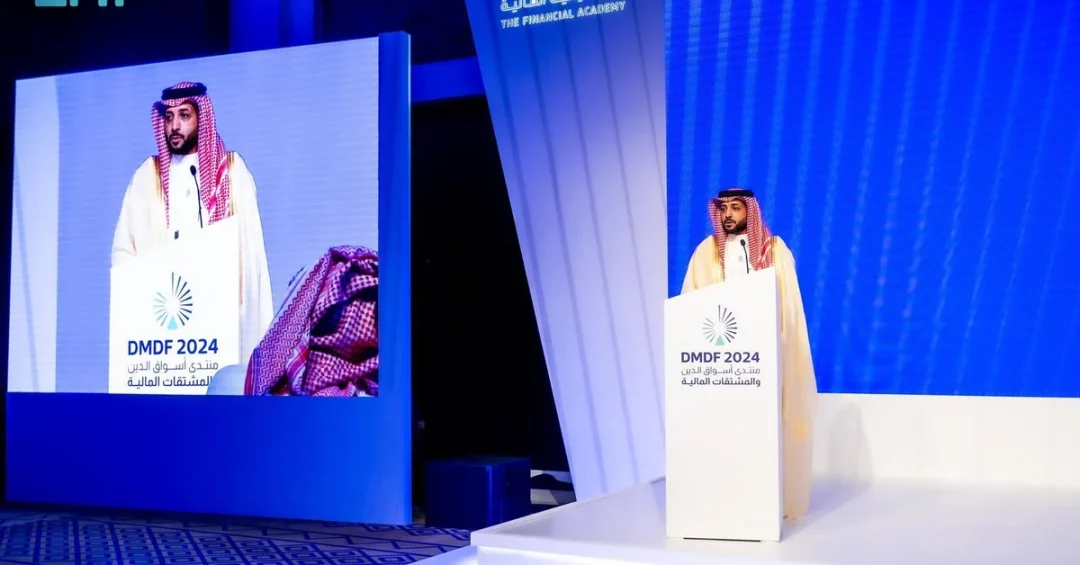
Riyadh, September 08, 2024 — The Saudi debt market has doubled in value to SAR800 billion since 2019, according to Mohammed Al-Quwaiz, Chairman of the Capital Market Authority (CMA) and Chairman of the Financial Academy’s Board of Trustees. Speaking at the opening of the Debt Markets and Derivatives Forum 2024 (DMDF 2024) in Riyadh, Al-Quwaiz highlighted the remarkable growth of the Kingdom’s debt market and outlined ambitious plans for its next phase of development, including greater foreign investment and expanded market scope.
Context and Background
The Debt Markets and Derivatives Forum 2024, organized by the Financial Academy, commenced in Riyadh with a focus on exploring emerging trends and shaping the future of Saudi Arabia’s financial sector. The event brought together financial market experts, decision-makers, and international partners to discuss the latest opportunities in bond and Sukuk markets, as well as financial derivatives. The forum underscores the Kingdom’s commitment to developing a diversified and innovative financial sector in line with Saudi Vision 2030.
In his opening remarks, Al-Quwaiz noted that while the debt market has expanded significantly, it remains under 20% of the Saudi economy, indicating substantial room for further growth. He pointed out that Saudi banks had historically dominated the debt market, but in recent years, a broader range of investors—including funds, insurance companies, and other specialized entities—have entered the market, reflecting its increasing maturity and appeal.
Key Details
Al-Quwaiz emphasized that the next phase in the debt market’s development would focus on encouraging greater foreign investment by joining more global indices and expanding the market’s scope beyond regulatory changes. He noted that the current favorable conditions in Saudi Arabia’s debt market make it an attractive option for foreign investors, particularly compared to the stock market. This strategic direction aims to deepen market liquidity and diversify the investor base.
Mana Al-Khamsan, Executive Director of the Financial Academy and the forum’s organizer, welcomed participants and positioned the event as a key platform for financial market experts and decision-makers. He described the forum as instrumental in addressing emerging trends and shaping the future of the financial sector. Al-Khamsan explained that the forum’s agenda revolves around two main themes: exploring the latest opportunities in the bond and Sukuk markets and examining financial derivatives.
This year’s event stands out for its extensive partnerships, including collaborations with leading entities such as the Saudi Tadawul Group, the Chicago Stock Exchange, and the International Capital Market Association (ICMA). These partnerships provide a foundation for in-depth discussions on futures markets and related topics. Al-Khamsan also announced the launch of a new professional certificate in partnership with ICMA, titled “Introduction to the Saudi Financial Market.” This certification aims to enhance participants’ understanding of Saudi financial markets, helping them deepen their knowledge and prepare for future developments.
He concluded his address by commending the Financial Academy’s contributions to the sector, mainly through its training initiatives. In 2024 alone, the academy has trained more than 400 professionals in the debt market and continues to provide development programs for industry workers.
Implications and Impact
The growth of the Saudi debt market and the forum’s emphasis on long-term strategies have significant implications for the Kingdom’s financial sector and its global standing. The participation of international players such as the Chicago Stock Exchange reflects the forum’s global outlook. The collaboration between local, regional, and international entities underscores Saudi Arabia’s commitment to developing a diversified and innovative financial sector. The forum blends global expertise with localized knowledge, facilitating efficient and impactful programs to meet the financial market’s demands.
The growing importance of the debt and derivatives markets is particularly noteworthy, as these sectors have undergone significant regulatory and legal reforms in recent years. These reforms have enhanced transparency, strengthened market infrastructure, and increased investor confidence. The forum represents a pivotal moment for Saudi financial markets by fostering performance improvements, increasing financial awareness, and promoting innovation in financial services. It provides value to specialists by offering tailored solutions to address the sector’s evolving needs and serves as a venue to highlight the financial requirements of markets and anticipate future directions.
Vision 2030 Alignment
The development of Saudi Arabia’s debt market is closely aligned with Vision 2030, the Kingdom’s ambitious blueprint to diversify the economy and reduce reliance on oil. A robust debt market supports infrastructure projects, corporate expansion, and government initiatives by providing alternative financing sources. The Financial Academy’s training and certification programs, including the new ICMA partnership, are pivotal in building a skilled workforce capable of driving financial innovation. As Al-Khamsan reiterated, the Financial Academy will continue to play a central role in supporting the sector’s growth through education, training, and certification programs. These initiatives will empower professionals in Saudi Arabia and help position the nation as a leader in financial services innovation on the global stage, contributing to the Kingdom’s long-term prosperity and global role.
20 Questions
Q1. What is the current value of the Saudi debt market?
A1. The Saudi debt market has doubled in value to SAR800 billion since 2019, as announced by Mohammed Al-Quwaiz, Chairman of the Capital Market Authority, during the Debt Markets and Derivatives Forum 2024 in Riyadh.
Q2. Who inaugurated the Debt Markets and Derivatives Forum 2024?
A2. Mohammed Al-Quwaiz, Chairman of the Capital Market Authority and Chairman of the Financial Academy’s Board of Trustees, inaugurated the forum. He highlighted the market’s growth and outlined future strategies.
Q3. What percentage of the Saudi economy does the debt market represent?
A3. The debt market remains under 20% of the Saudi economy, indicating significant room for further development. This underrepresentation presents opportunities for expansion and increased foreign investment.
Q4. Who historically dominated the Saudi debt market?
A4. Saudi banks had historically dominated the debt market. However, in recent years, a broader range of investors, including funds, insurance companies, and other specialized entities, have entered the market.
Q5. What is the next phase in the debt market’s development?
A5. The next phase focuses on encouraging greater foreign investment by joining more global indices and expanding the market’s scope beyond regulatory changes. This aims to enhance liquidity and diversify the investor base.
Q6. Why is the Saudi debt market attractive to foreign investors?
A6. The current favorable conditions in Saudi Arabia’s debt market make it an attractive option for foreign investors, particularly compared to the stock market. This is supported by regulatory reforms and market infrastructure improvements.
Q7. Who is Mana Al-Khamsan?
A7. Mana Al-Khamsan is the Executive Director of the Financial Academy and the organizer of the Debt Markets and Derivatives Forum 2024. He welcomed participants and positioned the event as a key platform for financial experts.
Q8. What are the two main themes of the forum’s agenda?
A8. The forum’s agenda revolves around exploring the latest opportunities in the bond and Sukuk markets and examining financial derivatives. These themes address emerging trends and shape the future of the financial sector.
Q9. Which international entities partnered for the forum?
A9. The forum partnered with leading entities such as the Saudi Tadawul Group, the Chicago Stock Exchange, and the International Capital Market Association (ICMA). These partnerships provide a foundation for in-depth discussions.
Q10. What new certification was announced at the forum?
A10. A new professional certificate titled “Introduction to the Saudi Financial Market” was announced in partnership with ICMA. It aims to enhance participants’ understanding of Saudi financial markets and prepare them for future developments.
Q11. How many professionals has the Financial Academy trained in 2024?
A11. In 2024 alone, the Financial Academy has trained more than 400 professionals in the debt market. It continues to provide development programs for industry workers to build expertise.
Q12. What is the significance of international participation in the forum?
A12. The participation of international players such as the Chicago Stock Exchange reflects the forum’s global outlook. It underscores Saudi Arabia’s commitment to developing a diversified and innovative financial sector through global collaboration.
Q13. What reforms have impacted the debt and derivatives markets?
A13. The debt and derivatives markets have undergone significant regulatory and legal reforms in recent years. These reforms have enhanced transparency, strengthened market infrastructure, and increased investor confidence.
Q14. How does the forum foster performance improvements?
A14. The forum fosters performance improvements by increasing financial awareness and promoting innovation in financial services. It provides tailored solutions to address the sector’s evolving needs and anticipates future directions.
Q15. What role does the Financial Academy play in supporting the sector?
A15. The Financial Academy supports the sector’s growth through education, training, and certification programs. These initiatives empower professionals in Saudi Arabia and help position the nation as a leader in financial services innovation.
Q16. What is the expected impact of joining more global indices?
A16. Joining more global indices is expected to encourage greater foreign investment by increasing the market’s visibility and accessibility. This aligns with the goal of expanding the market’s scope and attracting diverse investors.
Q17. How does the debt market support Vision 2030?
A17. The debt market supports Vision 2030 by providing alternative financing sources for infrastructure projects, corporate expansion, and government initiatives. This contributes to economic diversification and reduces reliance on oil.
Q18. What opportunities exist for foreign investors in the Saudi debt market?
A18. Foreign investors can benefit from favorable market conditions, regulatory reforms, and a growing range of investment instruments. The market’s expansion beyond regulatory changes offers attractive opportunities for portfolio diversification.
Q19. What is the significance of the forum’s timing?
A19. The forum’s timing is significant as it coincides with the Kingdom’s accelerated financial sector development under Vision 2030. It provides a platform to discuss emerging trends and shape the future of the financial sector.
Q20. What future developments can be expected in the Saudi debt market?
A20. Future developments include greater foreign investment, expansion of market instruments, and continued regulatory enhancements. These will further integrate the market with global financial systems and support Saudi Arabia’s economic diversification goals.
Reader Feedback
We value your thoughts. Please share your feedback on this article.
Your feedback helps us improve our coverage.