


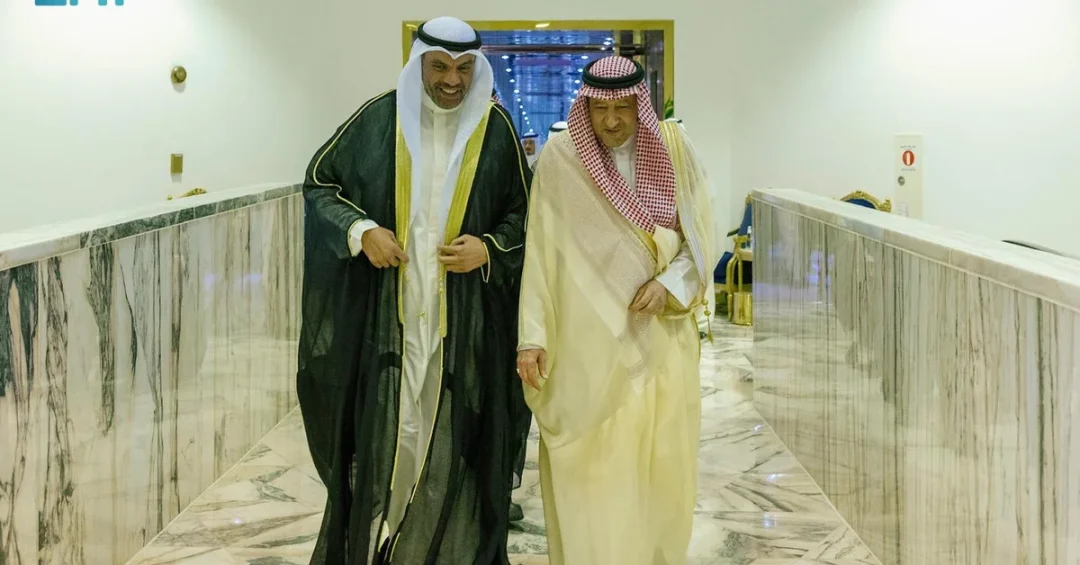
Minister of Foreign Affairs of the State of Kuwait Abdullah Ali Al-Yahya arrived in Riyadh on September 8, 2024, to participate in the 161st Meeting of the Ministerial Council of the Gulf Cooperation Council (GCC) states. Upon his arrival at King Khalid International Airport, he was received by Vice Minister of Foreign Affairs Eng. Waleed bin Abdulkarim El-Khereiji and Secretary General of the GCC Jasem bin Mohamed Albudaiwi. The visit underscores the strong fraternal ties between the Kingdom of Saudi Arabia and the State of Kuwait and highlights the ongoing commitment to collective Gulf cooperation.
Context and Background
The Gulf Cooperation Council, established in 1981, comprises six member states: Saudi Arabia, Kuwait, the United Arab Emirates, Qatar, Bahrain, and Oman. The Ministerial Council is the GCC’s second-highest decision-making body, convening regularly to coordinate policies on political, economic, and security issues. The 161st meeting reflects the continuous efforts by member states to enhance integration and address shared challenges. Saudi Arabia, as a founding member and host of the GCC Secretariat in Riyadh, plays a pivotal role in guiding the council’s agenda toward achieving regional stability and prosperity.
Key Details
The arrival of Minister Al-Yahya was marked by a formal welcome at King Khalid International Airport, where Eng. El-Khereiji and Secretary General Albudaiwi received him. The 161st Ministerial Council meeting is expected to cover a range of topics, including regional security, economic cooperation, and coordination on international issues. Kuwait’s active participation demonstrates its dedication to the GCC’s objectives and its close bilateral relations with Saudi Arabia. The meeting also provides an opportunity to review progress on initiatives such as the GCC Customs Union and the common market, which aim to facilitate trade and investment across the region.
Implications and Impact
This high-level gathering comes amid evolving geopolitical dynamics in the Middle East, where GCC unity is essential for addressing challenges and seizing opportunities. The meeting is likely to reinforce joint positions on matters of mutual interest, including support for stability in Yemen, humanitarian efforts in Gaza, and countering terrorism. For Saudi Arabia, hosting the event reinforces its leadership role in fostering Gulf solidarity and advancing regional diplomacy. The strong Saudi-Kuwaiti relationship, built on shared history and mutual respect, continues to be a cornerstone of GCC cohesion.
Vision 2030 Alignment
The 161st GCC Ministerial Council meeting aligns with Saudi Arabia’s Vision 2030, which emphasizes international cooperation and economic diversification. By strengthening ties with Kuwait and other GCC states, the Kingdom advances its goals of enhancing regional security, promoting sustainable development, and creating a prosperous future for the Gulf region. Such diplomatic engagements are integral to Saudi Arabia’s broader strategy of positioning itself as a global leader and a hub for diplomacy, trade, and innovation.
20 Questions
Q1. Who arrived in Riyadh on September 8, 2024?
A1. Kuwaiti Foreign Minister Abdullah Ali Al-Yahya arrived in Riyadh to participate in the 161st GCC Ministerial Council meeting.
Q2. What is the purpose of the Kuwaiti Foreign Minister’s visit to Riyadh?
A2. He is visiting to participate in the 161st Meeting of the Ministerial Council of the GCC states.
Q3. Who received the Kuwaiti Foreign Minister at the airport?
A3. He was received by Eng. Waleed bin Abdulkarim El-Khereiji, Vice Minister of Foreign Affairs, and Jasem bin Mohamed Albudaiwi, Secretary General of the GCC.
Q4. What is the GCC Ministerial Council?
A4. The GCC Ministerial Council is the second-highest decision-making body of the Gulf Cooperation Council, comprising foreign ministers of member states.
Q5. Which countries are members of the GCC?
A5. The GCC includes Saudi Arabia, Kuwait, the United Arab Emirates, Qatar, Bahrain, and Oman.
Q6. When was the GCC established?
A6. The GCC was established in 1981 to promote cooperation among Gulf states.
Q7. What is the significance of the 161st Ministerial Council meeting?
A7. It provides a platform for GCC foreign ministers to discuss regional and international issues and coordinate policies.
Q8. How does Saudi Arabia contribute to the GCC?
A8. Saudi Arabia, as a founding member, hosts the GCC Secretariat in Riyadh and plays a key role in guiding its agenda.
Q9. What topics are likely on the agenda of the 161st meeting?
A9. Topics may include regional security, economic integration, and coordination on international issues of mutual concern.
Q10. How does Kuwait’s participation benefit the GCC?
A10. Kuwait’s active involvement strengthens GCC unity and supports collective efforts toward regional stability and prosperity.
Q11. What are the key achievements of the GCC?
A11. The GCC has fostered economic integration through initiatives like the Customs Union and the common market, and enhanced political coordination.
Q12. How does the GCC address regional security challenges?
A12. The GCC coordinates security policies, conducts joint military exercises, and collaborates on counterterrorism efforts.
Q13. What is the role of the GCC Secretary General?
A13. The Secretary General heads the GCC Secretariat, oversees administrative affairs, and facilitates coordination among member states.
Q14. How does the meeting align with Saudi Vision 2030?
A14. The meeting supports Vision 2030 by promoting international cooperation, economic diversification, and regional stability.
Q15. What is the state of Saudi-Kuwaiti relations?
A15. Saudi-Kuwaiti relations are strong and fraternal, built on shared history, mutual respect, and common interests.
Q16. How often does the GCC Ministerial Council meet?
A16. The Ministerial Council meets regularly, typically every few months, to discuss pressing issues.
Q17. What economic initiatives are part of the GCC?
A17. The GCC has launched initiatives such as the Customs Union, the common market, and plans for monetary union.
Q18. How does the GCC promote cultural exchange?
A18. The GCC supports cultural programs, educational exchanges, and joint events to strengthen ties among member states.
Q19. What challenges does the GCC currently face?
A19. The GCC addresses regional security threats, economic diversification, and geopolitical tensions while maintaining unity.
Q20. How does Saudi Arabia benefit from hosting the GCC meeting?
A20. Hosting reinforces Saudi Arabia’s leadership role, enhances diplomacy, and supports Vision 2030 goals of global engagement.
Reader Feedback
We value your thoughts. Please share your feedback on this article.
Your feedback helps us improve our coverage.