


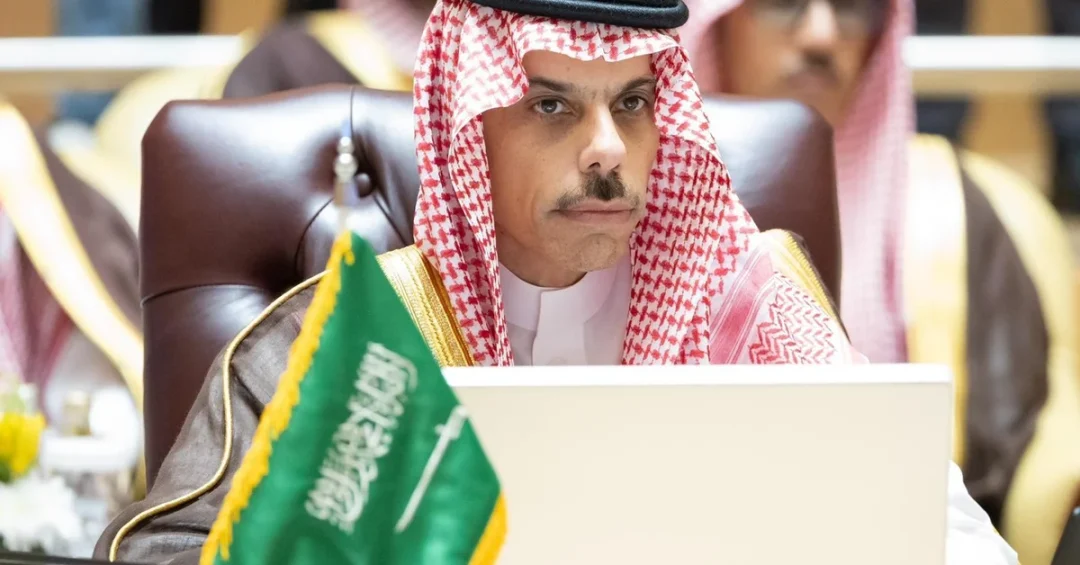
Saudi Minister of Foreign Affairs Prince Faisal bin Farhan bin Abdullah participated in the GCC-India Joint Ministerial Meeting for Strategic Dialogue in Riyadh on September 9, 2024, underscoring the Kingdom’s commitment to fostering regional and international cooperation. The meeting, held at the Gulf Cooperation Council (GCC) General Secretariat, brought together foreign ministers from GCC member states and India to discuss the joint action plan and avenues to strengthen ties between the Gulf bloc and the South Asian nation.
Context and Background
The GCC-India Strategic Dialogue, established in 2014, serves as a platform to enhance political, economic, and security cooperation between the GCC and India. India is a major trade partner for GCC countries, with bilateral trade exceeding $150 billion annually. The meeting comes amid growing global interdependence, where regional blocs like the GCC play a pivotal role in addressing shared challenges, from energy security to counterterrorism.
Saudi Arabia, as a key GCC member, has consistently advocated for dialogue and collaboration to promote stability and prosperity. The participation of Prince Faisal bin Farhan highlights the Kingdom’s active diplomacy and its Vision 2030 goals of diversifying partnerships and strengthening its global standing.
Key Details
The meeting covered a range of topics, including the joint action plan and ways to bolster cooperation between the GCC and India. Discussions also focused on reinforcing bilateral and multilateral coordination to enhance international security and peace. Attending the meeting were Vice Minister of Foreign Affairs Eng. Waleed El-Khereiji and Deputy Minister for International Multilateral Affairs and General Supervisor of the Public Diplomacy Deputyship Dr. Abdulrahman Al-Rassi.
The GCC-India Joint Ministerial Meeting for Strategic Dialogue is part of ongoing efforts to deepen ties in areas such as trade, investment, energy, technology, and people-to-people exchanges. The joint action plan aims to create a roadmap for collaboration over the next few years, focusing on mutual interests and shared goals.
Implications and Impact
This meeting carries significant implications for regional and international relations. Enhanced GCC-India cooperation can lead to increased trade and investment flows, contributing to economic growth in both regions. It also strengthens diplomatic and security coordination, which is crucial for addressing common challenges such as terrorism, maritime security, and climate change.
For Saudi Arabia, deeper engagement with India aligns with its foreign policy objectives of building strategic partnerships beyond traditional allies. India’s growing economy and its large diaspora in the Gulf make it a vital partner for the Kingdom’s economic diversification efforts under Vision 2030.
Vision 2030 Alignment
Saudi Arabia’s active participation in the GCC-India Strategic Dialogue reflects the Kingdom’s Vision 2030 objective of fostering international cooperation and economic diversification. By strengthening ties with India, Saudi Arabia aims to attract investment, boost non-oil trade, and position itself as a hub for global business and diplomacy. This meeting underscores the Kingdom’s role as a bridge between regions and its commitment to a peaceful and prosperous world.
20 Questions
Q1. What was the purpose of the GCC-India Joint Ministerial Meeting for Strategic Dialogue?
A1. The meeting aimed to discuss the joint action plan and enhance cooperation between the GCC and India across various sectors, including trade, security, and diplomacy, to foster regional and international stability.
Q2. Who represented Saudi Arabia at the meeting?
A2. Saudi Arabia was represented by Minister of Foreign Affairs Prince Faisal bin Farhan bin Abdullah, along with Vice Minister Eng. Waleed El-Khereiji and Deputy Minister Dr. Abdulrahman Al-Rassi.
Q3. Where was the meeting held?
A3. The meeting was held at the Gulf Cooperation Council General Secretariat in Riyadh, Saudi Arabia, on September 9, 2024.
Q4. What is the GCC-India Strategic Dialogue?
A4. The GCC-India Strategic Dialogue is a platform established in 2014 to enhance political, economic, and security cooperation between the Gulf Cooperation Council and India.
Q5. What topics were discussed at the meeting?
A5. Topics included the joint action plan, bolstering GCC-India cooperation, and reinforcing bilateral and multilateral coordination to enhance international security and peace.
Q6. Why is India important to the GCC?
A6. India is a major trade partner for the GCC, with bilateral trade exceeding $150 billion annually. It also has a large diaspora in the Gulf, contributing to economic and cultural ties.
Q7. How does this meeting benefit Saudi Arabia?
A7. The meeting strengthens Saudi Arabia’s diplomatic and economic ties with India, aligning with Vision 2030 goals of diversifying partnerships and attracting investment to boost non-oil sectors.
Q8. What is the joint action plan mentioned in the meeting?
A8. The joint action plan is a roadmap for collaboration between the GCC and India, focusing on mutual interests such as trade, investment, energy, technology, and people-to-people exchanges.
Q9. What is Saudi Arabia’s role in the GCC?
A9. As a founding member, Saudi Arabia plays a leading role in the GCC, advocating for regional cooperation, stability, and economic integration among member states.
Q10. How does this meeting align with Saudi Vision 2030?
A10. It supports Vision 2030 by enhancing international cooperation, diversifying the economy, and positioning Saudi Arabia as a global hub for business and diplomacy.
Q11. What are the key areas of GCC-India cooperation?
A11. Key areas include trade, investment, energy, technology, security, and cultural exchanges, all aimed at fostering mutual prosperity and regional stability.
Q12. Who attended the meeting from the GCC side?
A12. Foreign ministers from GCC member states, including Saudi Arabia, UAE, Qatar, Kuwait, Bahrain, and Oman, attended the meeting.
Q13. What is the significance of the GCC-India partnership?
A13. The partnership is significant for regional stability, economic growth, and security cooperation, as it brings together a major economic bloc and a rising global power.
Q14. How often do these meetings occur?
A14. These meetings occur periodically as part of the strategic dialogue framework, with the last one held in 2023, to review progress and set new goals.
Q15. What is Saudi Arabia’s foreign policy objective in attending?
A15. Saudi Arabia aims to strengthen multilateral ties, promote peace, and advance its economic interests through partnerships like this, in line with its Vision 2030.
Q16. How does India benefit from this dialogue?
A16. India gains enhanced access to Gulf markets, energy resources, and investment opportunities, while also strengthening security and diplomatic ties with the region.
Q17. What are the expected outcomes of the meeting?
A17. Expected outcomes include concrete steps to implement the joint action plan, increased cooperation in key sectors, and a commitment to regular consultations on regional and global issues.
Q18. What role does the GCC General Secretariat play?
A18. The GCC General Secretariat facilitates coordination among member states and organizes meetings like this to promote collective action and regional integration.
Q19. How does this meeting impact regional security?
A19. By enhancing GCC-India coordination on security matters, the meeting contributes to stability in the Gulf and broader Indian Ocean region, addressing shared threats like terrorism and piracy.
Q20. What is the future outlook for GCC-India relations?
A20. The future outlook is positive, with both sides committed to deepening ties, expanding trade, and collaborating on global challenges, promising a robust and multifaceted partnership.
Reader Feedback
We value your thoughts. Please share your feedback on this article.
Your feedback helps us improve our coverage.