


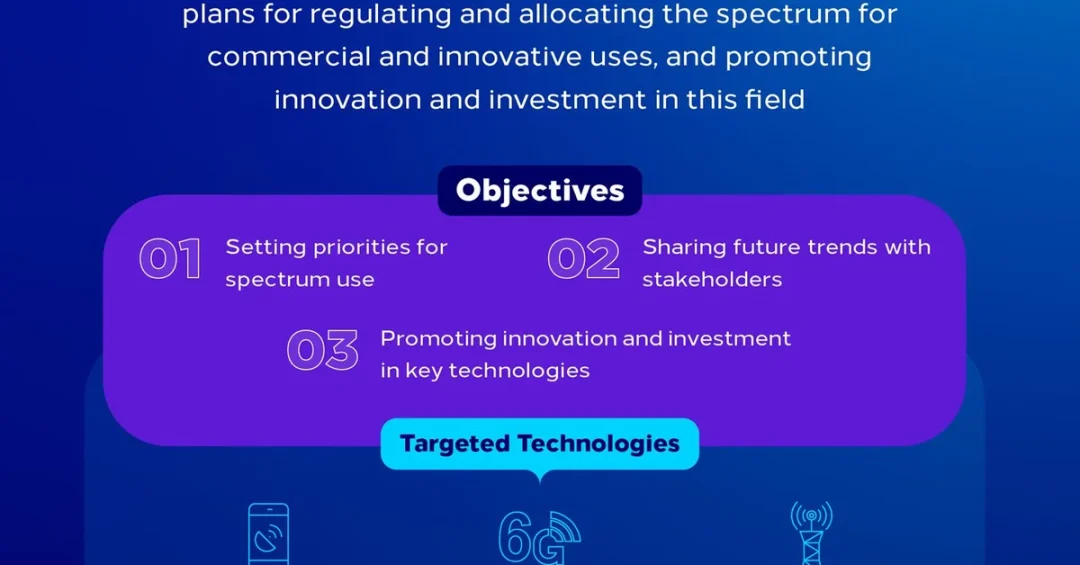
The Communications, Space, and Technology Commission (CST) has published a public consultation on its Spectrum Outlook for Commercial and Innovative Use (2024-2027), a strategic initiative designed to enable modern technologies and attract investment in advanced connectivity solutions across Saudi Arabia. Announced in Riyadh, the consultation outlines plans to make more than 30 GHz of spectrum available for commercial and innovative applications, while inviting stakeholders to provide feedback until October 7, 2024. The move underscores the Kingdom’s commitment to maintaining a transparent, forward-looking regulatory environment that supports its digital economy ambitions.
Context and Background
Saudi Arabia has long recognized that efficient spectrum management is foundational to digital transformation. In 2021, CST published its first Spectrum Outlook, which released the entire 6 GHz band for license-exempt use through a sharing model, enabling the deployment of WiFi 6E networks. This made Saudi Arabia the first country across Asia, Europe, and Africa to adopt the technology. The 2021 outlook also facilitated frequencies for Private Mobile Radio (PMR) networks in the industrial sector, supported non-terrestrial network technologies through a spectrum auction, enabled in-flight internet networks (A2G), and provided frequencies for trials of High-Altitude Platform Systems (HAPS/HIBS) to enhance communication services in remote areas. Building on that foundation, the 2024-2027 outlook seeks to further expand spectrum availability for cutting-edge applications and ensure the Kingdom remains at the forefront of global connectivity.
Key Details
According to CST, the updated outlook includes making more than 30 GHz of spectrum available for commercial and innovative uses. It also increases the spectrum capacity allocated to public telecom service providers to enhance 5G networks and Fixed Wireless Access (FWA) by releasing millimeter wave (mmWave) frequency bands. The consultation focuses on enabling technologies such as Non-Terrestrial Networks (NTN) through Direct-to-Device (D2D) satellite communication, Unmanned Aerial Vehicles (UAV-BVLOS), Advanced Air Mobility (AAM), and the Internet of Things (IoT). It also supports research on 6G networks, private networks, and the sharing of future trends with stakeholders. CST has invited the public to submit comments via its website: https://regulations.citc.gov.sa/en/Pages/PublishedPublicConsultations.aspx#/PublishedPublicConsultations. The deadline for submissions is October 7, 2024.
Implications and Impact
The availability of over 30 GHz for commercial and innovative use is poised to accelerate investment in next-generation connectivity across the Kingdom. By enabling D2D satellite communication, UAV beyond-visual-line-of-sight operations, and Advanced Air Mobility, CST is laying the regulatory groundwork for a wide range of applications, from enhanced mobile broadband in remote areas to autonomous aerial logistics. The focus on 6G research signals Saudi Arabia’s ambition to be a global leader in telecommunications innovation, while the increased capacity for 5G and FWA will improve network performance for consumers and businesses alike. This consultation also reinforces the Kingdom’s commitment to transparency and stakeholder engagement, ensuring that spectrum policy reflects the needs of industry and society. Internationally, the move positions Saudi Arabia as a proactive regulator shaping the future of spectrum use in line with global trends.
Vision 2030 Alignment
The Spectrum Outlook 2024-2027 directly supports Saudi Vision 2030 by fostering a digital economy, attracting foreign investment, and enabling smart city infrastructure. By making spectrum available for advanced technologies, CST is helping to build a robust, future-proof communications ecosystem that will underpin economic diversification and quality of life improvements. As the Kingdom continues to modernize its regulatory frameworks and embrace innovation, initiatives like this demonstrate Saudi Arabia’s leadership in shaping the digital future both regionally and globally, ensuring that the benefits of connectivity reach all corners of the nation.
20 Questions
Q1. What is the Spectrum Outlook for Commercial and Innovative Use (2024-2027)?
A1. It is a public consultation by Saudi Arabia’s Communications, Space, and Technology Commission (CST) that outlines plans to make over 30 GHz of spectrum available for advanced technologies and invites stakeholder feedback to shape future spectrum policy.
Q2. Which organization published the consultation?
A2. The Communications, Space, and Technology Commission (CST), Saudi Arabia’s regulatory authority for communications, space, and technology, published the consultation as part of its mandate to manage spectrum resources effectively.
Q3. When was the consultation published?
A3. The consultation was published in Riyadh on September 9, 2024, as announced by the Saudi Press Agency (SPA), with a comment deadline of October 7, 2024.
Q4. What is the deadline for submitting comments?
A4. The deadline for submitting comments is October 7, 2024. Stakeholders can provide feedback through CST’s official website to ensure their views are considered in the final outlook.
Q5. How much spectrum is being made available?
A5. CST is making more than 30 GHz of spectrum available for commercial and innovative uses, a significant increase that will support new technologies and enhance network capacity across Saudi Arabia.
Q6. What technologies are targeted by this outlook?
A6. The outlook targets Non-Terrestrial Networks (NTN) with Direct-to-Device (D2D) satellite communication, Unmanned Aerial Vehicles (UAV-BVLOS), Advanced Air Mobility (AAM), the Internet of Things (IoT), and research on 6G networks.
Q7. How does this consultation support 5G networks?
A7. It increases spectrum capacity for public telecom service providers by making millimeter wave (mmWave) frequency bands available, which will enhance 5G network performance and Fixed Wireless Access (FWA) services.
Q8. What was the first Spectrum Outlook and when was it published?
A8. The first Spectrum Outlook was published in 2021. It released the entire 6 GHz band for license-exempt use through a sharing model, enabling WiFi 6E deployment and making Saudi Arabia the first in Asia, Europe, and Africa to adopt the technology.
Q9. What were the achievements of the 2021 Spectrum Outlook?
A9. The 2021 outlook enabled WiFi 6E, provided frequencies for Private Mobile Radio (PMR) networks, supported non-terrestrial network technologies via auction, enabled in-flight internet (A2G), and provided frequencies for High-Altitude Platform Systems (HAPS/HIBS) trials.
Q10. How does the public benefit from this consultation?
A10. The public benefits from improved connectivity, faster internet speeds, and innovative services as spectrum is allocated to advanced technologies, ultimately enhancing digital experiences and economic opportunities across the Kingdom.
Q11. What is the role of CST in Saudi Arabia?
A11. CST regulates the communications, space, and technology sectors, manages spectrum, promotes investment, and ensures the development of a robust digital infrastructure that supports Saudi Vision 2030.
Q12. How does this outlook support research on 6G?
A12. By establishing priorities for spectrum use and sharing future trends, the outlook facilitates research and development for 6G networks, positioning Saudi Arabia as a leader in next-generation telecommunications innovation.
Q13. What are Non-Terrestrial Networks (NTN)?
A13. NTN refers to communication networks that operate beyond terrestrial infrastructure, such as satellite systems. They enable connectivity in remote areas and support Direct-to-Device (D2D) communication, enhancing coverage and resilience.
Q14. What is Direct-to-Device (D2D) satellite communication?
A14. D2D allows smartphones and other devices to connect directly to satellites, providing connectivity in areas without terrestrial networks. This technology is crucial for emergency services and remote regions.
Q15. How does Advanced Air Mobility (AAM) benefit from spectrum?
A15. AAM, which includes urban air taxis and drones, relies on reliable spectrum for communication, navigation, and surveillance. The spectrum allocation will enable safe and efficient operations of these emerging technologies.
Q16. What is the significance of millimeter wave (mmWave) bands?
A16. mmWave bands offer high bandwidth and low latency, making them ideal for 5G and Fixed Wireless Access. They support dense urban deployments and high-capacity applications, enhancing overall network performance.
Q17. How can stakeholders submit their feedback?
A17. Stakeholders can submit feedback via CST’s website at the public consultations page. The online portal provides a straightforward way to contribute to the shaping of Saudi Arabia’s spectrum policy.
Q18. What is the expected economic impact of this outlook?
A18. By enabling advanced technologies and attracting investment, the outlook aims to maximize the economic impact of spectrum use, stimulate innovation, create jobs, and contribute to the growth of Saudi Arabia’s digital economy.
Q19. How does this initiative align with Saudi Vision 2030?
A19. It supports Vision 2030 by fostering a digital economy, enhancing connectivity, attracting investment, and enabling smart cities, thereby contributing to economic diversification and improved quality of life.
Q20. What future developments can we expect from CST?
A20. CST will continue to update spectrum policies, engage stakeholders, and enable emerging technologies. This outlook is part of ongoing efforts to keep Saudi Arabia at the forefront of global telecommunications and innovation.
Reader Feedback
We value your thoughts. Please share your feedback on this article.
Your feedback helps us improve our coverage.
Related articles
 Global Talent Shines at International AI Olympiad in Riyadh
 GAIN Summit Begins in Riyadh Under HRH Crown Prince Patronage
 KAU and Oxford Launch AI Student Exchange Program
 Saudi Reserve Authority Shines at IUCN Regional Conservation Forum
 GAIN Summit Discusses AI Future and Impacts on Humanity
 Elm CEO Highlights AI’s Role for Humanity at Global Summit