


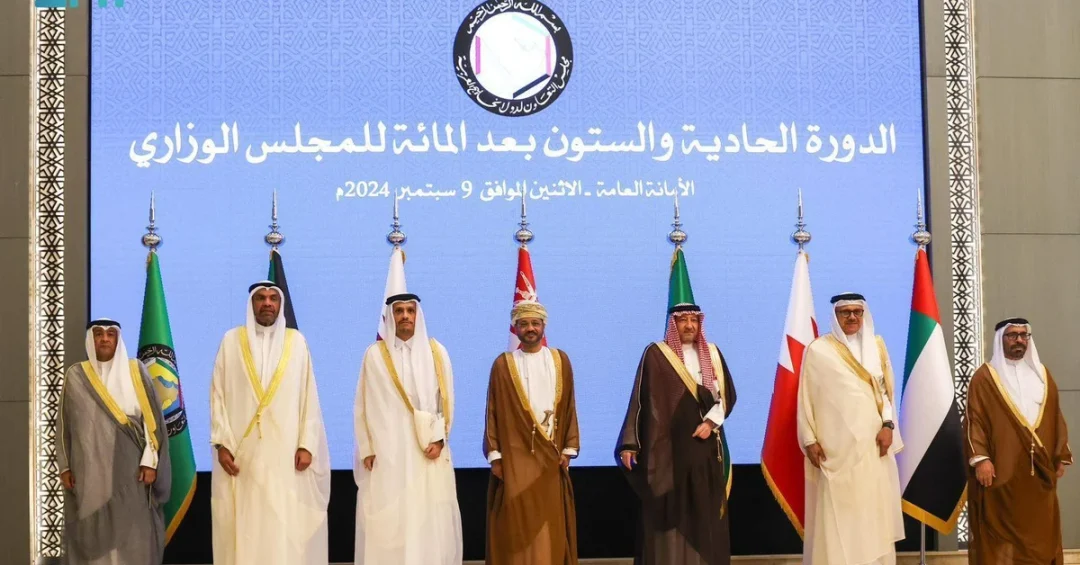
Deputizing for Minister of Foreign Affairs Prince Faisal bin Farhan bin Abdullah, Vice Minister of Foreign Affairs Eng. Waleed bin Abdulkarim El-Khereiji participated in the 161st session of the Gulf Cooperation Council (GCC) Ministerial Council Meeting in Riyadh on September 10, 2024. The meeting was chaired by Prime Minister and Minister of Foreign Affairs of the State of Qatar, Sheikh Mohammed bin Abdulrahman Al Thani, whose country holds the current GCC presidency. Discussions focused on advancing joint Gulf action and addressing the latest regional and international developments, with particular attention to the humanitarian crisis in the Gaza Strip and the city of Rafah.
Context and Background
The GCC Ministerial Council is the principal forum for foreign ministers of the six member states—Saudi Arabia, Bahrain, Kuwait, Oman, Qatar, and the United Arab Emirates—to coordinate policies on political, security, and economic issues. The 161st session comes amid heightened regional tensions and ongoing diplomatic efforts to address the conflict in Gaza. Saudi Arabia’s participation underscores its commitment to collective Gulf action and its support for regional stability. The meeting also reviewed progress on joint Gulf initiatives, including economic integration and security cooperation, as part of the GCC’s long-term strategy to enhance regional prosperity and resilience.
Key Details
During the meeting, ministers emphasized the urgent need for an immediate ceasefire in Gaza and the importance of securing relief corridors to deliver humanitarian aid to affected civilians. They discussed the critical situation in Rafah and the need for coordinated international action to alleviate the humanitarian crisis. The Saudi delegation included Dr. Abdulrahman Al-Rassi, Deputy Minister for International Multilateral Affairs and General Supervisor of the Public Diplomacy Deputyship, reflecting the Kingdom’s multifaceted approach to diplomacy that combines multilateral engagement with public outreach. The meeting concluded with a joint statement reiterating the GCC’s unified stance on regional security and humanitarian issues.
Implications and Impact
The 161st GCC Ministerial Council Meeting reinforces the Gulf’s collective diplomatic weight in addressing regional crises. By advocating for a ceasefire and humanitarian access, GCC states aim to mitigate the conflict’s impact and pave the way for a sustainable political solution. Saudi Arabia’s active role highlights its leadership in fostering Gulf unity and its broader commitment to international peace and security. The discussions also signal the GCC’s readiness to engage with global partners to address shared challenges, from security to economic development. For international observers, the meeting demonstrates the Gulf’s capacity to act as a stabilizing force in a volatile region.
Vision 2030 Alignment
Saudi Arabia’s participation in the 161st GCC Ministerial Council Meeting aligns with the Kingdom’s Vision 2030 objectives, which emphasize proactive diplomacy, regional cooperation, and global engagement. By working with Gulf neighbors to promote peace and stability, Saudi Arabia contributes to a secure environment conducive to economic diversification and social development. The meeting’s focus on humanitarian relief also reflects the Kingdom’s commitment to upholding international humanitarian principles, a key pillar of its foreign policy. As Vision 2030 progresses, Saudi Arabia will continue to leverage multilateral platforms like the GCC to advance shared interests and reinforce its role as a responsible global actor.
20 Questions
Q1. What was the 161st GCC Ministerial Council Meeting?
A1. It was a gathering of foreign ministers from the six Gulf Cooperation Council member states, held in Riyadh on September 10, 2024, to discuss regional and international issues and coordinate joint Gulf action.
Q2. Who chaired the 161st GCC Ministerial Council Meeting?
A2. The meeting was chaired by Sheikh Mohammed bin Abdulrahman Al Thani, Prime Minister and Minister of Foreign Affairs of Qatar, which holds the current GCC presidency.
Q3. Who represented Saudi Arabia at the meeting?
A3. Vice Minister of Foreign Affairs Eng. Waleed bin Abdulkarim El-Khereiji represented Saudi Arabia, deputizing for Minister of Foreign Affairs Prince Faisal bin Farhan bin Abdullah.
Q4. What were the main topics discussed?
A4. Discussions covered the progress of joint Gulf action, the latest regional and international developments, particularly in Gaza Strip and Rafah, and the urgent need for a ceasefire and humanitarian aid corridors.
Q5. Why is the Gaza Strip situation important to the GCC?
A5. The Gaza Strip situation is a humanitarian crisis affecting regional stability. The GCC seeks to promote peace and alleviate suffering through coordinated diplomatic efforts and humanitarian support.
Q6. What is the significance of the GCC Ministerial Council?
A6. The GCC Ministerial Council is the primary forum for foreign ministers of GCC states to coordinate policies on political, security, and economic issues, enhancing regional cooperation and unity.
Q7. Who else attended the meeting from the Saudi delegation?
A7. Dr. Abdulrahman Al-Rassi, Deputy Minister for International Multilateral Affairs and General Supervisor of the Public Diplomacy Deputyship, attended the meeting as part of the Saudi delegation.
Q8. What was the outcome of the meeting?
A8. The meeting concluded with a joint statement reiterating the GCC’s unified stance on regional security and humanitarian issues, emphasizing the need for a ceasefire and relief corridors in Gaza.
Q9. How does this meeting align with Saudi Vision 2030?
A9. The meeting aligns with Vision 2030 by promoting regional stability and cooperation, which are essential for economic diversification and social development in Saudi Arabia.
Q10. What role does Saudi Arabia play in the GCC?
A10. Saudi Arabia is a founding member and plays a leading role in the GCC, actively contributing to joint Gulf action and fostering unity among member states.
Q11. What are relief corridors?
A11. Relief corridors are secured routes for delivering humanitarian aid to conflict-affected areas, ensuring that essential supplies reach civilians in need without hindrance.
Q12. Why is an immediate ceasefire important?
A12. An immediate ceasefire is crucial to halt violence, protect civilians, and allow humanitarian aid to reach those affected, paving the way for a sustainable peace process.
Q13. How does the GCC address regional conflicts?
A13. The GCC addresses regional conflicts through diplomatic dialogue, collective decision-making, and coordinated efforts to promote peace, security, and stability in the region.
Q14. What is the GCC’s stance on the Gaza conflict?
A14. The GCC calls for an immediate ceasefire, the protection of civilians, and the unimpeded delivery of humanitarian aid, while supporting international efforts for a lasting solution.
Q15. How often does the GCC Ministerial Council meet?
A15. The GCC Ministerial Council meets regularly, typically several times a year, to discuss and coordinate on regional and international issues of common concern.
Q16. What are the GCC member states?
A16. The GCC member states are Saudi Arabia, Bahrain, Kuwait, Oman, Qatar, and the United Arab Emirates, all working together for regional integration and cooperation.
Q17. What is the significance of Saudi Arabia participating in this meeting?
A17. Saudi Arabia’s participation demonstrates its commitment to Gulf unity and its active role in addressing regional challenges, reinforcing its leadership in the Arab and Islamic world.
Q18. What does the meeting imply for regional stability?
A18. The meeting implies a unified Gulf approach to regional stability, with coordinated diplomatic efforts to de-escalate tensions and address humanitarian crises effectively.
Q19. How does Saudi Arabia contribute to humanitarian efforts in Gaza?
A19. Saudi Arabia contributes through diplomatic advocacy for ceasefires and aid corridors, as well as providing financial and material support to humanitarian organizations operating in Gaza.
Q20. What is the expected follow-up to the meeting?
A20. Follow-up will include continued coordination among GCC states to implement the meeting’s decisions, monitor regional developments, and engage with international partners to support peace efforts.
Reader Feedback
We value your thoughts. Please share your feedback on this article.
Your feedback helps us improve our coverage.