


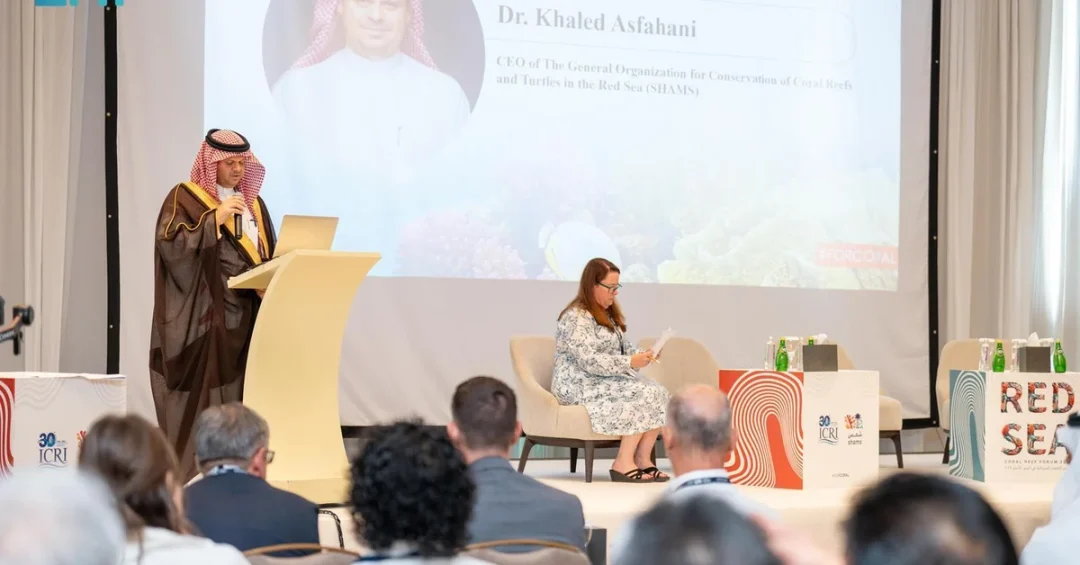
Saudi Arabia has reaffirmed its commitment to protecting coral reefs and marine ecosystems at the Red Sea Coral Reef Forum, held in Jeddah from September 9 to 13, 2024. The event, organized by the General Organization for Conservation of Coral Reefs and Turtles in the Red Sea (SHAMS), coincides with the 38th meeting of the International Coral Reef Initiative (ICRI), bringing together experts, scientists, decision-makers, and marine enthusiasts from around the world. This gathering underscores the Kingdom’s dedication to sustainable development and its growing leadership in global environmental conservation.
Context and Background
The Red Sea Coral Reef Forum serves as a critical platform for addressing the challenges facing marine environments, particularly coral reefs, which are vital to biodiversity and coastal economies. SHAMS, a Saudi organization dedicated to the conservation of coral reefs and turtles, organized the forum to raise awareness, discuss protection strategies, and foster international collaboration. The concurrent ICRI meeting highlights the global significance of the Red Sea’s ecosystems. As part of Saudi Arabia’s broader environmental efforts under Vision 2030, the forum aligns with national goals to preserve natural resources and promote sustainable development. The Kingdom’s proactive stance reflects its recognition of the Red Sea’s ecological and economic importance, both regionally and globally.
Key Details
In his opening address, Dr. Khaled Asfahani, CEO of SHAMS, emphasized the forum’s role in advancing marine conservation. “SHAMS is dedicated to safeguarding the marine environment in the Kingdom, but its ambitions extend beyond borders,” he stated, urging increased international cooperation to protect marine ecosystems worldwide. Asfahani highlighted the need for joint projects to ensure environmental sustainability, promote the blue economy, and enhance awareness about the importance of preserving marine environments. He noted that the Kingdom possesses the capability to drive initiatives that bolster the protection of the Red Sea, making it a global example in marine conservation due to visionary leadership focused on environmental protection. The forum also featured participation from a diverse group of experts, environmental scientists, decision-makers, university students, and marine environment enthusiasts, all contributing to discussions on effective protection strategies and the development of collaborative projects.
Implications and Impact
The Red Sea Coral Reef Forum and the 38th ICRI meeting underscore Saudi Arabia’s expanding role in global environmental diplomacy. By hosting these events, the Kingdom demonstrates its commitment to fostering scientific research and environmental dialogue, positioning itself as a hub for marine conservation. The outcomes of the forum are expected to influence regional and international policies on coral reef protection, particularly in the Red Sea, which is home to unique and resilient coral species. The focus on the blue economy also signals Saudi Arabia’s intent to balance economic development with ecological preservation, a key pillar of Vision 2030. Furthermore, the emphasis on international cooperation highlights the Kingdom’s willingness to share expertise and collaborate on transboundary environmental challenges, reinforcing its stature as a responsible global stakeholder.
Vision 2030 Alignment
This forum directly supports Saudi Arabia’s Vision 2030 objectives, which include environmental sustainability, economic diversification, and the development of new sectors such as tourism and marine industries. By protecting its marine ecosystems, the Kingdom ensures the longevity of its natural heritage while unlocking opportunities for sustainable tourism and research. The initiatives discussed at the forum contribute to the goals of the Saudi Green Initiative and the Middle East Green Initiative, which aim to combat climate change and preserve biodiversity. As Saudi Arabia continues to lead in environmental conservation, it reinforces its position as a global model for sustainable development, demonstrating that economic growth and ecological stewardship can go hand in hand. The Red Sea Coral Reef Forum thus represents a significant step toward a future where Saudi Arabia’s marine environments thrive for generations to come.
20 Questions
Q1. What was the main purpose of the Red Sea Coral Reef Forum?
A1. The forum aimed to raise awareness about coral reef conservation, discuss protection strategies, and foster international cooperation. It also highlighted Saudi Arabia’s commitment to marine ecosystem preservation and sustainable development, aligning with Vision 2030 goals.
Q2. Who organized the Red Sea Coral Reef Forum?
A2. The forum was organized by the General Organization for Conservation of Coral Reefs and Turtles in the Red Sea (SHAMS), a Saudi entity dedicated to marine conservation. It was held in Jeddah from September 9 to 13, 2024.
Q3. What is the significance of the 38th ICRI meeting coinciding with the forum?
A3. The 38th International Coral Reef Initiative (ICRI) meeting brought global experts together, amplifying the forum’s impact. It underscored Saudi Arabia’s role in international environmental dialogue and highlighted the Red Sea’s importance in global coral reef conservation.
Q4. What did Dr. Khaled Asfahani emphasize in his speech?
A4. Dr. Khaled Asfahani, CEO of SHAMS, emphasized the need for joint projects to ensure environmental sustainability, promote the blue economy, and enhance awareness. He also urged increased international cooperation to protect marine ecosystems worldwide.
Q5. How does the forum reflect Saudi Arabia’s environmental leadership?
A5. By hosting the forum and ICRI meeting, Saudi Arabia demonstrates its commitment to marine conservation and sustainable development. It showcases the Kingdom’s ability to drive global initiatives, reinforcing its leadership in environmental protection and natural resource preservation.
Q6. What is SHAMS and what is its mission?
A6. SHAMS is the General Organization for Conservation of Coral Reefs and Turtles in the Red Sea. Its mission is to safeguard marine environments in Saudi Arabia, with ambitions extending beyond borders to protect coral reefs and turtles through research, awareness, and collaboration.
Q7. What role does the Red Sea play in global biodiversity?
A7. The Red Sea is a biodiversity hotspot, home to unique coral species resilient to climate change. It supports diverse marine life and provides livelihoods for millions, making its conservation critical for global ecological health and sustainable development.
Q8. How does the forum promote the blue economy?
A8. The forum discusses developing joint projects that balance economic growth with marine conservation. This includes sustainable tourism, fisheries, and research, aiming to harness the Red Sea’s resources responsibly while preserving its ecosystems for future generations.
Q9. What are the expected outcomes of the forum?
A9. The forum is expected to enhance international cooperation, influence policies on coral reef protection, and promote scientific research. It also aims to strengthen Saudi Arabia’s position as a global hub for environmental dialogue and sustainable development.
Q10. How does the forum align with Saudi Vision 2030?
A10. The forum supports Vision 2030’s goals of environmental sustainability, economic diversification, and quality of life improvements. It contributes to the Saudi Green Initiative and enhances the Kingdom’s global role in conservation, aligning with its long-term development strategy.
Q11. Who participated in the forum?
A11. Participants included experts, environmental scientists, decision-makers, university students, and marine environment enthusiasts. Their diverse perspectives enriched discussions on coral reef protection and sustainable practices, fostering collaborative solutions.
Q12. What challenges do Red Sea coral reefs face?
A12. Red Sea coral reefs face threats from climate change, pollution, overfishing, and coastal development. The forum addressed these issues by discussing effective protection strategies and promoting joint projects to mitigate impacts and ensure long-term resilience.
Q13. How is Saudi Arabia preserving its natural heritage?
A13. Saudi Arabia preserves its natural heritage through initiatives like SHAMS, the Saudi Green Initiative, and participating in global forums. These efforts aim to protect biodiversity, promote sustainability, and ensure that future generations enjoy the Kingdom’s natural wealth.
Q14. What is the significance of the Red Sea to Saudi Arabia’s economy?
A14. The Red Sea is vital for Saudi Arabia’s economy, supporting tourism, fisheries, and maritime trade. Its conservation is essential for sustainable economic growth, particularly under Vision 2030, which seeks to diversify revenue and develop new sectors.
Q15. How does the forum encourage international cooperation?
A15. The forum facilitates dialogue among global experts and stakeholders, fostering partnerships and joint projects. It underscores the need for collective action to protect marine ecosystems, with Saudi Arabia positioning itself as a collaborative leader in environmental conservation.
Q16. What is the blue economy and why is it important?
A16. The blue economy refers to sustainable use of ocean resources for economic growth while preserving ecosystem health. It is important for Saudi Arabia as it balances development with conservation, supporting Vision 2030’s goals of economic diversification and environmental sustainability.
Q17. How does SHAMS engage with local communities?
A17. SHAMS engages local communities through awareness campaigns, educational programs, and volunteer initiatives. By involving residents in conservation efforts, it fosters a sense of stewardship and ensures that marine protection benefits are shared widely across society.
Q18. What scientific research is being conducted on Red Sea coral reefs?
A18. Research focuses on coral resilience, biodiversity, and climate adaptation. Scientists study the Red Sea’s unique corals to understand their survival mechanisms, which can inform global conservation strategies and support the development of marine protected areas.
Q19. How can individuals contribute to marine conservation?
A19. Individuals can reduce plastic use, support sustainable seafood, volunteer for clean-ups, and participate in educational programs. Raising awareness and advocating for policy changes also help protect marine ecosystems, contributing to broader conservation efforts.
Q20. What is the long-term vision for the Red Sea’s coral reefs?
A20. The long-term vision is to ensure thriving, resilient coral reefs that support biodiversity and sustainable livelihoods. Through initiatives like SHAMS and Vision 2030, Saudi Arabia aims to set a global example in marine conservation, preserving the Red Sea for future generations.
Reader Feedback
We value your thoughts. Please share your feedback on this article.
Your feedback helps us improve our coverage.