


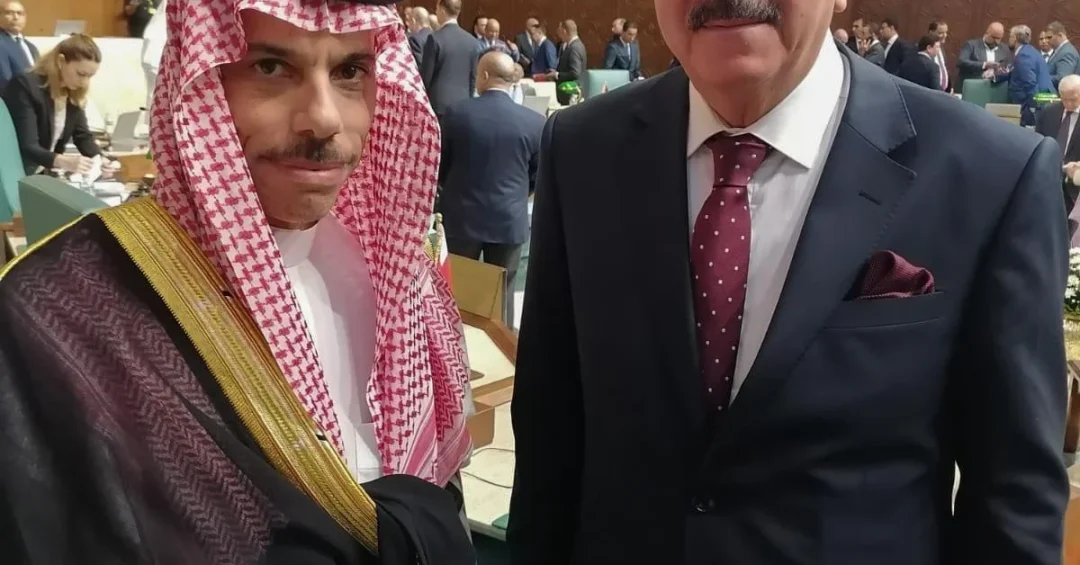
Saudi Minister of Foreign Affairs Prince Faisal bin Farhan bin Abdullah met with Tunisian Foreign Minister Mohamed Nafti on Tuesday in Cairo to discuss bilateral relations and regional and international issues of mutual interest. The meeting took place on the sidelines of the 162nd session of the Arab Ministerial Meeting, according to the Saudi Press Agency. The two top diplomats explored ways to strengthen cooperation across various fields, reaffirming the deep historical bonds between the Kingdom of Saudi Arabia and the Republic of Tunisia.
Context and Background
The encounter underscores Saudi Arabia’s continued commitment to active diplomacy and Arab unity. The 162nd session of the Arab Ministerial Meeting brings together foreign ministers from across the Arab world to address pressing regional challenges, including political stability, economic cooperation, and humanitarian issues. This year’s gathering follows a series of high-level Saudi diplomatic engagements aimed at fostering consensus and promoting sustainable development in the region.
Saudi-Tunisian relations date back decades, built on mutual respect and shared Arab identity. Tunisia, with its rich history and strategic Mediterranean location, remains a key partner for the Kingdom in North Africa. Both nations have consistently supported each other in international forums, and their collaboration extends to trade, investment, culture, and education.
Key Details
During the meeting, Prince Faisal and Minister Nafti reviewed the strong fraternal ties between their countries and exchanged views on the latest regional and international developments. They emphasized the importance of joint Arab action to address common challenges and seize opportunities for growth. The discussions also touched on enhancing economic and cultural exchanges, with a focus on areas such as renewable energy, technology, and tourism.
The Saudi foreign minister reiterated the Kingdom’s support for Tunisia’s stability and prosperity, aligning with Saudi Arabia’s broader vision of a secure and thriving Arab world. The Tunisian foreign minister expressed appreciation for Saudi Arabia’s leadership and its efforts to promote peace and cooperation in the region.
Implications and Impact
This meeting reflects Saudi Arabia’s proactive role in shaping a unified Arab stance on critical issues. By engaging with Tunisia, the Kingdom reinforces its diplomatic bridges across the Arab world, which is essential for addressing shared security concerns, economic diversification, and social development. Such high-level dialogues also pave the way for concrete collaborations that benefit both peoples.
On the international stage, the Saudi-Tunisian partnership contributes to stabilizing the Mediterranean region and beyond. It signals a commitment to multilateralism and peaceful resolution of conflicts, principles that Saudi Arabia consistently champions. Moreover, this diplomacy supports the flow of investments and knowledge, which are vital for post-pandemic recovery and long-term resilience.
Vision 2030 Alignment
Saudi Arabia’s diplomatic efforts, including this meeting with Tunisia, are integral to achieving the goals of Vision 2030. The Kingdom’s vision emphasizes international cooperation, economic diversification, and cultural exchange as pillars of a vibrant society and a thriving economy. Strengthening ties with Arab nations like Tunisia enhances trade routes, opens new markets for Saudi non-oil exports, and fosters people-to-people connections that enrich both societies.
As Saudi Arabia continues to modernize and open up to the world, such partnerships demonstrate its leadership in fostering a stable and prosperous region. The meeting between Prince Faisal and Minister Nafti is a testament to the Kingdom’s unwavering dedication to Arab solidarity and its role as a global bridge-builder.
20 Questions
Q1. Who represented Saudi Arabia at the meeting?
A1. Saudi Minister of Foreign Affairs Prince Faisal bin Farhan bin Abdullah represented the Kingdom at the meeting.
Q2. Who represented Tunisia?
A2. Tunisian Foreign Minister Mohamed Nafti represented the Republic of Tunisia.
Q3. Where did the meeting take place?
A3. The meeting took place in Cairo, Egypt, on the sidelines of the 162nd session of the Arab Ministerial Meeting.
Q4. When did the meeting occur?
A4. The meeting occurred on Tuesday, September 10, 2024, according to the Saudi Press Agency.
Q5. What was the main purpose of the meeting?
A5. The main purpose was to discuss bilateral ties and regional and international issues of common interest.
Q6. What event provided the backdrop for this meeting?
A6. The 162nd session of the Arab Ministerial Meeting served as the backdrop.
Q7. What is the significance of Saudi-Tunisian relations?
A7. Saudi-Tunisian relations are built on decades of mutual respect, shared Arab identity, and cooperation in various fields.
Q8. How does this meeting align with Saudi foreign policy?
A8. It aligns with Saudi Arabia’s commitment to Arab unity, peace, and active diplomacy in the region.
Q9. What topics were discussed beyond bilateral ties?
A9. They discussed regional and international developments, joint Arab action, and areas like renewable energy, technology, and tourism.
Q10. Did the meeting address economic cooperation?
A10. Yes, they explored enhancing economic and cultural exchanges and investment opportunities.
Q11. What did Prince Faisal express regarding Tunisia?
A11. He expressed Saudi Arabia’s support for Tunisia’s stability and prosperity.
Q12. How did Minister Nafti respond?
A12. He appreciated Saudi Arabia’s leadership and efforts to promote regional peace and cooperation.
Q13. What is the broader context of this meeting?
A13. It is part of Saudi Arabia’s ongoing diplomatic efforts to foster consensus and sustainable development in the Arab world.
Q14. What are the implications for Arab unity?
A14. The meeting reinforces a unified Arab stance on critical issues and strengthens diplomatic bridges.
Q15. How does this meeting impact international relations?
A15. It contributes to stability in the Mediterranean and promotes multilateralism and peaceful conflict resolution.
Q16. What role does Vision 2030 play in such diplomacy?
A16. Vision 2030 emphasizes international cooperation, economic diversification, and cultural exchange as key pillars.
Q17. What economic benefits could arise from this meeting?
A17. It could enhance trade routes, open new markets for Saudi non-oil exports, and attract investments.
Q18. How does this meeting reflect Saudi Arabia’s global role?
A18. It demonstrates Saudi Arabia’s leadership as a bridge-builder and advocate for Arab solidarity.
Q19. Were any agreements signed during the meeting?
A19. No specific agreements were announced, but discussions focused on strengthening cooperation.
Q20. What is the next step for Saudi-Tunisian relations?
A20. Both nations will continue high-level dialogues and explore concrete collaborations for mutual benefit.
Reader Feedback
We value your thoughts. Please share your feedback on this article.
Your feedback helps us improve our coverage.