


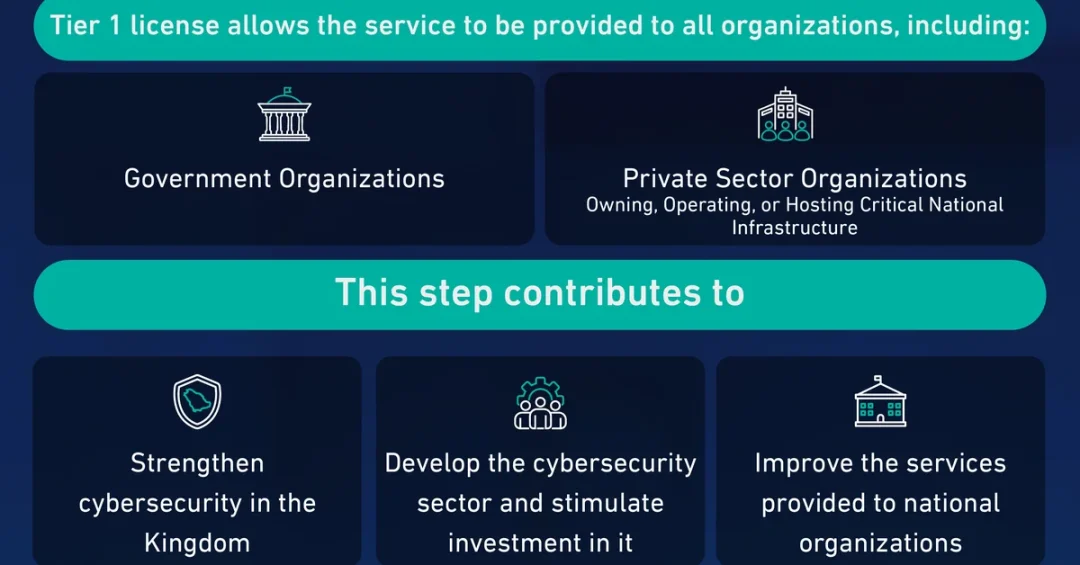
Riyadh, March 16, 2025 — The National Cybersecurity Authority (NCA) has announced the first group of companies to receive Tier 1 licenses to provide Managed Security Operations Center (MSOC) services in Saudi Arabia. The licenses, granted to SITE, sirar by stc, Haboob, Cyberani by Aramco Digital, TCC, and SAMI-AEC, authorize these providers to deliver comprehensive MSOC services to all organizations, including government and private sector entities that own, operate, or host Critical National Infrastructure (CNI). This milestone supports the NCA’s strategic goal of building a robust national cybersecurity sector, stimulating investment, and enhancing the protection of the Kingdom’s vital interests.
Context and Background
The licensing phase follows the NCA’s issuance of the “Regulatory Framework for Licensing Managed Security Operations Center Services” and the “National Policy for Managed Security Operations Centers.” These policies mandate that government and private sector organizations responsible for Critical National Infrastructure conduct their Security Operations Center (SOC) activities through a Tier 1 licensed MSOC provider. The NCA, as the national entity in charge of cybersecurity, aims to strengthen the Kingdom’s cybersecurity posture to safeguard national security, critical infrastructure, priority sectors, and government services.
Key Details
The Tier 1 licenses were awarded to six prominent companies: SITE, sirar by stc, Haboob, Cyberani by Aramco Digital, TCC, and SAMI-AEC. These providers are now authorized to offer MSOC services that help organizations detect cyber threats, respond to incidents, and receive recommendations on mitigating risks. The NCA emphasized that this step is part of its ongoing efforts to stimulate the growth of the cybersecurity sector, foster innovation, and encourage investment. The licensing framework ensures that CNI organizations receive high-quality, standardized security operations services from approved providers.
Implications and Impact
This development is expected to significantly enhance the Kingdom’s cybersecurity resilience by centralizing and professionalizing security operations for critical infrastructure. It also creates new opportunities for investment and growth in the cybersecurity sector, positioning Saudi Arabia as a regional leader in digital security. For international audiences, this move demonstrates Saudi Arabia’s commitment to protecting its digital economy and ensuring a secure environment for business and government operations. The licensed providers will play a crucial role in defending against evolving cyber threats, thereby supporting the reliability of essential services.
Vision 2030 Alignment
This initiative aligns directly with Saudi Vision 2030’s objectives of diversifying the economy, fostering innovation, and developing a advanced digital infrastructure. By building a strong cybersecurity sector, the Kingdom not only protects its critical assets but also creates a conducive environment for technology-driven growth and investment. The NCA’s efforts underscore Saudi Arabia’s resolve to lead in cybersecurity and to contribute to a safe and prosperous digital future, reinforcing its global role as a responsible and forward-looking nation.
20 Questions
Q1. What did the National Cybersecurity Authority announce?
A1. The NCA announced the companies that obtained Tier 1 licenses to provide Managed Security Operations Center (MSOC) services in Saudi Arabia.
Q2. Which companies received Tier 1 MSOC licenses?
A2. The licensed companies are SITE, sirar by stc, Haboob, Cyberani by Aramco Digital, TCC, and SAMI-AEC.
Q3. What services can Tier 1 licensed providers offer?
A3. They can offer comprehensive MSOC services to all organizations, including government and private sector entities that own, operate, or host Critical National Infrastructure.
Q4. What is the purpose of these licenses?
A4. The licenses aim to strengthen national cybersecurity by allowing providers to detect threats, respond to incidents, and offer mitigation recommendations.
Q5. What is the National Cybersecurity Authority?
A5. The NCA is the national entity in charge of cybersecurity in Saudi Arabia and serves as the national reference in all cybersecurity affairs.
Q6. What are the strategic goals of the NCA?
A6. The NCA aims to enhance the Kingdom’s cybersecurity posture, safeguard vital interests, stimulate the cybersecurity sector, and foster innovation and investment.
Q7. What policies preceded this licensing phase?
A7. The licensing follows the “Regulatory Framework for Licensing Managed Security Operations Center Services” and the “National Policy for Managed Security Operations Centers.”
Q8. Who must use Tier 1 licensed MSOC providers?
A8. Government and private sector organizations that own, operate, or host Critical National Infrastructure are mandated to use Tier 1 licensed MSOC providers.
Q9. What is Critical National Infrastructure?
A9. CNI refers to assets, systems, and networks essential for the functioning of society and the economy, such as energy, finance, and healthcare.
Q10. How does this benefit Saudi Arabia’s cybersecurity?
A10. It centralizes and professionalizes security operations, enhancing the protection of critical infrastructure and improving national resilience against cyber threats.
Q11. What economic impact does this have?
A11. It stimulates investment in the cybersecurity sector, creates jobs, and supports the growth of local cybersecurity companies.
Q12. How does this align with Vision 2030?
A12. It supports economic diversification, innovation, and the development of a secure digital infrastructure, key pillars of Vision 2030.
Q13. What is a Managed Security Operations Center?
A13. An MSOC is a service that monitors, detects, and responds to cybersecurity threats on behalf of organizations.
Q14. Why is Tier 1 licensing important?
A14. Tier 1 licensing ensures that providers meet high standards and can handle the security needs of critical infrastructure effectively.
Q15. What role does the private sector play?
A15. Private sector companies are licensed to provide MSOC services, contributing to a vibrant and competitive cybersecurity market.
Q16. How will this affect government organizations?
A16. Government organizations will benefit from enhanced protection and standardized security operations provided by licensed MSOC providers.
Q17. What is the expected timeline for implementation?
A17. The NCA has not specified a timeline, but organizations are expected to comply with the mandate as part of ongoing cybersecurity reforms.
Q18. What other initiatives has the NCA undertaken?
A18. The NCA has launched various initiatives to boost cybersecurity, including awareness campaigns, training programs, and regulatory frameworks.
Q19. How does this impact international investors?
A19. It signals a secure and stable digital environment, making Saudi Arabia an attractive destination for technology and cybersecurity investments.
Q20. What is the significance of this announcement?
A20. It marks a major step in Saudi Arabia’s journey to become a global leader in cybersecurity, ensuring the protection of its digital assets and infrastructure.
Reader Feedback
We value your thoughts. Please share your feedback on this article.
Your feedback helps us improve our coverage.
Related articles
 Saudi Ministry Hosts Ramadan Iftar in Indonesia
 KSrelief Delivers Ramadan Food Aid to Montenegro
 KSrelief Distributes Ramadan Food Baskets in Romania
 SPA News Academy to Host Freelance Media Meeting
 KSrelief Distributes Food Baskets to Refugees in Lebanon
 CST Teams Continue Field Efforts in the Two Holy Mosques