


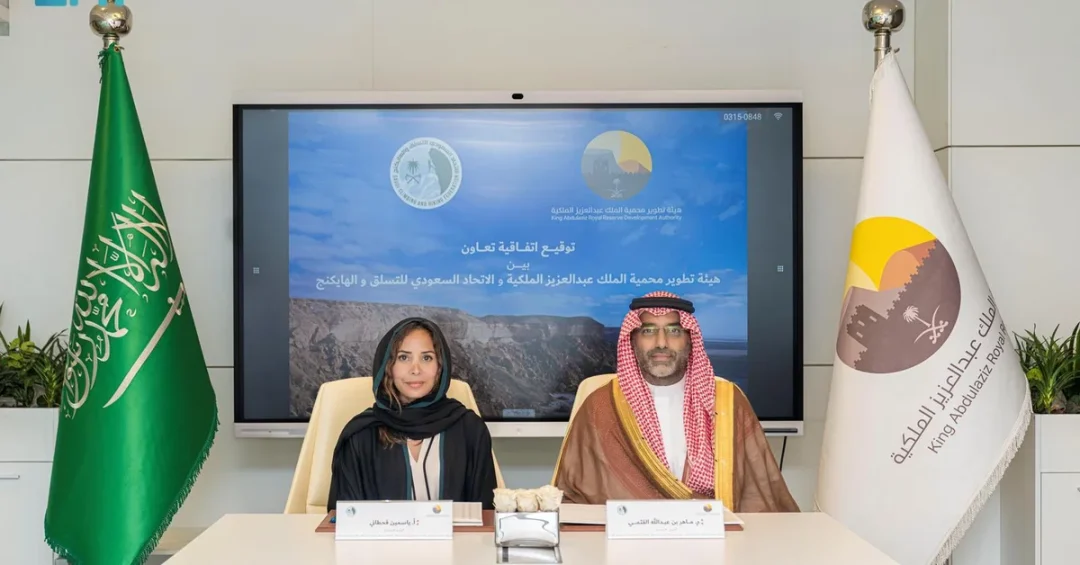
The King Abdulaziz Royal Reserve Development Authority (KARDA) signed a cooperation agreement with the Saudi Climbing and Hiking Federation (SCHF) on September 18, 2024, in Riyadh, as reported by the Saudi Press Agency (SPA). The agreement aims to enhance collaboration in organizing hiking programs and create new opportunities for citizens, residents, and visitors to engage in sports activities within the reserve. This initiative supports Saudi Vision 2030 goals by promoting sports tourism, improving quality of life, and empowering women in sports.
Context and Background
The King Abdulaziz Royal Reserve, one of Saudi Arabia’s largest nature reserves, is dedicated to conserving biodiversity and promoting sustainable development. The Saudi Climbing and Hiking Federation, operating under the Ministry of Sports, is responsible for developing and regulating climbing and hiking activities across the Kingdom. This partnership aligns with the Kingdom’s efforts to diversify recreational offerings and boost eco-tourism. The agreement reflects the broader strategy to utilize natural reserves for community engagement and economic diversification, in line with Vision 2030.
Key Details
Under the agreement, KARDA and SCHF will collaborate to organize various hiking programs within the reserve, providing new opportunities for sports participation. The initiatives are designed to enhance the quality of life for individuals and families, diversify economic activities, empower women’s involvement, and promote their leadership roles in this sport. The agreement also aims to create an inviting environment for citizens, residents, and visitors to engage in outdoor activities. This cooperation is part of a larger effort to develop sports tourism and support the strategic objectives of royal reserves. The signing ceremony took place in Riyadh, highlighting the commitment of both entities to advance recreational and tourism opportunities.
Implications and Impact
This agreement is expected to have significant implications for sports tourism in Saudi Arabia, attracting both domestic and international visitors to the reserve. By offering organized hiking and climbing activities, it will promote physical well-being and foster a deeper appreciation for the Kingdom’s natural heritage. The focus on empowering women aligns with broader societal reforms under Vision 2030, encouraging greater female participation in sports and leadership. Economically, the initiative will create opportunities for local businesses, guide services, and hospitality, contributing to job creation and economic diversification. Regionally, it sets a precedent for integrating natural reserves into the sports and tourism sectors, potentially inspiring similar collaborations.
Vision 2030 Alignment
This cooperation directly supports Saudi Vision 2030 by advancing sports tourism, enhancing quality of life, and promoting women’s empowerment. It underscores the Kingdom’s commitment to sustainable development and the optimal use of natural resources for public benefit. By creating new recreational opportunities, the agreement contributes to a vibrant society and a thriving economy, key pillars of Vision 2030. As Saudi Arabia continues to open up and diversify, such partnerships will play a vital role in showcasing the Kingdom’s natural beauty and cultural heritage to the world.
20 Questions
Q1. What is the King Abdulaziz Royal Reserve Development Authority?
A1. The King Abdulaziz Royal Reserve Development Authority is a Saudi government entity responsible for managing and developing the King Abdulaziz Royal Reserve, one of the Kingdom’s largest nature reserves, focusing on conservation and sustainable development.
Q2. What is the Saudi Climbing and Hiking Federation?
A2. The Saudi Climbing and Hiking Federation is a sports organization under the Ministry of Sports that promotes and regulates climbing and hiking activities across Saudi Arabia, aiming to develop these sports and increase public participation.
Q3. When and where was the cooperation agreement signed?
A3. The cooperation agreement was signed on September 18, 2024, in Riyadh, as reported by the Saudi Press Agency. The signing ceremony marked a significant step in enhancing sports and recreational activities within the reserve.
Q4. What are the main objectives of the agreement?
A4. The agreement aims to strengthen collaboration in organizing hiking programs, create new sports opportunities for citizens, residents, and visitors, enhance quality of life, diversify economic activities, and empower women in sports within the reserve.
Q5. How does the agreement support Saudi Vision 2030?
A5. It supports Vision 2030 by advancing sports tourism, improving quality of life, empowering women, and promoting sustainable development, aligning with the goals of a vibrant society and a thriving economy.
Q6. What activities will be organized under this agreement?
A6. The agreement will facilitate various hiking and climbing programs, outdoor activities, and events designed to engage the community and promote sports tourism within the King Abdulaziz Royal Reserve.
Q7. Who benefits from this agreement?
A7. Citizens, residents, and visitors to the reserve will benefit from new recreational opportunities. Additionally, local businesses and the tourism sector will gain from increased activity and job creation.
Q8. How does the agreement empower women?
A8. The agreement includes initiatives to promote women’s involvement and leadership roles in hiking and climbing, supporting gender inclusion and empowerment in sports, in line with Vision 2030 reforms.
Q9. What is the significance of the King Abdulaziz Royal Reserve?
A9. The reserve is one of Saudi Arabia’s largest protected areas, known for its biodiversity and natural landscapes. It plays a key role in conservation and sustainable development, and now in sports tourism.
Q10. How will the agreement impact local communities?
A10. It will create economic opportunities through increased tourism, support local businesses, and provide healthy recreational activities for families, enhancing community well-being and cohesion.
Q11. What role does the Ministry of Sports play?
A11. The Ministry of Sports oversees the Saudi Climbing and Hiking Federation, ensuring that the agreement aligns with national sports development strategies and Vision 2030 objectives.
Q12. Will there be any infrastructure developments?
A12. The agreement focuses on organizing programs and creating an enabling environment. Specific infrastructure developments may follow to support hiking trails and facilities, as part of the reserve’s development plans.
Q13. How does this agreement promote sports tourism?
A13. By offering organized hiking and climbing activities in a unique natural setting, it attracts tourists interested in adventure and eco-tourism, thereby boosting the Kingdom’s sports tourism sector.
Q14. What economic diversification does this bring?
A14. It diversifies economic activities by generating revenue from tourism, creating jobs in hospitality and guiding services, and supporting local enterprises, reducing reliance on oil.
Q15. Are there any environmental considerations?
A15. Yes, the agreement emphasizes sustainable practices to preserve the reserve’s biodiversity and natural heritage, ensuring that activities are environmentally responsible.
Q16. How can the public participate in these programs?
A16. The public can participate by registering for programs announced by the authority and federation. Information will be available through their official channels and social media.
Q17. What is the expected timeline for implementation?
A17. Implementation will begin following the signing, with programs rolled out gradually. Specific timelines will be announced by the authority and federation as plans progress.
Q18. Does this agreement have international implications?
A18. Yes, it positions Saudi Arabia as a destination for adventure tourism, attracting international visitors and showcasing the Kingdom’s natural beauty and commitment to sustainable development.
Q19. How does this align with other royal reserve initiatives?
A19. It complements other efforts to develop royal reserves for tourism and recreation, integrating them into the national strategy for economic diversification and environmental conservation.
Q20. What is the long-term vision for this partnership?
A20. The long-term vision is to establish the reserve as a premier destination for hiking and climbing, contributing to Saudi Arabia’s tourism goals, community well-being, and Vision 2030 objectives.
Reader Feedback
We value your thoughts. Please share your feedback on this article.
Your feedback helps us improve our coverage.
Related articles
 Saudi Triathlon Federation Hosts National Day Aquathlon in Khobar
 Deputy Governor of Jazan Receives Saudi Games Torch
 Boxers Shine in Public Workout Ahead of Riyadh Season Card – Wembley Edition
 Al-Jouf Equestrian Square: 37-Year Legacy of Excellence
 PFL MENA Semi-Finals Ignite Riyadh’s Boulevard City
 Joshua, Dubois Ready for Riyadh Season Card at Wembley