


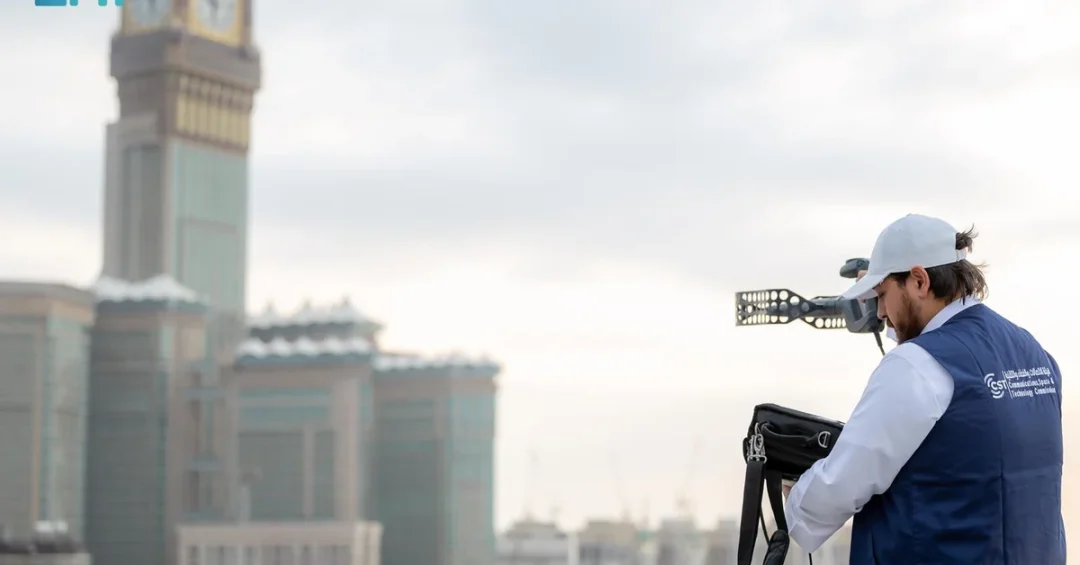
The Communications and Space Technology Commission (CST) is continuing its field operations in the Two Holy Mosques to ensure uninterrupted service quality, facilitate visitors’ digital experiences, and uphold the Kingdom’s commitment to serving Umrah performers. According to the Saudi Press Agency (SPA), CST teams began their duties in Makkah and Madinah ahead of Ramadan and remain stationed at King Abdulaziz International Airport in Jeddah and Prince Mohammed bin Abdulaziz International Airport in Madinah. Their responsibilities include monitoring telecommunications service providers’ sales outlets and evaluating network performance and coverage at every stage of a visitor’s digital journey.
Context and Background
The Two Holy Mosques in Makkah and Madinah welcome millions of pilgrims annually, with numbers significantly increasing during Ramadan. Reliable telecommunications and digital services are essential for managing this influx, enabling pilgrims to stay connected, access information, and navigate their spiritual journey smoothly. The CST, as the Kingdom’s regulatory authority for communications and space technology, plays a critical role in ensuring that service providers meet the highest standards of quality and coverage. This initiative aligns with Saudi Arabia’s broader efforts to enhance the pilgrimage experience through technology and infrastructure development.
Key Details
CST’s field operations involve several key activities. Teams are deployed at major entry points, including King Abdulaziz International Airport in Jeddah and Prince Mohammed bin Abdulaziz International Airport in Madinah, to monitor service providers’ sales outlets and ensure compliance with regulations. They also assess network performance and coverage across all stages of a visitor’s digital journey, from arrival to departure. To maintain high service standards, CST employs mobile spectrum monitoring stations within the Two Holy Mosques to detect and analyze radio signals, identifying any unauthorized usage or interference that could impact wireless communication quality. This proactive approach helps prevent disruptions and ensures a seamless digital experience for pilgrims.
Implications and Impact
The continuous monitoring and evaluation by CST have significant implications for the millions of pilgrims visiting the Two Holy Mosques. By ensuring robust telecommunications services, the Kingdom enhances the overall pilgrimage experience, allowing visitors to focus on their spiritual activities without technological hindrances. This also supports the safety and security of pilgrims by enabling efficient communication among emergency services and authorities. Furthermore, the initiative demonstrates Saudi Arabia’s commitment to leveraging advanced technology for the benefit of humanity, reinforcing its position as a global leader in serving pilgrims and managing large-scale events.
Vision 2030 Alignment
This effort is closely aligned with Saudi Vision 2030, which aims to transform the Kingdom into a global hub for technology and innovation while enhancing the quality of life for citizens and visitors. By investing in cutting-edge telecommunications infrastructure and ensuring its reliability during peak periods, Saudi Arabia is not only improving the pilgrimage experience but also showcasing its capability to host millions of visitors seamlessly. The CST’s work contributes to the Vision’s objectives of economic diversification and public service excellence, further solidifying the Kingdom’s role as a leader in digital transformation and hospitality.
20 Questions
Q1. What is the Communications and Space Technology Commission (CST)?
A1. The CST is Saudi Arabia’s regulatory authority for communications and space technology, ensuring high-quality services and fostering innovation in the sector.
Q2. Why are CST teams stationed in the Two Holy Mosques?
A2. They are there to ensure uninterrupted telecommunications service quality and facilitate visitors’ digital experiences during their pilgrimage.
Q3. When did CST teams begin their duties?
A3. They began ahead of Ramadan and remain stationed throughout the holy month to manage increased demand.
Q4. Where are CST teams primarily located?
A4. In Makkah and Madinah, as well as at King Abdulaziz International Airport in Jeddah and Prince Mohammed bin Abdulaziz International Airport in Madinah.
Q5. What are the main responsibilities of CST teams?
A5. They monitor telecom service providers’ sales outlets and evaluate network performance and coverage at every stage of a visitor’s digital journey.
Q6. How does CST monitor radio signals in the Two Holy Mosques?
A6. They use mobile spectrum monitoring stations to detect and analyze radio signals, identifying unauthorized usage or interference.
Q7. Why is it important to detect unauthorized radio usage?
A7. Unauthorized usage can interfere with wireless communication, degrading service quality for pilgrims and emergency services.
Q8. How does this initiative benefit pilgrims?
A8. It ensures reliable connectivity, enabling pilgrims to stay in touch with family, access information, and navigate easily.
Q9. What role does the Saudi Press Agency play in this news?
A9. The Saudi Press Agency (SPA) is the official source that reported on CST’s ongoing field efforts.
Q10. How does this align with Saudi Vision 2030?
A10. It supports Vision 2030’s goals of enhancing quality of life, leveraging technology, and positioning Saudi Arabia as a global leader.
Q11. What is the significance of the Two Holy Mosques in Islam?
A11. They are the holiest sites in Islam, attracting millions of pilgrims annually for Hajj and Umrah.
Q12. How does Ramadan affect the number of visitors?
A12. Ramadan sees a significant surge in pilgrims performing Umrah, increasing demand for services.
Q13. What technologies are used by CST for monitoring?
A13. Mobile spectrum monitoring stations are deployed to analyze radio signals and ensure compliance.
Q14. What happens if interference is detected?
A14. CST identifies the source and takes corrective action to eliminate interference, ensuring optimal service.
Q15. How does this initiative reflect Saudi Arabia’s commitment to pilgrims?
A15. It demonstrates the Kingdom’s dedication to providing a seamless and spiritually fulfilling experience for all visitors.
Q16. Are there similar efforts in other parts of Saudi Arabia?
A16. CST conducts field operations nationwide to ensure telecom service quality, especially during major events.
Q17. How can pilgrims access help if they face connectivity issues?
A17. They can contact their service provider or report issues to CST through official channels.
Q18. What impact does this have on Saudi Arabia’s international image?
A18. It showcases the Kingdom’s technological capabilities and its ability to host millions of visitors efficiently.
Q19. Does CST collaborate with telecom providers?
A19. Yes, CST works closely with providers to ensure compliance and enhance service quality.
Q20. What is the long-term goal of these efforts?
A20. To sustain world-class telecommunications services in the Two Holy Mosques, supporting Vision 2030 and beyond.
Reader Feedback
We value your thoughts. Please share your feedback on this article.
Your feedback helps us improve our coverage.
Related articles
 TGA Seizes Three Foreign Trucks, Fines SAR10,000 Each
 IsDB Approves Reactivation of Syria’s Membership
 KSrelief Distributes 1,390 Food Baskets in Somalia
 KSrelief Distributes 700 Food Baskets in Djibouti
 KSrelief Distributes 400 Food Baskets in South Africa
 KSrelief Distributes 613 Food Baskets in Nigeria