


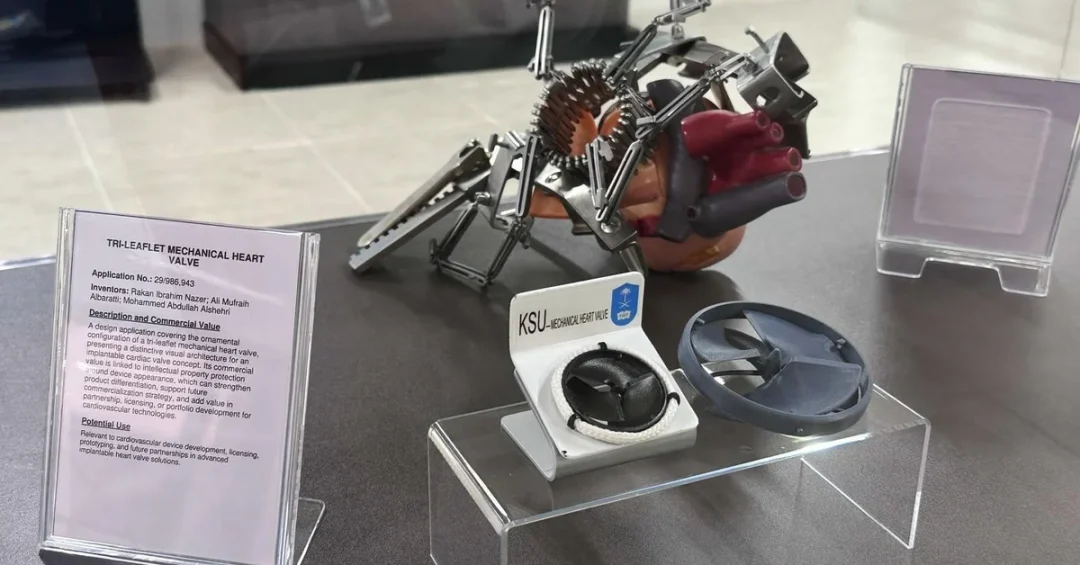
King Saud University has been granted a U.S. patent for a tri-leaflet mechanical heart valve developed by Professor of Cardiac Sciences at the College of Medicine, Dr. Rakan bin Ibrahim Nazer, according to the Saudi Press Agency (SPA). The patent recognizes a novel mechanical design that aims to improve blood-flow dynamics and reduce regurgitation in patients requiring heart valve replacement. The announcement, reported by SPA, underscores the university’s expanding role in medical innovation and Saudi Arabia’s broader push to advance healthcare technology under Vision 2030.
Context and Background
Mechanical heart valves are critical for patients with severe valvular heart disease, but conventional designs can pose risks such as blood clotting and imperfect flow. The newly patented tri-leaflet valve, developed at King Saud University’s College of Medicine, introduces a configuration of three movable leaflets connected to a central mechanism and a peripheral ring. This allows the leaflets to open and close in a coordinated manner, regulating blood flow more effectively. The patent reflects years of research by Dr. Rakan bin Ibrahim Nazer and his team, building on the university’s established track record in medical innovation.
Key Details of the Invention
The invention focuses on optimizing leaflet kinematics and blood-flow dynamics compared with conventional valve designs. By enabling coordinated movement of the three leaflets, the valve aims to reduce regurgitation—the backward leakage of blood—which can lead to complications. The design also seeks to enhance overall hemodynamic performance. According to SPA, the patent adds to King Saud University’s growing portfolio of medical breakthroughs and represents a further step in advancing mechanical heart valve technology.
Implications for Healthcare and Innovation
This development matters not only for Saudi Arabia but also for the global medical community. Improved mechanical heart valves could lead to better outcomes for patients worldwide, reducing the need for repeat surgeries and improving quality of life. It also highlights the Kingdom’s capacity to contribute to high-tech medical research, attracting international collaboration and investment. The patent serves as a testament to the talent and dedication of Saudi researchers and reinforces the nation’s commitment to becoming a hub for healthcare innovation.
Vision 2030 Alignment
This achievement aligns closely with Saudi Vision 2030, which prioritizes the development of a diversified, knowledge-based economy and world-class healthcare. By fostering groundbreaking research and securing international patents, King Saud University is helping to position the Kingdom as a leader in medical technology. Such innovations support the Vision’s goals of enhancing quality of life, creating high-value jobs, and promoting scientific excellence, ultimately contributing to a healthier and more prosperous future for all.
20 Questions
Q1. What did King Saud University receive a U.S. patent for?
A1. King Saud University received a U.S. patent for a tri-leaflet mechanical heart valve developed by Professor of Cardiac Sciences Dr. Rakan bin Ibrahim Nazer, as reported by the Saudi Press Agency.
Q2. Who is the inventor of the patented heart valve?
A2. The inventor is Dr. Rakan bin Ibrahim Nazer, a Professor of Cardiac Sciences at the College of Medicine at King Saud University, who led the development of the tri-leaflet mechanical heart valve.
Q3. What are the key features of the patented valve design?
A3. The valve features three movable leaflets connected to a central mechanism and a peripheral ring, enabling coordinated opening and closing to regulate blood flow and reduce regurgitation, according to the patent details.
Q4. How does the tri-leaflet design improve on conventional heart valves?
A4. It optimizes leaflet kinematics and blood-flow dynamics, aiming to reduce backward leakage and improve overall performance compared to traditional mechanical valve designs, as stated in the announcement.
Q5. When was the patent granted?
A5. The patent was granted and announced on October 9, 2026, according to the Saudi Press Agency report, marking a significant milestone for King Saud University’s medical research.
Q6. What is the significance of this patent for King Saud University?
A6. It adds to the university’s track record of medical innovation and demonstrates its capacity to produce internationally recognized research, enhancing its reputation as a leading institution in Saudi Arabia and globally.
Q7. How does this invention contribute to healthcare in Saudi Arabia?
A7. It advances local medical technology capabilities, potentially leading to improved treatments for heart patients and supporting the Kingdom’s goal of providing world-class healthcare under Vision 2030.
Q8. What is a mechanical heart valve?
A8. A mechanical heart valve is a prosthetic device used to replace a damaged heart valve, typically made of durable materials, designed to regulate blood flow and improve cardiac function in patients with valvular heart disease.
Q9. What does ‘tri-leaflet’ mean in this context?
A9. ‘Tri-leaflet’ refers to the valve having three movable flaps, or leaflets, which open and close in a coordinated manner to control blood flow, mimicking the function of natural heart valves.
Q10. How does the valve reduce regurgitation?
A10. The coordinated movement of the three leaflets and the central mechanism allows for more precise closure, minimizing backward leakage of blood and improving overall efficiency of the valve.
Q11. Was this invention developed in collaboration with other institutions?
A11. The source material does not specify any collaborators; it attributes the invention solely to Dr. Rakan bin Ibrahim Nazer and King Saud University, highlighting the university’s independent research capabilities.
Q12. What impact could this patent have on the global medical device market?
A12. It could introduce a new, improved option for mechanical heart valves, potentially benefiting patients worldwide and positioning Saudi Arabia as a contributor to advanced medical technology, though market adoption would require further testing.
Q13. How does this achievement align with Saudi Vision 2030?
A13. It supports Vision 2030’s focus on healthcare innovation, economic diversification, and knowledge-based development by showcasing Saudi Arabia’s ability to generate high-value intellectual property and improve quality of life.
Q14. What are the next steps for this invention?
A14. While not specified, typically such patents undergo further research, development, and clinical testing before potential commercialization; King Saud University may seek partners to bring the valve to market.
Q15. Does the patent cover only the United States?
A15. The announcement mentions a U.S. patent; it is common for inventors to seek patents in multiple jurisdictions, but further international filings were not detailed in the source material.
Q16. How does this reflect on Saudi Arabia’s research capabilities?
A16. It demonstrates the Kingdom’s growing capacity for cutting-edge medical research and innovation, reinforcing its commitment to becoming a global leader in science and technology as part of Vision 2030.
Q17. What is the role of King Saud University in Saudi healthcare?
A17. King Saud University is a premier institution that advances medical education, research, and innovation, contributing to the development of healthcare professionals and technologies that benefit the Kingdom and beyond.
Q18. Could this invention lead to commercial products?
A18. Yes, if further developed and approved, the tri-leaflet mechanical heart valve could become a commercial medical device, potentially improving patient outcomes and generating economic value for Saudi Arabia.
Q19. What makes this invention novel?
A19. Its novel approach to mechanical heart valve design, specifically the coordinated three-leaflet mechanism and optimized blood-flow dynamics, distinguishes it from conventional valves, as highlighted in the patent.
Q20. How does this news reflect Saudi Arabia’s broader ambitions?
A20. It exemplifies Saudi Arabia’s drive to foster innovation, diversify the economy, and enhance global competitiveness in healthcare, aligning with Vision 2030’s goals of prosperity and scientific leadership.
Reader Feedback
We value your thoughts. Please share your feedback on this article.
Your feedback helps us improve our coverage.