


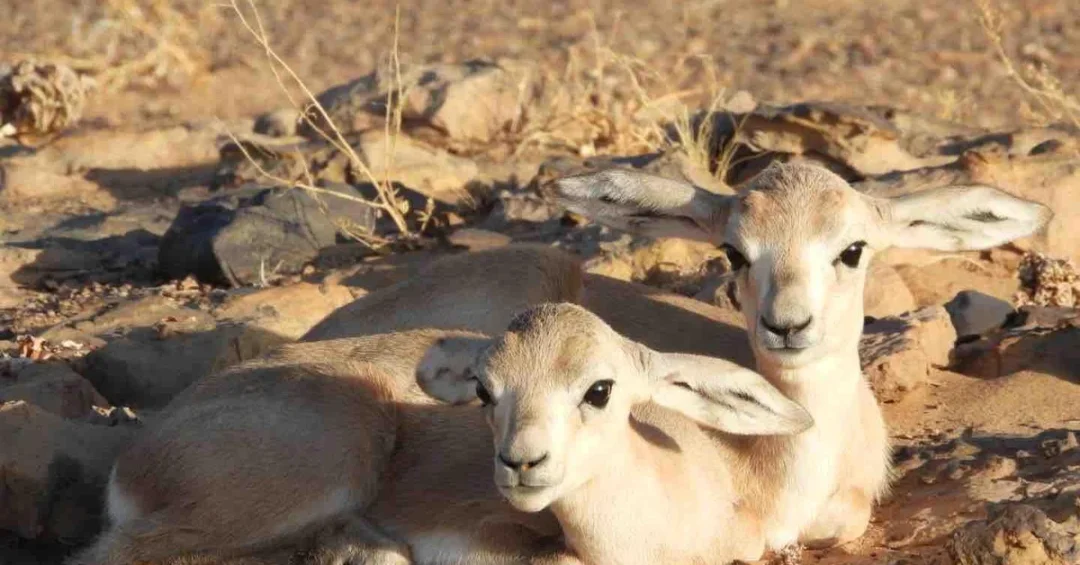
The King Salman bin Abdulaziz Royal Reserve has announced the birth of twin endangered Arabian sand gazelles, marking the 84th Arabian gazelle birth within the reserve this year. The field team observed the twins in September 2024, underscoring the reserve’s ongoing success in wildlife conservation and habitat restoration. This achievement reflects the Kingdom’s commitment to protecting endangered species and promoting biodiversity under Saudi Vision 2030.
Context and Background
The King Salman bin Abdulaziz Royal Reserve, established by royal decree, is the largest natural wildlife reserve in the Middle East, spanning 130,700 square kilometers across four administrative regions: Al-Jawf, Hail, the Northern Borders, and Tabuk. The reserve’s diverse habitats, ranging from deserts to mountains, provide a sanctuary for numerous endangered species. The Arabian sand gazelle is a vulnerable species that has faced significant decline due to habitat loss and hunting. The reserve’s conservation efforts are part of a broader national strategy to preserve Saudi Arabia’s natural heritage and achieve the goals of Saudi Vision 2030, which emphasizes environmental sustainability and quality of life.
Key Details
The birth of the twin Arabian sand gazelles is the 84th recorded birth of this species within the reserve. The field team conducts regular monitoring to ensure the safety and well-being of the animals. According to the authority, the successful reproduction reflects the quality and suitability of the reserve’s natural habitats. In addition to Arabian sand gazelles, the reserve has recorded over 120 mammal births, including oryx and ibex. These achievements are the result of tailored conservation programs that include the release of endangered species and the creation of environments that support their growth and reproduction.
Implications and Impact
The successful breeding of endangered species within the King Salman bin Abdulaziz Royal Reserve has significant implications for regional and international conservation efforts. It demonstrates Saudi Arabia’s leadership in environmental protection and biodiversity conservation. The reserve serves as a model for other countries in the region, showcasing how large-scale habitat restoration and species management can yield tangible results. Furthermore, the reserve’s efforts contribute to global efforts to preserve endangered species and combat biodiversity loss, aligning with international treaties such as the Convention on Biological Diversity.
Vision 2030 Alignment
The conservation successes at the King Salman bin Abdulaziz Royal Reserve directly support Saudi Vision 2030, which aims to enhance environmental sustainability, protect natural resources, and improve the quality of life for citizens and residents. By safeguarding endangered species and restoring ecosystems, the reserve contributes to the Kingdom’s goals of becoming a global leader in environmental stewardship and sustainable development. These initiatives also promote eco-tourism and community engagement, further diversifying the economy and creating opportunities for local communities.
20 Questions
Q1. What recent birth was announced at the King Salman bin Abdulaziz Royal Reserve?
A1. The reserve announced the birth of twin endangered Arabian sand gazelles in September 2024, marking the 84th Arabian gazelle birth within the reserve this year.
Q2. How many Arabian gazelle births have been recorded in the reserve?
A2. The reserve has recorded 84 Arabian gazelle births, including the recent twins, demonstrating the success of its conservation programs.
Q3. What other mammal births have been recorded in the reserve?
A3. Over 120 mammal births have been recorded, including oryx, Arabian sand gazelles, and ibex, reflecting the reserve’s diverse wildlife.
Q4. What is the size of the King Salman bin Abdulaziz Royal Reserve?
A4. The reserve spans 130,700 square kilometers, making it the largest natural wildlife reserve in the Middle East.
Q5. Which regions does the reserve cover?
A5. It covers four administrative regions: Al-Jawf, Hail, the Northern Borders, and Tabuk, encompassing diverse habitats.
Q6. Why is the birth of twin gazelles significant?
A6. It highlights the reserve’s success in creating a suitable environment for endangered species to reproduce and thrive, contributing to biodiversity conservation.
Q7. How does the reserve support endangered species?
A7. The reserve releases endangered species into tailored environments and conducts regular monitoring to ensure their safety and growth.
Q8. What is the role of the field team?
A8. The field team conducts rigorous and regular monitoring to protect the animals, observe births, and ensure their well-being within the reserve.
Q9. How does this achievement align with Saudi Vision 2030?
A9. It supports Vision 2030’s environmental sustainability goals by protecting biodiversity, enhancing quality of life, and promoting eco-tourism.
Q10. What is the Arabian sand gazelle’s conservation status?
A10. The Arabian sand gazelle is classified as endangered, facing threats from habitat loss and hunting, making conservation efforts crucial.
Q11. What types of habitats are found in the reserve?
A11. The reserve features diverse natural habitats, varied terrain, and unique geographical formations, supporting a wide range of wildlife.
Q12. How does the reserve contribute to global conservation?
A12. It serves as a model for large-scale habitat restoration and species management, contributing to international biodiversity goals.
Q13. What is the significance of recording over 120 mammal births?
A13. It indicates the reserve’s effectiveness in providing a thriving environment for various species, supporting population recovery.
Q14. How does the reserve ensure the safety of the animals?
A14. Through regular monitoring and protection measures, the field team ensures the animals are safe from threats and disturbances.
Q15. What other species are protected in the reserve?
A15. Besides Arabian sand gazelles, the reserve protects oryx, ibex, and other endangered species, promoting biodiversity.
Q16. What is the reserve’s role in eco-tourism?
A16. The reserve’s conservation efforts and natural beauty attract eco-tourists, supporting sustainable tourism and local economies.
Q17. How does the reserve contribute to Saudi Arabia’s environmental goals?
A17. It aligns with national strategies to preserve natural heritage, combat desertification, and promote sustainable development.
Q18. What measures are taken to create tailored environments?
A18. The reserve implements habitat restoration, provides food and water sources, and manages breeding programs to support each species.
Q19. What international conventions does the reserve’s work support?
A19. It supports the Convention on Biological Diversity and other global efforts to protect endangered species and ecosystems.
Q20. How can the public learn more about the reserve?
A20. Information is available through official Saudi channels, including the Saudi Press Agency and the reserve’s official website, promoting awareness and support.
Reader Feedback
We value your thoughts. Please share your feedback on this article.
Your feedback helps us improve our coverage.