


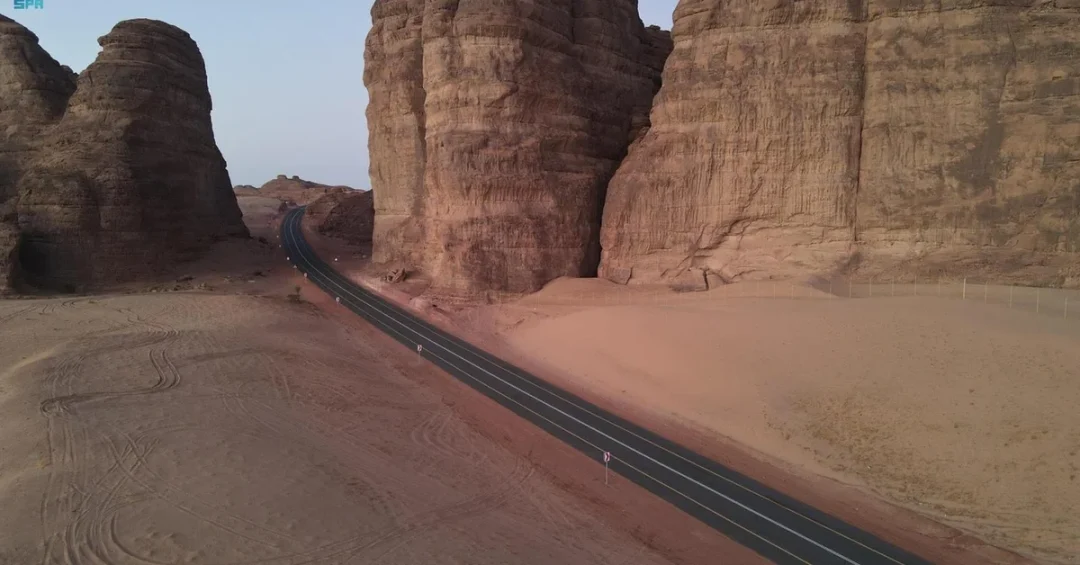
Saudi Arabia’s road network has undergone a remarkable transformation since the Kingdom’s unification, growing from approximately 239 kilometers to over 73,000 kilometers today, according to the Roads General Authority. This achievement has positioned the Kingdom as a global leader in road connectivity, as confirmed by the Global Competitiveness Forum. The evolution of Saudi Arabia’s roads reflects a long-standing commitment to infrastructure development that dates back to the era of the founder, King Abdulaziz, who recognized the vital role of transportation in connecting communities and fostering economic growth.
Context and Background
From the early days of the Kingdom, successive governments have invested significantly in expanding and modernizing the road network. The vision of King Abdulaziz laid the foundation for a transportation system that would not only connect the vast regions of the country but also drive economic prosperity. Over the decades, this commitment has resulted in a sophisticated network that spans deserts, mountains, and urban centers, facilitating the movement of people and goods across the Kingdom.
The transformation of Saudi Arabia’s roads is a testament to the nation’s strategic planning and dedication to progress. The Roads General Authority has played a pivotal role in this journey, overseeing the development and maintenance of the network. Their efforts have ensured that the roads meet international standards, contributing to the Kingdom’s ranking as a world leader in road connectivity by the Global Competitiveness Forum.
Key Details
The expansion from a mere 239 kilometers to over 73,000 kilometers is a staggering achievement that underscores Saudi Arabia’s commitment to infrastructure. This growth has been accompanied by a focus on quality and safety, with modern design and engineering practices ensuring that the roads are among the best in the world. The network includes major highways that link key cities such as Riyadh, Jeddah, Dammam, and Mecca, as well as rural roads that connect remote communities to essential services.
According to the Roads General Authority, the Kingdom continues to invest in road development as part of its broader strategy to enhance connectivity and support economic diversification. The roads are not just pathways but arteries of commerce, enabling the efficient transport of goods and boosting trade both domestically and internationally. This infrastructure is crucial for the success of various sectors, including tourism, logistics, and manufacturing.
Implications and Impact
The robust road network has significant implications for Saudi Arabia’s economy and society. It facilitates the movement of millions of pilgrims during Hajj and Umrah, ensuring their safety and comfort. It supports the growth of the tourism sector by making heritage sites and natural attractions more accessible. Moreover, it enhances the quality of life for citizens by reducing travel times and improving access to education, healthcare, and employment opportunities.
On the international stage, Saudi Arabia’s road connectivity serves as a model for other nations. The Global Competitiveness Forum’s recognition highlights the Kingdom’s role as a leader in infrastructure development. This not only boosts Saudi Arabia’s reputation but also attracts foreign investment and fosters international partnerships. The roads are a key component of the Kingdom’s logistics and transport strategy, which aims to position Saudi Arabia as a global hub for trade and commerce.
Vision 2030 Alignment
The development of Saudi Arabia’s road network is closely aligned with Vision 2030, the Kingdom’s ambitious plan to diversify its economy and enhance its global standing. Vision 2030 emphasizes the importance of infrastructure as a pillar of economic growth and social development. By investing in world-class roads, Saudi Arabia is not only improving domestic connectivity but also laying the groundwork for a prosperous future.
As the Kingdom continues to advance its infrastructure projects, the road network will remain a cornerstone of its strategy to achieve Vision 2030 goals. It will support the growth of non-oil sectors, create jobs, and improve the overall quality of life for citizens and residents. Saudi Arabia’s roads are indeed a global model, showcasing the Kingdom’s determination to build a connected, prosperous, and forward-looking nation.
20 Questions
Q1. What was the length of Saudi Arabia’s road network at the time of unification?
A1. At the time of unification, the road network was estimated at approximately 239 kilometers. This modest beginning marked the start of a remarkable journey of expansion and modernization that continues to this day.
Q2. How many kilometers of roads does Saudi Arabia have today?
A2. Today, according to the Roads General Authority, Saudi Arabia boasts over 73,000 kilometers of roads. This extensive network connects cities, rural areas, and key economic zones across the Kingdom.
Q3. Which organization has confirmed Saudi Arabia’s position as a world leader in road connectivity?
A3. The Global Competitiveness Forum has confirmed Saudi Arabia’s position as a world leader in road connectivity. This recognition underscores the Kingdom’s commitment to developing high-quality infrastructure.
Q4. Who was the founder that initiated Saudi Arabia’s road development?
A4. King Abdulaziz, the founder of the Kingdom, recognized the vital role of transportation in connecting communities and fostering economic growth. His vision laid the foundation for the modern road network.
Q5. What is the role of the Roads General Authority?
A5. The Roads General Authority oversees the development and maintenance of Saudi Arabia’s road network. It ensures that roads meet international standards and contribute to the Kingdom’s ranking as a global leader in connectivity.
Q6. How does the road network support the Hajj and Umrah pilgrimages?
A6. The road network facilitates the movement of millions of pilgrims during Hajj and Umrah, ensuring their safety and comfort. It provides efficient routes to the holy cities of Mecca and Medina.
Q7. What are the economic benefits of Saudi Arabia’s road network?
A7. The road network enables the efficient transport of goods, boosting domestic and international trade. It supports sectors such as tourism, logistics, and manufacturing, contributing to economic diversification.
Q8. How does the road network enhance the quality of life for citizens?
A8. By reducing travel times and improving access to education, healthcare, and employment, the road network enhances the quality of life. It also connects remote communities to essential services.
Q9. What is Vision 2030 and how does it relate to road development?
A9. Vision 2030 is Saudi Arabia’s plan to diversify its economy and enhance global standing. Road development is a key pillar, as it supports economic growth, job creation, and improved connectivity.
Q10. Which major cities are connected by Saudi Arabia’s road network?
A10. Major cities such as Riyadh, Jeddah, Dammam, and Mecca are connected by the network. It also links rural areas to urban centers, ensuring comprehensive connectivity across the Kingdom.
Q11. How does the road network attract foreign investment?
A11. A world-class road network enhances Saudi Arabia’s reputation as a business-friendly destination. It facilitates logistics and trade, making the Kingdom an attractive hub for foreign investment and international partnerships.
Q12. What is the significance of the Global Competitiveness Forum’s recognition?
A12. The recognition highlights Saudi Arabia’s leadership in infrastructure development. It validates the Kingdom’s efforts to build a modern, efficient road network that serves as a model for other nations.
Q13. How has the road network evolved since the era of King Abdulaziz?
A13. From 239 kilometers to over 73,000 kilometers, the network has grown exponentially. Successive governments have invested in expansion and modernization, resulting in a sophisticated system.
Q14. What role do roads play in Saudi Arabia’s tourism sector?
A14. Roads make heritage sites and natural attractions more accessible, supporting the growth of tourism. They enable tourists to explore the Kingdom’s diverse landscapes and cultural treasures with ease.
Q15. How does the road network support Saudi Arabia’s logistics strategy?
A15. The network is a key component of the logistics strategy, aiming to position Saudi Arabia as a global trade hub. It ensures efficient movement of goods, enhancing the Kingdom’s competitiveness.
Q16. What safety measures are in place for Saudi Arabia’s roads?
A16. The Roads General Authority implements modern design and engineering practices to ensure safety. This includes regular maintenance, signage, and adherence to international standards.
Q17. How does road connectivity benefit rural communities?
A17. Rural roads connect remote communities to essential services such as healthcare and education. They also provide access to markets, fostering economic opportunities and improving livelihoods.
Q18. What is the future outlook for Saudi Arabia’s road network?
A18. The Kingdom will continue to invest in road development as part of Vision 2030. Future projects will focus on sustainability, technology, and further enhancing connectivity to support economic growth.
Q19. How does the road network contribute to Saudi Arabia’s global standing?
A19. A world-class road network showcases the Kingdom’s infrastructure capabilities, enhancing its global reputation. It attracts investment and positions Saudi Arabia as a leader in connectivity and logistics.
Q20. In what ways do Saudi Arabia’s roads serve as a global model?
A20. The roads exemplify strategic planning, quality engineering, and commitment to connectivity. Other nations can learn from Saudi Arabia’s approach to infrastructure development as a driver of economic and social progress.
Reader Feedback
We value your thoughts. Please share your feedback on this article.
Your feedback helps us improve our coverage.