


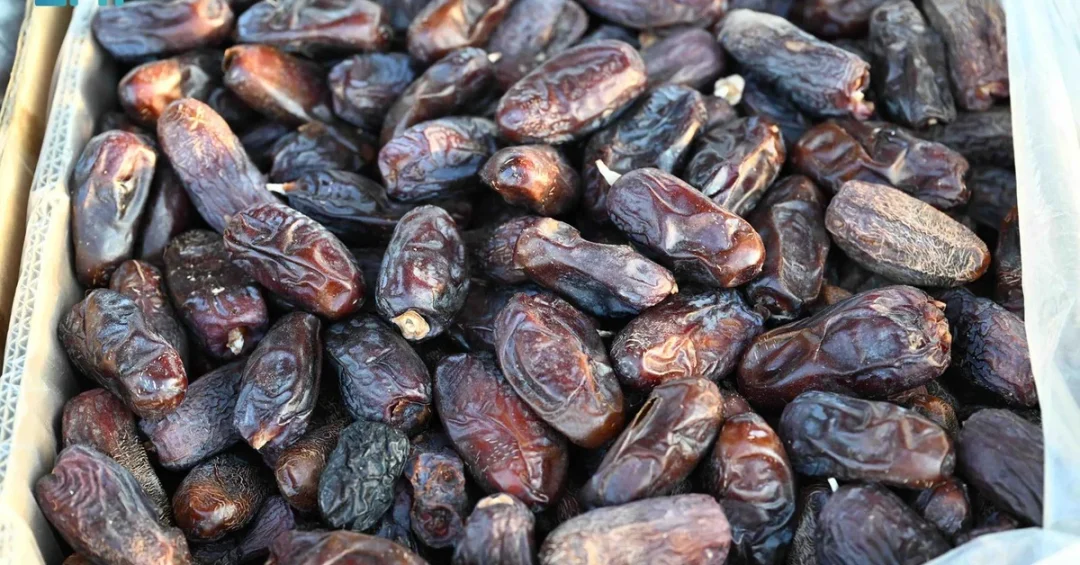
The Madinah region is renowned for its diverse date crops, with Anbara dates standing out as a particularly prized variety, according to the Saudi Press Agency (SPA). After Ajwa, Anbara is one of the most famous date varieties grown in the region. Medium-sized and late-ripening, Anbara dates have a distinctive rectangular shape that sets them apart from other varieties.
Context and Background
Dates hold a special place in Saudi culture and heritage, and Madinah has long been celebrated for producing some of the finest dates in the world. The Ministry of Environment, Water, and Agriculture has established standard specifications for Anbara dates to ensure quality, facilitate local and international trade, encourage the production of high-quality dates, improve economic returns for producers and exporters, and safeguard consumer interests.
Anbara dates are considered a rare commodity in Saudi Arabia. Their cultivation is challenging, requiring careful attention and specific growing conditions. The palm trees are known for their weak structure, necessitating pruning and thinning to ensure optimal fruit production. Annual yields per palm tree typically do not exceed 70 kilograms, further contributing to their rarity and value.
Key Details
Anbara dates are classified into three grades: excellent, first, and second. Excellent-grade dates weigh at least 13 grams each and contain no more than 38 dates in a 500-gram package. The first grade requires a minimum weight of 10 grams per date and a maximum of 50 dates in a 500-gram package. The second grade represents the minimum standard, with a single date weighing at least 6 grams and a 500-gram package containing no more than 83 dates.
Prized for their rarity, beautiful dark red color, and pleasant aroma, Anbara dates are often given as gifts. They are monosaccharide dates, meaning their sugar content primarily consists of glucose and fructose, which are simpler sugars that the body can quickly absorb for energy.
Implications and Impact
The cultivation and trade of Anbara dates have significant implications for Saudi Arabia’s agricultural sector and international trade. By setting standard specifications, the Ministry of Environment, Water, and Agriculture ensures that Anbara dates meet high-quality standards, enhancing their marketability both domestically and abroad. This not only boosts the economic returns for producers and exporters but also strengthens Saudi Arabia’s position as a leading exporter of premium dates.
Moreover, the rarity and unique characteristics of Anbara dates make them a sought-after luxury item, contributing to the Kingdom’s reputation for producing high-quality agricultural products. The dates also play a role in cultural exchanges, as they are often presented as gifts to dignitaries and visitors, symbolizing Saudi hospitality and generosity.
Vision 2030 Alignment
The promotion and standardization of Anbara dates align with Saudi Vision 2030, which aims to diversify the economy and enhance the agricultural sector’s contribution to the national GDP. By supporting local producers and improving the quality of agricultural exports, the Kingdom is working towards sustainable economic growth and global competitiveness. The success of Anbara dates exemplifies how traditional agricultural practices can be modernized to meet international standards, furthering Saudi Arabia’s role as a key player in the global date market.
20 Questions
Q1. What is the significance of Anbara dates in Madinah?
A1. Anbara dates are highly prized in Madinah for their rarity, distinctive taste, and cultural value, often given as gifts. They are one of the most famous date varieties after Ajwa, reflecting the region’s rich agricultural heritage.
Q2. How does the Ministry of Environment, Water, and Agriculture ensure the quality of Anbara dates?
A2. The Ministry has set standard specifications for Anbara dates to ensure quality, facilitate trade, encourage high-quality production, improve economic returns for producers, and protect consumers. These standards help maintain the dates’ premium status.
Q3. What are the three grades of Anbara dates?
A3. The three grades are excellent, first, and second. Excellent-grade dates weigh at least 13 grams each and have no more than 38 dates per 500-gram package. First grade requires a minimum of 10 grams per date, and second grade at least 6 grams.
Q4. Why are Anbara dates considered rare?
A4. Their cultivation is challenging due to the palm trees’ weak structure, requiring careful pruning and thinning. Annual yields per tree typically do not exceed 70 kilograms, making them a limited and valuable commodity in Saudi Arabia.
Q5. What makes Anbara dates unique in appearance?
A5. Anbara dates have a distinctive rectangular shape and a beautiful dark red color. They are medium-sized and late-ripening, with a pleasant aroma that adds to their appeal as a luxury item.
Q6. How are Anbara dates typically consumed or used?
A6. They are often given as gifts due to their rarity and premium quality. They can be enjoyed fresh or used in various culinary applications, and their natural sweetness makes them a healthy energy source.
Q7. What is the sugar composition of Anbara dates?
A7. Anbara dates are monosaccharide dates, meaning their sugar content primarily consists of glucose and fructose. These simple sugars are easily absorbed by the body, providing quick energy.
Q8. How does the cultivation of Anbara dates impact the local economy?
A8. It provides income for local farmers and supports related industries such as packaging and export. The high quality and rarity of Anbara dates command premium prices, enhancing economic returns for producers and exporters in the region.
Q9. What are the ideal growing conditions for Anbara date palms?
A9. Anbara date palms require specific growing conditions, including the hot, arid climate of Madinah. They need careful attention, including regular pruning and thinning, to ensure optimal fruit production and quality.
Q10. How does the standardization of Anbara dates benefit consumers?
A10. Standard specifications ensure that consumers receive high-quality dates that meet consistent weight and count criteria. This protects consumer interests and builds trust in the product, both domestically and internationally.
Q11. In what ways do Anbara dates contribute to Saudi Arabia’s cultural heritage?
A11. Dates are a symbol of Saudi hospitality, and Anbara dates, with their premium status, are often presented to guests and dignitaries. They represent the Kingdom’s rich agricultural traditions and generosity.
Q12. What challenges do farmers face in cultivating Anbara dates?
A12. Farmers must manage the weak structure of the palm trees through pruning and thinning. The trees also require specific growing conditions, and yields are relatively low, making cultivation labor-intensive and challenging.
Q13. How does the export of Anbara dates reflect on Saudi Arabia’s global trade?
A13. It showcases the Kingdom’s ability to produce high-quality luxury agricultural products, enhancing its reputation in international markets. This contributes to trade diversification and economic growth, aligning with Vision 2030 goals.
Q14. What role do Anbara dates play in Saudi Vision 2030?
A14. They support economic diversification by boosting agricultural exports and local production. The standardization and promotion of Anbara dates align with Vision 2030’s aim to enhance the agricultural sector’s contribution to the national GDP.
Q15. How can one distinguish excellent-grade Anbara dates?
A15. Excellent-grade Anbara dates weigh at least 13 grams each, and a 500-gram package contains no more than 38 dates. They represent the highest quality, with superior size, appearance, and taste.
Q16. What is the annual yield per palm tree for Anbara dates?
A16. The annual yield per palm tree typically does not exceed 70 kilograms. This limited yield contributes to the rarity and high value of Anbara dates in the market.
Q17. Why are Anbara dates often given as gifts?
A17. Their rarity, beautiful dark red color, and pleasant aroma make them a luxurious and thoughtful gift. They symbolize appreciation and are a prestigious representation of Saudi hospitality and culture.
Q18. How does the Ministry’s standardization facilitate international trade?
A18. By setting clear quality and packaging standards, the Ministry ensures that Anbara dates meet international expectations. This reduces trade barriers, builds buyer confidence, and opens new markets for Saudi exporters.
Q19. What are the health benefits of consuming Anbara dates?
A19. Anbara dates are a natural source of quick energy due to their glucose and fructose content. They also provide essential nutrients and fiber, making them a healthy snack when consumed in moderation.
Q20. How does the cultivation of Anbara dates support sustainable agriculture in Saudi Arabia?
A20. It promotes sustainable practices by encouraging careful water management and tree care. The Ministry’s standards help ensure that production is efficient and environmentally responsible, supporting long-term agricultural sustainability.
Reader Feedback
We value your thoughts. Please share your feedback on this article.
Your feedback helps us improve our coverage.
Related articles
 JCCI Concludes 2nd Edition of IFOE 2024 in Jeddah
 Camel Avenue Festival Drives Economic Growth in Taif
 Saudi Arabia’s Transport Sector Hits Global Milestones
 DCO Launches Digital Economy Navigator to Bridge Global Digital Gap
 Saudi Commerce Chambers Mark 78 Years of Achievement
 Gambian President Receives SFD CEO in Makkah