


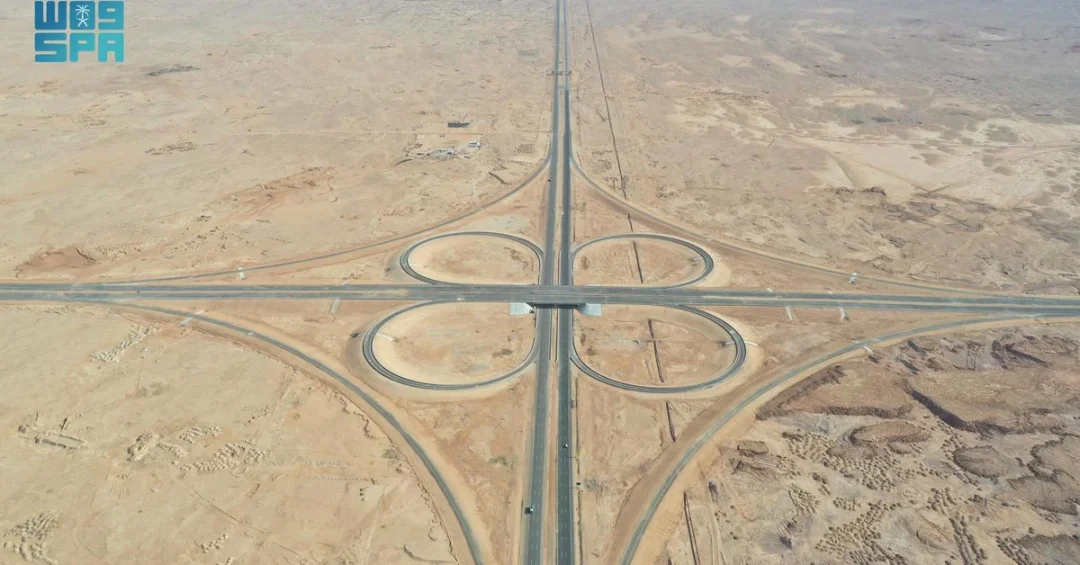
According to the Roads General Authority (RGA), in 1352 AH, just one year after the unification of the Kingdom, Saudi Arabia already possessed asphalt roads—a remarkable achievement that reflects the visionary leadership of the founder, King Abdulaziz bin Abdulrahman, and his unwavering commitment to comprehensive development and national connectivity. This milestone, highlighted in an RGA report issued on the occasion of the Kingdom’s 94th National Day, underscores how Saudi Arabia’s early investment in infrastructure laid the foundation for its emergence as a global leader in road connectivity.
Context and Background
Before the introduction of asphalt roads, transportation across the Arabian Peninsula was constrained by gravel and sand pathways, which hindered the movement of people and goods. The RGA report notes that the advent of asphalt paved the way for economic and commercial growth, strengthening ties between cities and regions. This development was not merely a technical upgrade but a strategic leap that facilitated the unification and integration of the nascent Kingdom. The visionary approach of King Abdulaziz recognized that modern infrastructure was essential for national cohesion and prosperity.
Key Details
The RGA report, released to coincide with the 94th National Day, reveals that Saudi Arabia’s road network now exceeds 73,000 kilometers, earning global recognition as the world’s leader in road connectivity according to the Global Competitiveness Report. This extensive network is a testament to decades of sustained investment and planning. The early adoption of asphalt roads in 1352 AH (circa 1933) was a pioneering step in the region, demonstrating the Kingdom’s forward-thinking approach to infrastructure development. The report emphasizes that these roads have been instrumental in fostering economic integration, facilitating trade, and enhancing the quality of life for citizens.
Implications and Impact
The development of a comprehensive road network has had profound implications for Saudi Arabia’s economic and social fabric. It has enabled the efficient movement of goods and people, supporting the growth of key sectors such as trade, tourism, and industry. Moreover, the connectivity provided by these roads has been crucial for the Kingdom’s regional and international integration, linking major cities, ports, and industrial zones. The recognition by the Global Competitiveness Report highlights Saudi Arabia’s status as a model for infrastructure excellence, further attracting foreign investment and fostering international partnerships.
Vision 2030 Alignment
This historical achievement aligns seamlessly with Vision 2030, Saudi Arabia’s ambitious blueprint for economic diversification and sustainable development. The Vision emphasizes the importance of modern infrastructure as a pillar for future growth, and the Kingdom continues to invest heavily in expanding and upgrading its transport networks. The early adoption of asphalt roads exemplifies the forward-looking spirit that drives Vision 2030, which aims to position Saudi Arabia as a global logistics hub and enhance the quality of life for all citizens. As the Kingdom celebrates its 94th National Day, it honors its rich history while embracing a future of continued progress and prosperity.
20 Questions
Q1. What did the Roads General Authority report highlight about Saudi Arabia’s early infrastructure?
A1. The RGA report highlighted that in 1352 AH, just one year after unification, Saudi Arabia already had asphalt roads, reflecting the founder’s commitment to development and connectivity.
Q2. When was the RGA report issued?
A2. The report was issued on the occasion of Saudi Arabia’s 94th National Day, celebrated in September 2024.
Q3. How did transportation work before asphalt roads in Saudi Arabia?
A3. Before asphalt roads, transportation was hindered by gravel and sand pathways, which made movement difficult and slowed economic progress.
Q4. What impact did asphalt roads have on Saudi Arabia’s growth?
A4. Asphalt roads paved the way for economic and commercial growth, strengthening ties between cities and regions and facilitating national integration.
Q5. How long is Saudi Arabia’s current road network?
A5. Saudi Arabia’s extensive road network now exceeds 73,000 kilometers, making it one of the largest and most connected in the world.
Q6. What global recognition has Saudi Arabia received for its road network?
A6. Saudi Arabia has been acknowledged as the world’s leader in road connectivity by the Global Competitiveness Report.
Q7. Who was the founder of Saudi Arabia that initiated these developments?
A7. King Abdulaziz bin Abdulrahman, the founder of modern Saudi Arabia, was the visionary leader who prioritized infrastructure development from the early days of the Kingdom.
Q8. Why is the year 1352 AH significant in Saudi history?
A8. 1352 AH (circa 1933) marks the year when Saudi Arabia, just a year after unification, already had asphalt roads, showcasing rapid progress.
Q9. How does the road network contribute to Saudi Arabia’s economy?
A9. The road network enhances economic integration, facilitates trade, and supports sectors like tourism and industry by efficiently connecting cities and regions.
Q10. What does the Global Competitiveness Report measure?
A10. The Global Competitiveness Report assesses countries on various factors, including infrastructure quality, and Saudi Arabia ranks highly in road connectivity.
Q11. What was the state of transportation before asphalt roads?
A11. Prior to asphalt, transportation relied on unpaved gravel and sand pathways, which were inefficient and posed challenges for travel and trade.
Q12. How did the early roads help unify the Kingdom?
A12. The roads improved connectivity between different regions, fostering national cohesion and enabling the central government to reach remote areas effectively.
Q13. What is the significance of the RGA report on National Day?
A13. The report serves to remind citizens of the Kingdom’s long-standing commitment to development and to celebrate the progress achieved over decades.
Q14. How does Saudi Arabia’s road network compare globally?
A14. Saudi Arabia’s road network is recognized as the world’s best in connectivity, reflecting its high quality and extensive reach.
Q15. What role did King Abdulaziz play in infrastructure development?
A15. King Abdulaziz prioritized modernization and infrastructure, including roads, to support economic growth and national unity from the very beginning.
Q16. How does the road network support Vision 2030?
A16. The network is crucial for Vision 2030’s goals of economic diversification and logistics hub status, enhancing connectivity for trade and tourism.
Q17. What are some benefits of asphalt roads for citizens?
A17. Asphalt roads provide smoother, faster, and safer travel, improving access to services, markets, and opportunities for all citizens.
Q18. When was the 94th National Day celebrated?
A18. The 94th National Day was celebrated on September 23, 2024, marking the unification of the Kingdom in 1932.
Q19. What other sectors benefit from improved road connectivity?
A19. Sectors such as tourism, trade, industry, and logistics benefit significantly, as roads enable efficient movement of goods and people.
Q20. How does this historical achievement inspire future projects?
A20. It sets a precedent for ambitious infrastructure projects under Vision 2030, demonstrating the Kingdom’s ability to achieve transformative development.
Reader Feedback
We value your thoughts. Please share your feedback on this article.
Your feedback helps us improve our coverage.