


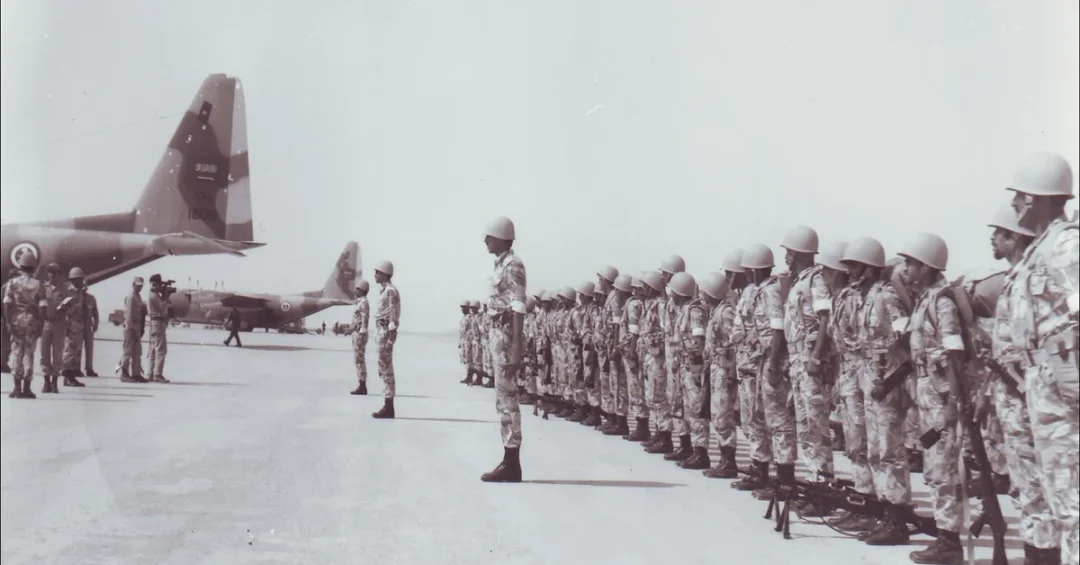
RIYADH — The history of the Saudi Arabian Armed Forces is deeply rooted in the unification of the Kingdom under the leadership of King Abdulaziz, a journey that began with a small group of loyal men armed with swords and spears and riding horses and camels. Their mission was to dispel fear and unite the Arabian Peninsula, traversing mountains, plains, and valleys to bring together diverse regions under a single banner. This foundational period, marked by immense challenges, demonstrated the unwavering loyalty and courage that would become the hallmark of Saudi Arabia’s military heritage.
Context and Background
In the early 20th century, the Arabian Peninsula was a patchwork of tribes and territories. King Abdulaziz, founder of modern Saudi Arabia, recognized that unity required both diplomacy and a credible defense force. The initial fighting teams, drawn from both urban and desert populations, were organized into structured units, laying the groundwork for a unified military. The establishment of military garrisons, such as the Jeddah garrison, marked significant milestones in this process, according to the Saudi Press Agency (SPA).
Under King Abdulaziz’s visionary leadership, the Saudi Arabian Army underwent rapid development. The formation of regular army units, including infantry, artillery, and machine gun regiments, marked a significant advancement. The establishment of a military affairs directorate further solidified the army’s structure and administration. As the army grew, the need for a more comprehensive defense system became apparent, leading to the formation of a defense agency, the restructuring of army units, and the establishment of a military school. The introduction of modern weaponry, transportation, and communication technologies further enhanced the army’s capabilities.
Key Details
The increasing complexity of defense operations necessitated the creation of a dedicated ministry. In November 1943, the Ministry of Defense was established, marking a significant milestone in the development of the Saudi Arabian Armed Forces. Successive Saudi monarchs continued to invest in the development of the armed forces, establishing specialized forces, acquiring advanced weaponry, and training personnel to ensure that the Saudi Arabian Armed Forces remain a formidable force.
After the death of King Abdulaziz bin Abdulrahman, his sons, the kings after him, continued to support and develop the Saudi Army, and to create specialized forces to protect the Kingdom, and equip them with the latest weapons and members trained in the best practices.
Land Forces: In October 1962, the modern era of the Saudi military began when King Faisal issued a Royal Decree appointing Prince Sultan bin Abdulaziz as Minister of Defense and Aviation and Inspector General. Under Prince Sultan’s leadership, significant reforms were implemented. In December 1976, the Saudi Arabian Army was renamed the Royal Saudi Land Forces.
Air Forces: A key priority for Saudi Arabia since the reign of King Abdulaziz has been securing the country’s airspace. The first step toward building a domestic air defense capability came in 1929, when the Kingdom acquired British Westland Wapiti fighter aircraft. Initially based on Dareen Island in the Eastern Region, these aircraft were primarily used for surveillance and reconnaissance missions. Recognizing the growing importance of air power, King Abdulaziz ordered the transfer of the aircraft to Jeddah in 1930, and established the first Saudi aviation school, which focused on training pilots and maintaining aircraft, laying the foundation for the Kingdom’s future aviation capabilities. Following the unification of the Kingdom, King Abdulaziz recognized the need to further develop the military air force. To address the shortage of trained personnel, he requested the British government to provide training for Saudi air crews. Under the leadership of Minister of Defense and Aviation Prince Sultan bin Abdulaziz, the Air Force underwent significant changes. It was relocated from Jeddah to Riyadh, and its name later became the Royal Saudi Air Forces.
Air Defense: In response to the Kingdom’s evolving needs and the importance of protecting its vital assets, Saudi Arabia established an air defense force as part of the artillery corps within the land forces. Recognizing the expanding role of air defense, a Royal Order was issued in 1984 designating air defense as a specialized independent force, officially named the Royal Saudi Air Defense Forces.
Naval Forces: Given Saudi Arabia’s extensive coastline along the Arabian Gulf and the Red Sea, establishing a naval force to protect the Kingdom’s territorial waters became a strategic necessity. In 1957, the Royal Saudi Naval Forces were formed, initially known simply as the Navy.
Today, the Ministry of Defense, with its various forces and branches, enjoys the unwavering support of Custodian of the Two Holy Mosques King Salman bin Abdulaziz Al Saud and HRH Prince Mohammed bin Salman bin Abdulaziz Al Saud, Crown Prince and Prime Minister. Under the close guidance of Minister of Defense Prince Khalid bin Salman bin Abdulaziz, the ministry is actively working to elevate the Saudi armed forces to world-class standards. A key component of this effort is the Ministry of Defense development plan, which outlines a new vision and strategy, a targeted operational model, an organizational structure, governance principles, and human resource requirements. Aligned with the National Defense Strategy, this comprehensive plan aims to ensure the continued modernization and effectiveness of the Saudi armed forces.
Implications and Impact
The modernization of the Saudi Arabian Armed Forces has significant implications for regional stability and international security. As a leading member of the Gulf Cooperation Council and a key ally of many Western nations, Saudi Arabia plays a crucial role in countering terrorism, ensuring maritime security, and promoting peace in the Middle East. The Kingdom’s military capabilities also contribute to humanitarian efforts and disaster relief, as seen in various international missions.
Moreover, the development of a self-reliant defense industry is a strategic goal. Through initiatives like the Saudi Arabian Military Industries (SAMI), the Kingdom aims to localize up to 50% of its military spending by 2030, fostering technological innovation and creating high-skilled jobs for Saudi youth.
Vision 2030 Alignment
The ongoing transformation of the Saudi Arabian Armed Forces is a cornerstone of Vision 2030, the comprehensive plan to diversify the economy and enhance national resilience. By investing in advanced defense technologies, training, and indigenous capabilities, the Kingdom not only safeguards its sovereignty but also contributes to regional peace and global security. As the Ministry of Defense continues to implement its development plan, the Saudi Armed Forces are poised to become a model of excellence, reflecting the nation’s ambition and its pivotal role on the world stage.
20 Questions
Q1. When did the history of the Saudi Arabian Armed Forces begin?
A1. The history began with the unification of the Kingdom under King Abdulaziz in the early 20th century, when a small group of loyal men armed with swords and spears embarked on a mission to unite the Arabian Peninsula.
Q2. What was the initial focus of the Saudi Arabian Army?
A2. The initial focus was on organization and standardization, forming fighting teams from both urban and desert populations to create a unified military force. This laid the groundwork for future expansions.
Q3. When was the Ministry of Defense established?
A3. The Ministry of Defense was established in November 1943, marking a significant milestone in the development of the Saudi Arabian Armed Forces and centralizing defense operations.
Q4. Who was appointed Minister of Defense and Aviation in 1962?
A4. Prince Sultan bin Abdulaziz was appointed by King Faisal in October 1962, initiating a modern era for the Saudi military with significant reforms and development.
Q5. When was the Saudi Arabian Army renamed the Royal Saudi Land Forces?
A5. In December 1976, under the leadership of Prince Sultan bin Abdulaziz, the Saudi Arabian Army was renamed the Royal Saudi Land Forces, reflecting its enhanced status and capabilities.
Q6. What was the first aircraft acquired by Saudi Arabia?
A6. In 1929, the Kingdom acquired British Westland Wapiti fighter aircraft, initially based on Dareen Island for surveillance and reconnaissance missions. This marked the beginning of Saudi air power.
Q7. When was the first Saudi aviation school established?
A7. King Abdulaziz ordered the establishment of the first Saudi aviation school in Jeddah in 1930, focusing on training pilots and maintaining aircraft, laying the foundation for future aviation capabilities.
Q8. When were the Royal Saudi Naval Forces formed?
A8. The Royal Saudi Naval Forces were formed in 1957, initially known as the Navy, to protect the Kingdom’s territorial waters along the Arabian Gulf and the Red Sea.
Q9. When did air defense become an independent force?
A9. In 1984, a Royal Order designated air defense as a specialized independent force, officially named the Royal Saudi Air Defense Forces, recognizing its expanding role in protecting vital assets.
Q10. Who is the current Minister of Defense?
A10. Prince Khalid bin Salman bin Abdulaziz is the current Minister of Defense, providing close guidance to elevate the Saudi armed forces to world-class standards under Vision 2030.
Q11. What is the Ministry of Defense development plan?
A11. The development plan outlines a new vision, strategy, operational model, organizational structure, governance principles, and human resource requirements to modernize the armed forces in line with the National Defense Strategy.
Q12. How does the Saudi military contribute to regional stability?
A12. The Saudi military participates in counter-terrorism efforts, maritime security, and humanitarian missions, contributing to peace and stability in the Middle East and beyond as a key ally.
Q13. What is Saudi Arabian Military Industries (SAMI)?
A13. SAMI is a state-owned defense company established to localize military spending and foster technological innovation, aiming to manufacture advanced defense systems domestically and create jobs.
Q14. What is the goal of localizing military spending?
A14. The goal is to localize up to 50% of military spending by 2030, as part of Vision 2030, to enhance self-reliance, boost the economy, and develop local talent in defense industries.
Q15. How does the Saudi Armed Forces support Vision 2030?
A15. By modernizing capabilities, investing in advanced technologies, and localizing defense production, the armed forces contribute to economic diversification, national security, and the overall goals of Vision 2030.
Q16. What role does King Salman play in the armed forces?
A16. Custodian of the Two Holy Mosques King Salman bin Abdulaziz Al Saud provides unwavering support to the Ministry of Defense, ensuring the armed forces have the resources and guidance to protect the Kingdom.
Q17. Who is Crown Prince Mohammed bin Salman?
A17. HRH Prince Mohammed bin Sal
Reader Feedback
We value your thoughts. Please share your feedback on this article.
Your feedback helps us improve our coverage.