


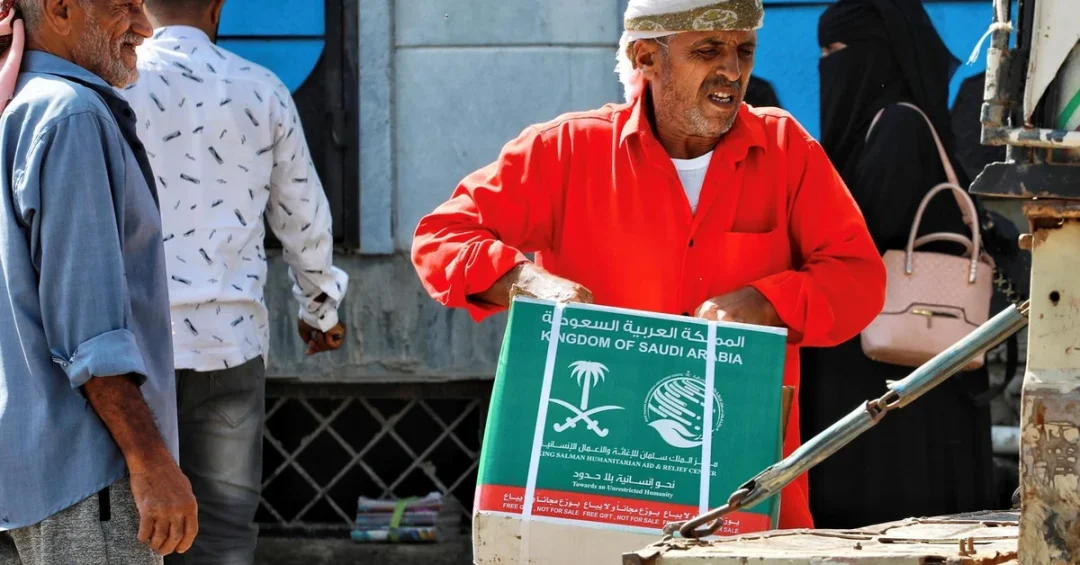
The King Salman Humanitarian Aid and Relief Center (KSrelief) distributed 258 food baskets in Marib District, Marib Governorate, Yemen, on September 21, 2024, providing critical assistance to 1,806 individuals from 258 families affected by recent floods and heavy rainfall. The distribution is part of KSrelief’s ongoing food aid project to support vulnerable communities across Yemen throughout 2024. This initiative reflects the Kingdom of Saudi Arabia’s continued commitment to alleviating the humanitarian crisis in Yemen and supporting those in urgent need.
Context and Background
Yemen has faced a protracted humanitarian crisis exacerbated by natural disasters, including seasonal floods that have displaced families and destroyed livelihoods. Marib Governorate, hosting a significant number of internally displaced persons, is particularly vulnerable. KSrelief, established in 2015, is Saudi Arabia’s primary humanitarian arm, delivering aid in coordination with international partners and local authorities. The food basket distribution in Marib is part of a broader effort to address food insecurity and provide immediate relief to those affected by flooding.
Key Details
The 258 food baskets were distributed to underprivileged families impacted by floods and heavy rainfall in Marib District. Each basket contains essential food items to sustain a family for a month, benefiting 1,806 individuals. This operation is part of KSrelief’s ongoing food aid project for Yemen in 2024, which aims to reach thousands of families across multiple governorates. The distribution was carried out by KSrelief teams on the ground, ensuring that aid reaches those most in need.
Implications and Impact
This distribution provides immediate relief to families who have lost homes and livelihoods due to flooding. It also underscores Saudi Arabia’s role as a leading humanitarian donor in Yemen, complementing broader international efforts. By addressing food insecurity, KSrelief helps stabilize communities and prevents further displacement. The aid also supports recovery by allowing families to focus on rebuilding rather than daily survival. The operation reinforces the Kingdom’s commitment to humanitarian principles and regional stability.
Vision 2030 Alignment
This initiative aligns with Saudi Vision 2030’s goal of enhancing the Kingdom’s global humanitarian role and promoting sustainable development. Through KSrelief, Saudi Arabia continues to demonstrate its dedication to international cooperation and relief efforts, contributing to a more stable and prosperous region. The food basket distribution in Marib is a testament to the Kingdom’s enduring commitment to supporting Yemen and its people.
20 Questions
Q1. What organization distributed the food baskets in Marib?
A1. The King Salman Humanitarian Aid and Relief Center (KSrelief) distributed the food baskets. KSrelief is Saudi Arabia’s primary humanitarian agency, established in 2015 to provide aid worldwide.
Q2. How many food baskets were distributed?
A2. A total of 258 food baskets were distributed in Marib District. Each basket contains essential food items to support a family for one month.
Q3. How many individuals benefited from this distribution?
A3. The distribution benefited 1,806 individuals from 258 families. These families were affected by floods and heavy rainfall in the region.
Q4. Where exactly did the distribution take place?
A4. The distribution took place in Marib District, Marib Governorate, Yemen. Marib hosts many internally displaced persons and is prone to seasonal flooding.
Q5. When was the distribution carried out?
A5. The distribution was carried out on September 21, 2024, as reported by the Saudi Press Agency. It was part of ongoing relief efforts.
Q6. What is the purpose of this food aid project?
A6. The project aims to support individuals affected by the humanitarian crisis in Yemen throughout 2024. It provides emergency food assistance to vulnerable families.
Q7. Who are the beneficiaries of this aid?
A7. The beneficiaries are underprivileged families impacted by floods and heavy rainfall. Many are internally displaced persons living in Marib.
Q8. What does each food basket contain?
A8. Each food basket contains essential food items such as rice, flour, oil, and canned goods. The contents are designed to meet a family’s nutritional needs for one month.
Q9. How does this distribution fit into KSrelief’s broader efforts?
A9. It is part of KSrelief’s ongoing food aid project for Yemen in 2024. KSrelief implements numerous projects in Yemen across food security, health, and shelter sectors.
Q10. Why is Marib particularly vulnerable to flooding?
A10. Marib’s geography and seasonal heavy rains make it prone to flash floods. The governorate also hosts many displaced families living in temporary settlements.
Q11. How does this aid reflect Saudi Arabia’s humanitarian commitment?
A11. It demonstrates Saudi Arabia’s ongoing dedication to alleviating suffering in Yemen. The Kingdom is one of the largest donors to Yemen’s humanitarian response.
Q12. What other types of aid does KSrelief provide in Yemen?
A12. KSrelief provides food, medical care, shelter, education, and water sanitation projects. It also supports livelihood and nutrition programs for vulnerable groups.
Q13. How does this distribution contribute to stability in Yemen?
A13. By meeting immediate food needs, it helps prevent further displacement and instability. It allows families to focus on recovery and rebuild their lives.
Q14. Is this aid coordinated with local authorities?
A14. Yes, KSrelief coordinates with local authorities and humanitarian partners. This ensures aid reaches those most in need efficiently and transparently.
Q15. How many families were affected by the floods in Marib?
A15. The article states that 258 families were affected and received aid. However, the total number of affected families may be higher, as relief efforts continue.
Q16. What is the significance of the number 1,806 beneficiaries?
A16. It represents the total number of individuals in the 258 families. On average, this is about seven members per family, reflecting typical household sizes in Yemen.
Q17. How does this project align with Vision 2030?
A17. It aligns with Vision 2030’s goal to enhance Saudi Arabia’s global humanitarian role. The Kingdom seeks to promote sustainable development and international cooperation.
Q18. What challenges does aid distribution face in Yemen?
A18. Challenges include ongoing conflict, damaged infrastructure, and limited access. KSrelief works with partners to overcome these obstacles and deliver aid.
Q19. How can other nations support similar relief efforts?
A19. Nations can contribute through funding, in-kind donations, and logistical support. Collaboration with KSrelief and UN agencies amplifies impact on the ground.
Q20. What is the expected long-term impact of this aid?
A20. It provides immediate relief and supports recovery, helping families avoid famine. Long-term, it contributes to stability and resilience in Yemeni communities.
Reader Feedback
We value your thoughts. Please share your feedback on this article.
Your feedback helps us improve our coverage.