


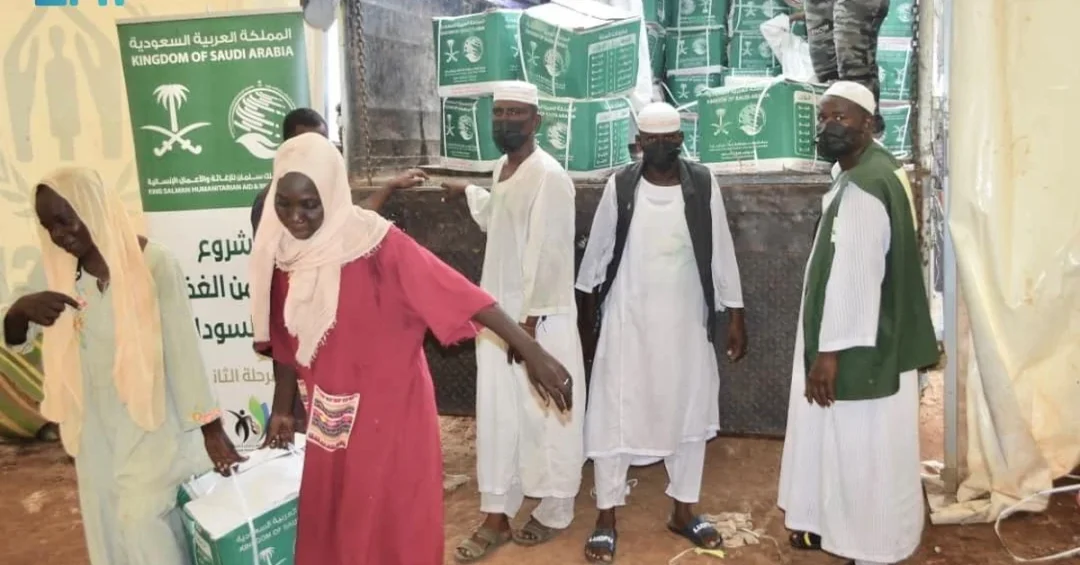
The King Salman Humanitarian Aid and Relief Center (KSrelief) has distributed 840 food baskets in Kassala State, Republic of Sudan, benefiting 4,862 individuals. The distribution is part of the second phase of the food security support project in Sudan for 2024, according to the Saudi Press Agency (SPA).
Context and Background
This initiative is part of the relief and humanitarian assistance provided by the Kingdom of Saudi Arabia through KSrelief, which aims to achieve food security and alleviate the suffering of the Sudanese people. Sudan has faced significant challenges in recent years, including economic instability and internal displacement, making food security a critical need. KSrelief, established in 2015, has been at the forefront of Saudi Arabia’s humanitarian efforts globally, delivering aid to crisis-affected regions.
Key Details
The food baskets were distributed in Kassala State, targeting 4,862 individuals. Each basket typically contains essential food items such as flour, rice, oil, and sugar, designed to support a family for a month. This distribution is part of the second phase of the food security support project in Sudan for 2024, which aims to reach vulnerable populations across the country.
Implications and Impact
The distribution of food baskets provides immediate relief to families in Kassala State, helping to mitigate hunger and malnutrition. It also contributes to stability by reducing the pressure on local resources and supporting community resilience. This effort reflects Saudi Arabia’s continued commitment to humanitarian causes worldwide, reinforcing its role as a leading donor in the region.
Vision 2030 Alignment
This humanitarian initiative aligns with Saudi Vision 2030’s emphasis on global engagement and social responsibility. By extending aid to Sudan, the Kingdom demonstrates its dedication to fostering peace and prosperity beyond its borders, in line with its values of generosity and solidarity.
20 Questions
Q1. What organization distributed the food baskets in Kassala State?
A1. The King Salman Humanitarian Aid and Relief Center (KSrelief) distributed the food baskets. KSrelief is a Saudi Arabian humanitarian organization established in 2015 to provide aid worldwide.
Q2. How many food baskets were distributed?
A2. 840 food baskets were distributed in Kassala State, Sudan. Each basket is designed to support a family, containing essential food items to meet their nutritional needs for a period.
Q3. How many individuals benefited from this distribution?
A3. The distribution benefited 4,862 individuals. This number includes men, women, and children who are among the most vulnerable populations in the region.
Q4. Where did the distribution take place?
A4. The distribution took place in Kassala State, Republic of Sudan. Kassala is located in eastern Sudan and has been affected by various humanitarian challenges.
Q5. When was the distribution carried out?
A5. The distribution was announced on September 22, 2024, according to the Saudi Press Agency. The exact date of distribution was not specified, but it falls under the 2024 project.
Q6. What phase of the food security support project is this?
A6. This is part of the second phase of the food security support project in Sudan for 2024. The project aims to address food insecurity and support vulnerable communities.
Q7. What is the purpose of the food security support project?
A7. The project aims to achieve food security and alleviate the suffering of the Sudanese people. It provides essential food supplies to those in need.
Q8. What items are typically included in the food baskets?
A8. Food baskets typically include staples such as flour, rice, oil, and sugar. These items are chosen to provide balanced nutrition and meet basic dietary needs.
Q9. Which Saudi organization is responsible for this aid?
A9. The King Salman Humanitarian Aid and Relief Center (KSrelief) is responsible. It is the primary Saudi agency for international humanitarian assistance.
Q10. Why is Sudan in need of food assistance?
A10. Sudan faces economic challenges, internal displacement, and food insecurity. These factors have left many people without reliable access to sufficient food.
Q11. How does this aid reflect Saudi Arabia’s humanitarian role?
A11. It demonstrates Saudi Arabia’s commitment to helping those in need globally. The Kingdom is a leading donor in humanitarian efforts, providing aid to many countries.
Q12. What is KSrelief’s mission?
A12. KSrelief’s mission is to provide humanitarian aid and relief to affected populations worldwide. It focuses on food security, health, shelter, and other essential needs.
Q13. How many phases does the food security support project have?
A13. The project has at least two phases, with the current distribution being part of the second phase. Each phase targets different regions and beneficiaries.
Q14. What is the significance of targeting Kassala State?
A14. Kassala State hosts many displaced persons and vulnerable communities. Targeting it ensures aid reaches those most in need.
Q15. How does this aid contribute to stability in Sudan?
A15. By providing food, it reduces hunger and tension over resources. This can contribute to social stability and peace in the region.
Q16. What other countries does KSrelief assist?
A16. KSrelief assists many countries worldwide, including Yemen, Syria, and Somalia. It operates in crisis-affected regions across continents.
Q17. What is the source of the information about this distribution?
A17. The information comes from the Saudi Press Agency (SPA), the official news agency of Saudi Arabia. It reported the distribution on September 22, 2024.
Q18. How does this initiative align with Saudi Vision 2030?
A18. It aligns with Vision 2030’s goal of global engagement and social responsibility. The Kingdom aims to play a positive role in international affairs.
Q19. How can other organizations support similar efforts?
A19. Other organizations can partner with KSrelief or launch their own humanitarian initiatives. Collaboration can amplify the impact of aid delivery.
Q20. What is the expected outcome of this food distribution?
A20. The expected outcome is improved food security for the beneficiaries. It will help alleviate immediate hunger and support their well-being.
Reader Feedback
We value your thoughts. Please share your feedback on this article.
Your feedback helps us improve our coverage.