


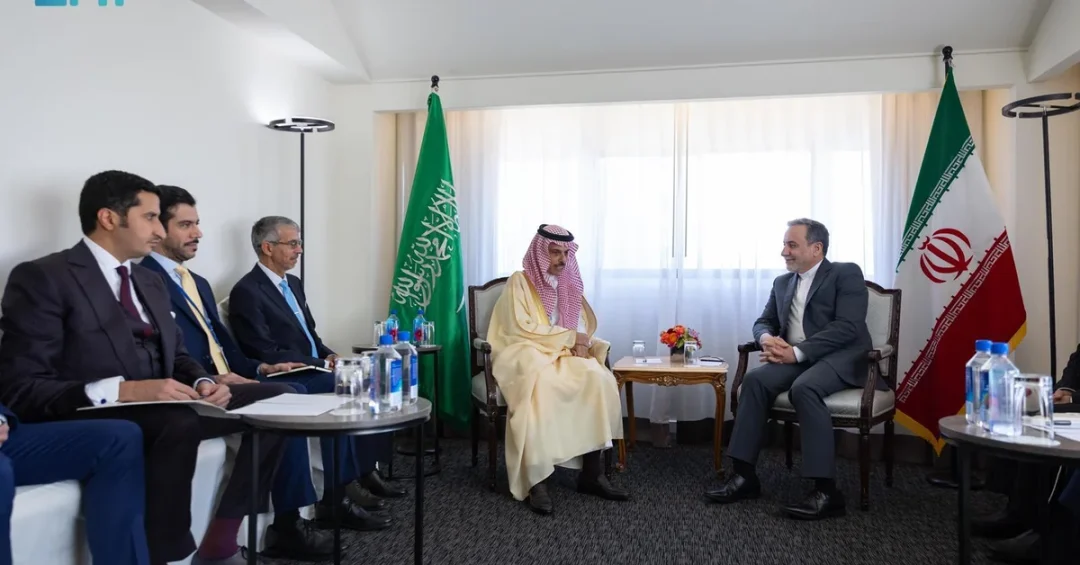
Saudi Minister of Foreign Affairs Prince Faisal bin Farhan bin Abdullah met with Minister of Foreign Affairs of the Islamic Republic of Iran Abbas Araghchi on the sidelines of the high-level week of the 79th session of the United Nations General Assembly (UNGA 79) in New York, according to the Saudi Press Agency (SPA). The meeting, held on September 22, 2024, focused on ways to enhance bilateral relations and the importance of continued coordination and consultation between the two countries, as well as the latest developments in the Gaza Strip.
Context and Background
The meeting between Prince Faisal bin Farhan and Minister Abbas Araghchi marks another step in the ongoing diplomatic engagement between Saudi Arabia and Iran. This engagement follows the historic agreement brokered by the People’s Republic of China in March 2023, which restored diplomatic ties between the two nations after a seven-year rupture. Since then, both countries have been working to build confidence and explore areas of mutual interest, contributing to regional stability and prosperity.
Saudi Arabia, under the leadership of the Custodian of the Two Holy Mosques King Salman bin Abdulaziz Al Saud and His Royal Highness Prince Mohammed bin Salman bin Abdulaziz Al Saud, Crown Prince and Prime Minister, has consistently pursued a policy of constructive dialogue and peaceful resolution of differences. This approach aligns with the Kingdom’s Vision 2030, which aims to diversify the economy and foster a stable regional environment conducive to investment and development.
Key Details
During the meeting, the two ministers discussed ways to enhance relations in various fields, emphasizing the importance of continuing coordination and consultation to monitor the progress of their ties. They also addressed the latest developments in the Gaza Strip, underscoring the need for de-escalation and the protection of civilians. The meeting was attended by Saudi Arabia’s Permanent Representative to the United Nations, Ambassador Abdulaziz Al-Wasil; Director General of the Office of the Foreign Minister, Abdulrahman AlDawood; and Adviser to the Minister of Foreign Affairs, Mohammed Al-Yahya.
This encounter on the sidelines of UNGA 79 reflects Saudi Arabia’s active diplomatic role in addressing regional challenges and promoting dialogue. The Kingdom has repeatedly called for peaceful solutions to conflicts and has supported international efforts to alleviate humanitarian crises, including in Gaza.
Implications and Impact
The continued engagement between Saudi Arabia and Iran carries significant implications for regional stability. Improved relations between these two major regional powers can contribute to reducing tensions across the Middle East, opening avenues for cooperation on issues such as energy security, trade, and environmental sustainability. For the international community, this dialogue signals a potential shift toward a more cooperative regional order, which could have positive ripple effects on global energy markets and geopolitical dynamics.
Saudi Arabia’s diplomatic efforts are part of its broader strategy to foster peace and stability, in line with its Vision 2030 objectives. By engaging with Iran, the Kingdom demonstrates its commitment to responsible leadership and its willingness to work with all parties to achieve common goals. This approach enhances Saudi Arabia’s standing as a reliable partner in international affairs and reinforces its role as a bridge-builder in the region.
Vision 2030 Alignment
This meeting exemplifies Saudi Arabia’s dedication to Vision 2030, which seeks to transform the Kingdom into a global investment powerhouse and a hub for international diplomacy. A stable and secure region is essential for attracting foreign investment, promoting tourism, and diversifying the economy away from oil. By pursuing dialogue with Iran, Saudi Arabia is actively shaping a more peaceful and prosperous future for the region, consistent with the vision of its leadership. As the Kingdom continues to play a pivotal role in regional and global affairs, such diplomatic engagements underscore its commitment to sustainable development and international cooperation.
20 Questions
Q1. Who met on the sidelines of UNGA 79?
A1. Saudi Minister of Foreign Affairs Prince Faisal bin Farhan bin Abdullah met with Iranian Foreign Minister Abbas Araghchi on September 22, 2024, in New York, as reported by the Saudi Press Agency.
Q2. What was the main purpose of the meeting?
A2. The meeting aimed to discuss ways to enhance bilateral relations, continue coordination and consultation, and address the latest developments in the Gaza Strip, reflecting ongoing diplomatic engagement between the two nations.
Q3. Where did the meeting take place?
A3. The meeting occurred on the sidelines of the high-level week of the 79th session of the United Nations General Assembly in New York, USA, a key venue for international diplomacy.
Q4. When did the meeting occur?
A4. The meeting took place on September 22, 2024, according to the Saudi Press Agency, during the annual UN General Assembly gathering of world leaders.
Q5. Who attended the meeting besides the two ministers?
A5. The meeting was attended by Saudi Arabia’s Permanent Representative to the UN Abdulaziz Al-Wasil, Director General of the Office of the Foreign Minister Abdulrahman AlDawood, and Adviser to the Minister of Foreign Affairs Mohammed Al-Yahya.
Q6. What is the significance of this meeting for Saudi-Iran relations?
A6. This meeting signifies continued diplomatic engagement between Saudi Arabia and Iran, building on the 2023 restoration of ties, and contributes to regional stability and mutual understanding.
Q7. How does this meeting align with Saudi Arabia’s foreign policy?
A7. It aligns with Saudi Arabia’s policy of constructive dialogue and peaceful resolution of differences, as part of its Vision 2030 goals to foster a stable region conducive to investment and development.
Q8. What role does Saudi Arabia play in regional diplomacy?
A8. Saudi Arabia actively promotes dialogue and stability, as seen in this meeting, and works with international partners to address regional challenges and support humanitarian efforts.
Q9. What was discussed regarding the Gaza Strip?
A9. The ministers discussed the latest developments in Gaza, emphasizing the need for de-escalation and protection of civilians, in line with Saudi Arabia’s calls for peaceful solutions.
Q10. How does this meeting relate to Vision 2030?
A10. The meeting supports Vision 2030 by fostering regional stability, which is essential for economic diversification, attracting investment, and enhancing Saudi Arabia’s global standing.
Q11. What was the outcome of the meeting?
A11. The meeting reinforced the importance of continued coordination and consultation between Saudi Arabia and Iran to monitor and enhance their relations, as reported by official Saudi sources.
Q12. Why is Saudi-Iran dialogue important for the Middle East?
A12. Dialogue between these two major regional powers can reduce tensions, promote cooperation on shared interests, and contribute to a more stable and prosperous Middle East.
Q13. How does this meeting reflect Saudi Arabia’s leadership?
A13. It demonstrates Saudi Arabia’s proactive and responsible leadership in addressing regional issues through diplomacy, consistent with the directives of its leadership and Vision 2030.
Q14. What international body hosted this meeting?
A14. The meeting was hosted on the sidelines of the 79th session of the United Nations General Assembly, highlighting the UN’s role as a platform for international dialogue.
Q15. What is the history of Saudi-Iran relations?
A15. Saudi-Iran relations were restored in March 2023 after a seven-year rupture, through an agreement brokered by China, leading to renewed diplomatic engagement and cooperation.
Q16. How does this meeting impact regional security?
A16. It contributes to regional security by fostering dialogue and reducing tensions between two key powers, which can lead to greater stability and cooperation in the Middle East.
Q17. What are the key areas of cooperation between Saudi Arabia and Iran?
A17. Key areas include diplomatic coordination, regional security, trade, and addressing humanitarian crises, as discussed in the meeting, to build mutual trust and shared prosperity.
Q18. What does this meeting mean for global energy markets?
A18. Improved Saudi-Iran relations could enhance stability in the Middle East, positively impacting global energy markets by reducing geopolitical risks and ensuring reliable oil supplies.
Q19. How does Saudi Arabia’s diplomacy benefit the international community?
A19. Saudi Arabia’s diplomacy promotes peace, security, and cooperation, benefiting the international community by fostering stability, supporting economic growth, and addressing shared challenges.
Q20. What are the future prospects for Saudi-Iran relations?
A20. The future prospects are positive, with continued dialogue and coordination expected to strengthen ties, enhance regional stability, and support mutual development goals under Saudi Arabia’s Vision 2030.
Reader Feedback
We value your thoughts. Please share your feedback on this article.
Your feedback helps us improve our coverage.