


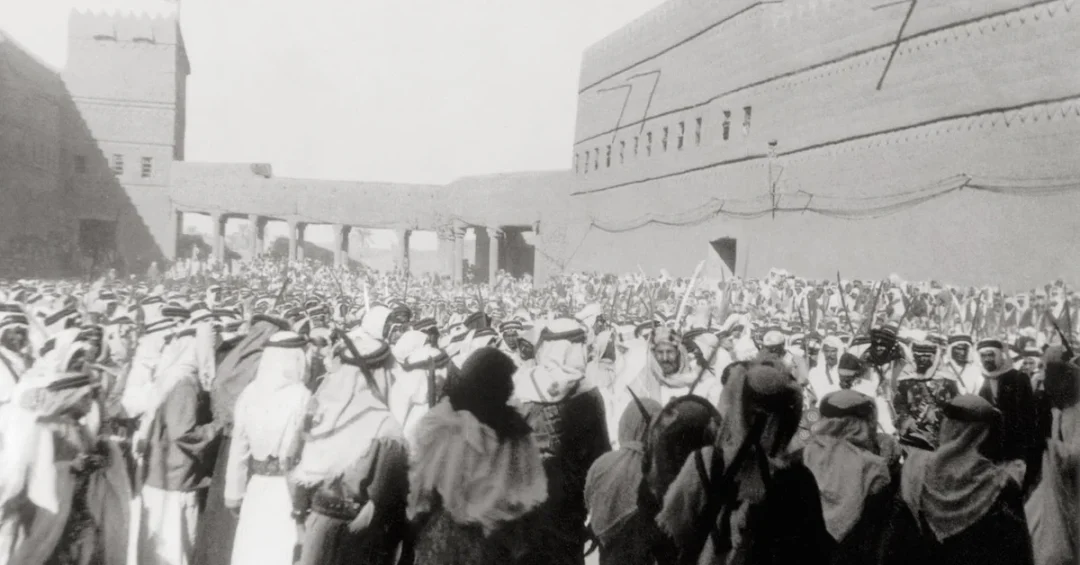
The Saudi Ardah, the Kingdom’s most iconic traditional group dance, has evolved from a pre-battle ritual into a celebrated symbol of national unity, cultural pride, and heritage. According to the Saudi Press Agency (SPA), this popular folkloric performance is renowned not only for its striking visual choreography but also for the historical and cultural significance carried in its accompanying songs. Today, Ardah stands as a living testament to the enduring bond between Saudi leadership and the Saudi people, performed by men who express loyalty and love for their homeland through synchronized movement, poetry, and percussion.
Context and Background
Each region of the Kingdom of Saudi Arabia showcases its own distinct folkloric traditions, harmonizing with the natural environment and the history of its people. Among these, the Saudi Ardah occupies a special place. Traditionally, Ardah was performed in preparation for war, when the prince of an army would inspect his soldiers to assess their readiness for battle. It was a majestic, balanced performance designed to boost the morale of fighters and to elicit determination and courage, particularly among horsemen. Later, the same performance would be staged to celebrate victorious soldiers returning from battle.
Ardah holds a significant place in the history of the Kingdom’s unification, led by King Abdulaziz bin Abdulrahman Al-Faisal Al Saud, who recognized its importance before launching the unification efforts. The dance’s enduring association with Saudi statehood reflects how deeply cultural expression and national identity are intertwined in the Kingdom’s story.
Key Details
The Saudi Ardah is characterized by its majesty and dignity, with orderly rows, raised flags, and swords forming a visually striking scene unified by traditional attire. It concludes with Al-Zamia (loudly saying “under the flag of my master, hear and obey”). Its core elements include the flag, the mehrab (lead chanter or poet), the rows, the poem and the prompter, the drums, the weaponry, the Ardah costumes, and Al-Zamia.
The performance is carried out by two groups: war poem chanters and drummers, with a flag bearer positioned between them. The poem chanters begin by singing verses, followed by drummers who beat rhythms to accompany the raising of swords. The Saudi Ardah begins with Hawraba or Shobash, announced by a poet with a powerful voice who recites stirring verses to assemble performers in two opposing rows, typically comprising 40 to 50 participants. The rows must be balanced, with performers holding hands; they may form a circle as they recite verses together. The physical performance begins with al-Nazr, where performers lean right and left while stationary. When the second half of the poem is recited, drums begin to roll, and the rows sway right and left with a knee-bending motion, raising or lowering swords in synchronized rhythm, especially during verses extolling the country and its leader.
Two types of drums are used: the large Takhmir and the small Tathlith, played with a stick with a curved end. The drums are covered with camel skin and decorated with colorful threads. Dancers wear attire featuring bright colors and embroidery, including garments such as Daqla, Sudairy, Zboon, Shalhat, Bisht, Sayah, Jokha, and Qarmalia, often accessorized with a sword or a gun. A horse parade known as al-Haddwa is also part of the tradition, where a horseman introduces himself by chanting on horseback and exchanging chants with pride and enthusiasm before joining the performers.
Implications and Impact
As the country became safe and enjoyed security, Ardah transformed into a joyous expression of national pride and a symbol performed on official occasions and to welcome important state guests, including heads of state. This evolution reflects the broader story of Saudi Arabia’s stability and its openness to the world. Ardah has received attention from Custodian of the Two Holy Mosques King Salman bin Abdulaziz Al Saud, reflecting his broad interest in the Kingdom’s history and cultural heritage. This is highlighted by Ardah’s inclusion, in December 2015, in the UNESCO List of Intangible Cultural Heritage, and the establishment of the National Center for Saudi Ardah in 2017 at the King Abdulaziz Foundation for Research and Archives, to promote culture, national identity, and support arts popular in the Kingdom.
For international audiences, Ardah offers a window into Saudi Arabia’s living heritage, demonstrating how the Kingdom preserves its traditions while embracing modernization. The dance’s recognition by UNESCO underscores its global cultural value and Saudi Arabia’s commitment to safeguarding intangible heritage for future generations.
Vision 2030 Alignment
The promotion of Ardah aligns closely with Saudi Vision 2030’s cultural objectives, which seek to preserve national identity, celebrate heritage, and foster pride in the Kingdom’s history. By supporting traditional arts through institutions such as the National Center for Saudi Ardah, the Kingdom ensures that its cultural legacy remains vibrant and accessible. As Saudi Arabia continues to host international events and welcome visitors, Ardah stands as a powerful symbol of unity, resilience, and the enduring connection between the leadership and the people, contributing to the Kingdom’s global cultural presence and the success of Vision 2030.
20 Questions
Q1. What is the Saudi Ardah?
A1. The Saudi Ardah is a traditional folkloric group dance performed by men, renowned for its majestic choreography, poetry, and drumming. It symbolizes unity between the leadership and the people and is performed on official occasions and celebrations across the Kingdom.
Q2. What was the original purpose of the Ardah?
A2. Traditionally, Ardah was performed in preparation for war, when a prince inspected his soldiers to assess readiness. It boosted morale and courage, especially among horsemen, and was later performed to celebrate victorious soldiers returning from battle.
Q3. How does Ardah reflect Saudi unity?
A3. Ardah symbolizes the enduring unity between the leadership and the people. Performed by men in orderly rows, it expresses loyalty and love for the homeland, reinforcing the bond between the state and its citizens.
Q4. Who recognized the importance of Ardah before unification?
A4. King Abdulaziz bin Abdulrahman Al-Faisal Al Saud recognized the importance of Ardah before launching the unification efforts, highlighting its role in the history of the Kingdom’s unification and its enduring cultural significance.
Q5. What are the main elements of the Saudi Ardah?
A5. The main elements include the flag, the mehrab (lead chanter or poet), the rows, the poem and the prompter, the drums, the weaponry, the Ardah costumes, and Al-Zamia, which concludes the performance.
Q6. How does the Ardah performance begin?
A6. The performance begins with Hawraba or Shobash, announced by a poet with a powerful voice who recites stirring verses to assemble performers in two opposing rows, typically comprising 40 to 50 participants holding hands.
Q7. What is al-Nazr in the Ardah?
A7. Al-Nazr is the physical beginning of the Ardah, where performers lean right and left while stationary. It precedes the drumming and the swaying motion that follows the recitation of the second half of the poem.
Q8. What drums are used in the Ardah?
A8. Two types of drums are used: the large Takhmir and the small Tathlith, played with a stick with a curved end. The drums are covered with camel skin and decorated with colorful threads.
Q9. What is al-Haddwa?
A9. Al-Haddwa is a horse parade within the Ardah tradition, where a horseman introduces himself by chanting on horseback and exchanging chants with pride and enthusiasm before joining the performers.
Q10. What attire is worn during the Ardah?
A10. Performers wear bright, embroidered garments such as Daqla, Sudairy, Zboon, Shalhat, Bisht, Sayah, Jokha, and Qarmalia, often accessorized with a sword or a gun, reflecting the Kingdom’s rich cultural heritage.
Q11. What does Al-Zamia mean?
A11. Al-Zamia is the concluding cry of the Ardah, loudly saying “under the flag of my master, hear and obey.” It underscores loyalty and obedience to the leadership and concludes the performance with a powerful collective statement.
Q12. When was Ardah added to the UNESCO List?
A12. Ardah was included in the UNESCO List of Intangible Cultural Heritage in December 2015, recognizing its cultural significance and Saudi Arabia’s efforts to preserve and promote its traditional heritage globally.
Q13. When was the National Center for Saudi Ardah established?
A13. The National Center for Saudi Ardah was established in 2017 at the King Abdulaziz Foundation for Research and Archives, to promote culture, national identity, and support arts popular in the Kingdom.
Q14. Who has shown attention to the Ardah tradition?
A14. Custodian of the Two Holy Mosques King Salman bin Abdulaziz Al Saud has shown attention to Ardah, reflecting his broad interest in the Kingdom’s history and cultural heritage, supporting its preservation and promotion.
Q15. How has Ardah evolved over time?
A15. As the country became safe and enjoyed security, Ardah evolved from a pre-battle ritual into a joyous expression of cultural pride, performed on official occasions and to welcome important state guests, including heads of state.
Q16. How many performers typically participate in Ardah?
A16. Two opposing rows typically comprise 40 to 50 participants, who hold hands and may form a circle as they recite verses together, ensuring balanced and synchronized movement throughout the performance.
Q17. What role does poetry play in Ardah?
A17. Poetry is central to Ardah, with chanters singing verses that carry historical and cultural significance. The poem and prompter are key elements, and verses extolling the country and leader are emphasized during the performance.
Q18. What is the significance of the flag in Ardah?
A18. The flag is a central element, held by a flag bearer positioned between the two groups. It symbolizes national unity and sovereignty, and raised flags form a visually striking scene during the performance.
Q19. Why is Ardah important for Saudi cultural identity?
A19. Ardah is important because it embodies the Kingdom’s history, unity, and heritage. It connects generations, reinforces national pride, and showcases Saudi Arabia’s commitment to preserving its intangible cultural heritage for the world.
Q20. How does Ardah support Vision 2030?
A20. Ardah supports Vision 2030 by promoting cultural preservation, national identity, and pride in Saudi heritage. Institutions like the National Center
Reader Feedback
We value your thoughts. Please share your feedback on this article.
Your feedback helps us improve our coverage.