


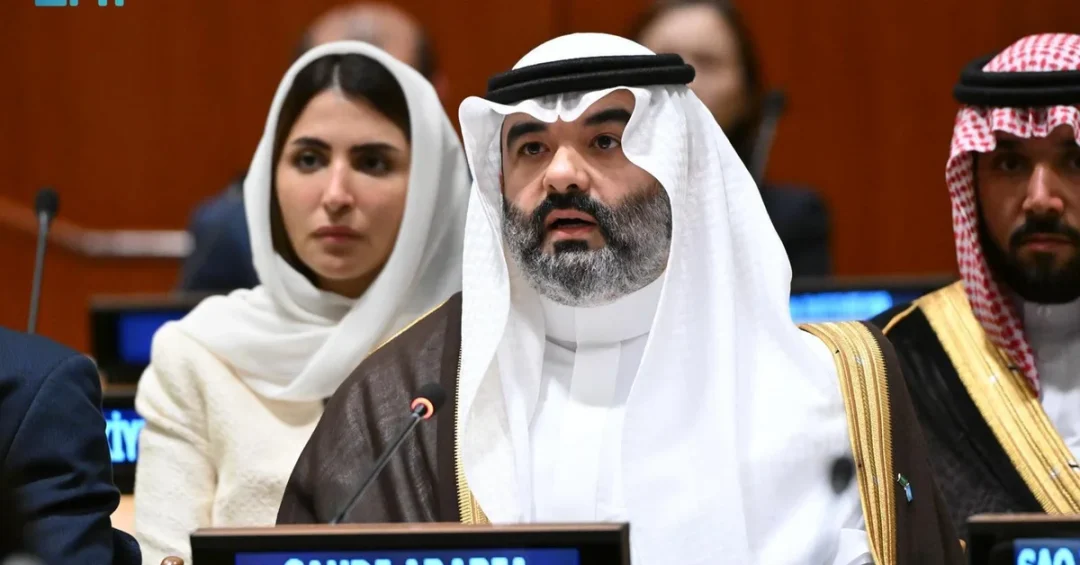
Saudi Arabia’s Minister of Communications and Information Technology, Eng. Abdullah Alswaha, told the Summit of the Future in New York that the Kingdom, under the leadership of the Custodian of the Two Holy Mosques and His Royal Highness the Crown Prince and Prime Minister, offers a global model for international cooperation to bridge social, economic, and artificial intelligence (AI) gaps. Speaking during the session titled ‘Toward a Common Digital Future’, Alswaha outlined Saudi Arabia’s initiatives to expand digital access, foster inclusive innovation, and shape ethical AI governance.
Context and Background
The Summit of the Future, held at the United Nations headquarters, brought together world leaders to adopt the Pact for the Future, a landmark agreement aimed at strengthening global governance for current and future generations. In this context, Saudi Arabia’s participation highlights its commitment to multilateralism and its role as a bridge-builder between developed and developing nations. The Kingdom’s efforts align with its Vision 2030 goals, which prioritize digital transformation, economic diversification, and global engagement.
Key Details
Minister Alswaha underscored Saudi Arabia’s collaboration with the International Telecommunication Union (ITU) on a study to address the digital divide, noting that 2.6 billion people worldwide still lack access to digital solutions. He cited the Kingdom’s virtual hospital as a pioneering model, having enabled specialized surgeries, including open-heart operations, for patients in various countries. Furthermore, Alswaha highlighted the Digital Cooperation Organization (DCO), proposed by Saudi Arabia, which serves over 800 million people by fostering a unified digital market and innovative platforms in healthcare, education, and business.
In the realm of AI, the minister announced several new initiatives: a framework for AI governance in partnership with the UN, the establishment of the International Center for Artificial Intelligence Research and Ethics (ICAIRE) with UNESCO, and the launch of the AI Readiness Framework with the ITU. He also presented seven recommendations, including the creation of an independent international scientific committee on AI, multi-government dialogue on AI governance, a platform for sharing AI standards and experiences, and a global network for capacity development.
Implications and Impact
Saudi Arabia’s proactive stance on digital cooperation and AI governance has significant implications for global efforts to reduce inequalities and promote sustainable development. By sharing its expertise and resources, the Kingdom is helping to shape an inclusive digital future that leaves no one behind. The initiatives announced at the Summit reinforce Saudi Arabia’s position as a leader in technology and innovation, and they contribute to the broader UN agenda on digital cooperation.
Vision 2030 Alignment
These efforts are deeply rooted in Vision 2030, Saudi Arabia’s ambitious blueprint for economic and social transformation. The Kingdom’s focus on digital infrastructure, AI ethics, and global partnerships not only drives domestic growth but also positions Saudi Arabia as a catalyst for international collaboration. As the world moves toward a common digital future, Saudi Arabia remains committed to empowering humanity and ensuring that technological advancements benefit all.
20 Questions
Q1. What event did Minister Alswaha address?
A1. Eng. Abdullah Alswaha spoke at the Summit of the Future session titled ‘Toward a Common Digital Future’ in New York on September 24, 2024.
Q2. What did Minister Alswaha say about Saudi Arabia’s role?
A2. He said the Kingdom presents a model of international cooperation to bridge social, economic, and AI gaps under the leadership of the Custodian of the Two Holy Mosques and the Crown Prince.
Q3. How many people lack access to digital solutions?
A3. According to Minister Alswaha, 2.6 billion people worldwide lack access to digital solutions.
Q4. What partnership did Saudi Arabia announce with the ITU?
A4. Saudi Arabia is collaborating with the ITU on a study to bridge the digital divide and launched the AI Readiness Framework in partnership with the ITU.
Q5. What is the virtual hospital initiative?
A5. The virtual hospital is a Saudi pioneering model in healthcare that has enabled specialized surgeries, including open-heart operations, on patients in various countries.
Q6. What is the Digital Cooperation Organization (DCO)?
A6. The DCO is an organization proposed by Saudi Arabia to bridge digital gaps and serve over 800 million people by providing digital platforms and a unified digital market.
Q7. How is Saudi Arabia contributing to AI governance?
A7. Through its membership in the UN Secretary-General’s AI Advisory Body and by presenting seven recommendations for AI governance.
Q8. What are the seven recommendations presented by Saudi Arabia?
A8. They include establishing an independent international scientific committee on AI, launching multi-government dialogue, creating a platform for sharing AI standards, and building a global network for capacity development.
Q9. What framework did Saudi Arabia announce in partnership with the UN?
A9. The Kingdom announced its framework for AI governance in partnership with the UN.
Q10. What is ICAIRE?
A10. ICAIRE is the International Center for Artificial Intelligence Research and Ethics, established in partnership with UNESCO.
Q11. What is the AI Readiness Framework?
A11. It is a framework launched in partnership with the International Telecommunication Union to assess and enhance AI readiness.
Q12. What did Minister Alswaha say about the Pact for the Future?
A12. He said that as we celebrate the launch of the Pact for the Future, we must unite in recognizing that we have only one option: a comprehensive AI that empowers humanity and ensures no one is left behind.
Q13. How does Saudi Arabia’s digital economy grow?
A13. The Kingdom is proud of the growth of its digital economy, which is fostered by providing digital platforms and a unified digital market to support innovative models in healthcare, education, and business.
Q14. What is the goal of the DCO?
A14. The DCO aims to bridge gaps and serve over 800 million people by fostering a unified digital market and innovative entrepreneurial models.
Q15. How does Saudi Arabia support global healthcare?
A15. Through the virtual hospital, Saudi Arabia has performed numerous specialized surgeries, including open-heart operations, on patients in various countries.
Q16. What is Saudi Arabia’s role in the AI Advisory Body?
A16. Saudi Arabia contributes to bridging social, economic, and AI gaps, shaping the future of humanity, and empowering individuals through its membership in the AI Advisory Body led by the UN Secretary-General.
Q17. What did Minister Alswaha highlight about international cooperation?
A17. He highlighted that Saudi Arabia, under its leadership, presents a model of international cooperation to bridge social, economic, and AI gaps.
Q18. What is the significance of the Summit of the Future?
A18. The Summit of the Future brings together world leaders to adopt the Pact for the Future, aiming to strengthen global governance for current and future generations.
Q19. How does Saudi Arabia’s participation align with Vision 2030?
A19. Saudi Arabia’s participation aligns with Vision 2030 by promoting digital transformation, economic diversification, and global engagement, showcasing the Kingdom’s commitment to a sustainable and inclusive future.
Q20. What does the Kingdom aim to achieve through these initiatives?
A20. The Kingdom aims to empower humanity, ensure no one is left behind in the digital era, and foster global cooperation to bridge social, economic, and AI gaps.
Reader Feedback
We value your thoughts. Please share your feedback on this article.
Your feedback helps us improve our coverage.