


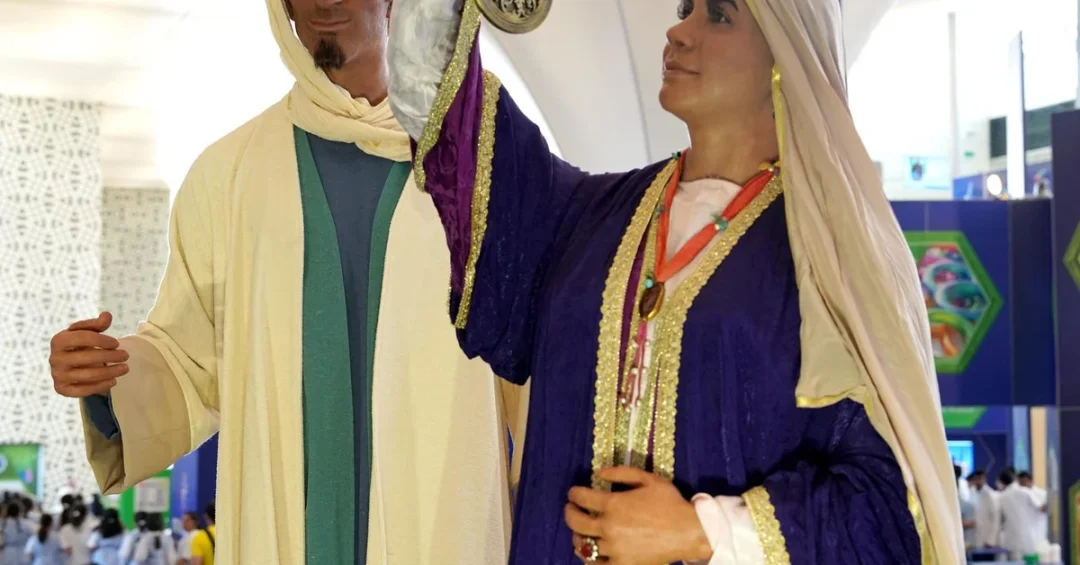
Riyadh, September 24, 2024 — The STEAM Festival, organized by King Salman Science Oasis and running until the end of September, is shining a spotlight on the remarkable legacy of Mariam Al-Astrolabi, a pioneering Muslim scientist whose work in astronomy and engineering continues to inspire generations. The festival, held in Riyadh, aims to instill pride in Saudi Arabia’s rich historical heritage, raise awareness about the vital role of women in science, and encourage young girls to pursue careers in STEAM fields, aligning with the aspirations of Saudi Vision 2030.
Context and Background
Mariam Al-Astrolabi, an astronomer from the Hamdanid dynasty in the late 10th century AD, is celebrated as one of the most notable women in Islamic scientific history. She excelled in astronomy and engineering, and is best known for her work in creating and perfecting astrolabes—instruments used in ancient times to determine locations based on the movement of stars. Her contributions were instrumental in marine navigation, helping explorers chart new routes, and also played a crucial role in determining prayer times and the direction of the Qibla. The astrolabe, which varied in size and design, was a symbol of the integration of science, technology, engineering, arts, and mathematics (STEAM). Some astrolabes were small enough to be carried like a pocket watch, predating mechanical clocks.
Centuries after her passing, Al-Astrolabi’s name continues to inspire. In 1990, American astronomer Henry E. Holt honored her by naming an asteroid he discovered at the Palomar Observatory in San Diego, California, after her. This recognition underscores her lasting impact on the field of astronomy.
Key Details
The STEAM Festival at King Salman Science Oasis is designed to highlight the achievements of Saudi women in science and to foster a new generation of innovators. Through interactive exhibits and educational activities, visitors can learn about the astrolabe’s significance and Al-Astrolabi’s contributions. The festival also emphasizes the importance of STEAM education in driving innovation and economic growth, in line with Saudi Vision 2030’s goals of diversifying the economy and empowering women.
By celebrating historical figures like Al-Astrolabi, the festival not only honors the past but also inspires future leaders. It provides a platform for young girls to see themselves in science and technology roles, breaking barriers and contributing to the nation’s development.
Implications and Impact
The tribute to Mariam Al-Astrolabi comes at a time when Saudi Arabia is actively promoting women’s participation in STEM fields. Under Vision 2030, the Kingdom has made significant strides in education and workforce inclusion, with women now making up a growing percentage of graduates in science and engineering. The festival serves as a reminder of the historical contributions of Muslim women to science and reinforces the message that women are essential to the Kingdom’s future prosperity.
Internationally, the recognition of Al-Astrolabi’s work highlights the rich scientific heritage of the Islamic world and its contributions to global knowledge. It also showcases Saudi Arabia’s commitment to preserving and promoting this heritage while embracing modernity and innovation.
Vision 2030 Alignment
The STEAM Festival and its focus on Mariam Al-Astrolabi are directly aligned with Saudi Vision 2030’s objectives to empower women, foster a culture of innovation, and enhance the quality of life for all citizens. By celebrating historical achievements and encouraging youth to pursue STEAM careers, the Kingdom is investing in its human capital and building a sustainable future. As Saudi Arabia continues to transform, events like this demonstrate the nation’s dedication to honoring its past while paving the way for a prosperous and inclusive tomorrow.
20 Questions
Q1. What is the STEAM Festival and who organized it?
A1. The STEAM Festival is an event organized by King Salman Science Oasis in Riyadh, running until the end of September. It aims to celebrate historical scientific contributions and inspire youth in STEAM fields, aligning with Saudi Vision 2030.
Q2. Who is Mariam Al-Astrolabi?
A2. Mariam Al-Astrolabi was a Muslim astronomer from the late 10th century Hamdanid dynasty, renowned for perfecting the astrolabe. She is one of the most notable women in Islamic scientific history.
Q3. What is an astrolabe and how was it used?
A3. An astrolabe is an ancient instrument used to determine locations by observing star movements. It was crucial for marine navigation, determining prayer times, and finding the Qibla direction. It integrated science, technology, engineering, arts, and mathematics.
Q4. Why is Mariam Al-Astrolabi significant in Islamic history?
A4. She made pioneering contributions to astronomy and engineering, particularly in designing and improving astrolabes. Her work exemplifies the role of women in science during the Islamic Golden Age.
Q5. How did Al-Astrolabi’s work impact navigation?
A5. Her perfected astrolabes helped sailors navigate across seas by accurately determining latitude and time. This facilitated exploration and trade, contributing to the expansion of Islamic and global commerce.
Q6. What is the connection between astrolabes and STEAM?
A6. Astrolabes represent the integration of science (astronomy), technology (design), engineering (precision manufacturing), arts (decorative elements), and mathematics (calculations). They are a historical example of STEAM principles.
Q7. How does the festival aim to inspire girls?
A7. By highlighting Al-Astrolabi’s achievements, the festival provides a female role model in science. It encourages girls to pursue STEAM careers, showing that women have historically excelled in these fields.
Q8. What is the significance of naming an asteroid after Al-Astrolabi?
A8. In 1990, astronomer Henry E. Holt named an asteroid after her, recognizing her contributions to astronomy. This honor highlights her lasting global impact and inspires future generations.
Q9. How does the festival align with Saudi Vision 2030?
A9. The festival supports Vision 2030’s goals of empowering women, fostering innovation, and diversifying the economy. It encourages youth to pursue STEAM education, which is vital for future economic growth.
Q10. What activities are featured at the STEAM Festival?
A10. The festival includes interactive exhibits, workshops, and educational displays about astrolabes and Al-Astrolabi’s work. These activities aim to engage visitors and spark interest in science and technology.
Q11. Why is it important to celebrate historical figures like Al-Astrolabi?
A11. Celebrating historical figures instills pride in cultural heritage and provides inspiration. It shows that Saudi women have made significant contributions to science, motivating current and future generations.
Q12. How did Al-Astrolabi’s work contribute to determining prayer times?
A12. Astrolabes helped determine the times for daily prayers by tracking the sun’s position. They also indicated the Qibla direction, ensuring Muslims could pray facing Mecca accurately.
Q13. What role did women play in Islamic scientific history?
A13. Women like Al-Astrolabi made notable contributions to astronomy, mathematics, and medicine. Their work was integral to the advancement of knowledge during the Islamic Golden Age.
Q14. How can young Saudis benefit from learning about Al-Astrolabi?
A14. Learning about her achievements can inspire young Saudis to pursue STEM fields, knowing that their heritage includes pioneering scientists. It reinforces the message that women can excel in science and technology.
Q15. What is the significance of the astrolabe in marine navigation?
A15. The astrolabe allowed sailors to determine their latitude and time at sea, enabling safer and more accurate navigation. This was crucial for trade and exploration during the Islamic Golden Age and beyond.
Q16. How does the festival promote women in science?
A16. By showcasing Al-Astrolabi’s legacy, the festival highlights women’s historical contributions to science. It encourages girls to see science as a viable and rewarding career path, breaking gender stereotypes.
Q17. What educational opportunities does King Salman Science Oasis offer?
A17. King Salman Science Oasis offers interactive exhibits, workshops, and events like the STEAM Festival. These aim to promote science literacy and inspire innovation among youth, supporting Vision 2030’s educational goals.
Q18. How does Al-Astrolabi’s story reflect Saudi Arabia’s commitment to women’s empowerment?
A18. Her story exemplifies the historical contributions of women in Saudi Arabia, aligning with Vision 2030’s focus on empowering women today. It shows that women’s participation in science is part of the Kingdom’s heritage.
Q19. What is the lasting legacy of Mariam Al-Astrolabi?
A19. Her legacy includes advancements in astronomy and engineering, and she remains a symbol of women’s scientific achievement. The asteroid named after her and ongoing tributes ensure her memory inspires future generations.
Q20. How can the public participate in the STEAM Festival?
A20. The public can visit King Salman Science Oasis during the festival to engage with exhibits and activities. It is an opportunity to learn about Saudi scientific heritage and support Vision 2030’s educational initiatives.
Reader Feedback
We value your thoughts. Please share your feedback on this article.
Your feedback helps us improve our coverage.
Related articles
 KAUST, Abdul Latif Jameel Motors, Toyota Partner on Hydrogen Fuel Cells
 Saudi Arabia Showcases Water Expertise at AIWW
 Saudi Space Agency Strengthens SpaceX Partnership
 Mobily Showcases Submarine Cable Investments at Singapore Conference
 Saudi Arabia Discusses AI Capacity Building at UN Advisory Board Meeting
 Saudi Team Wins Two Awards at Balkan Informatics Olympiad