


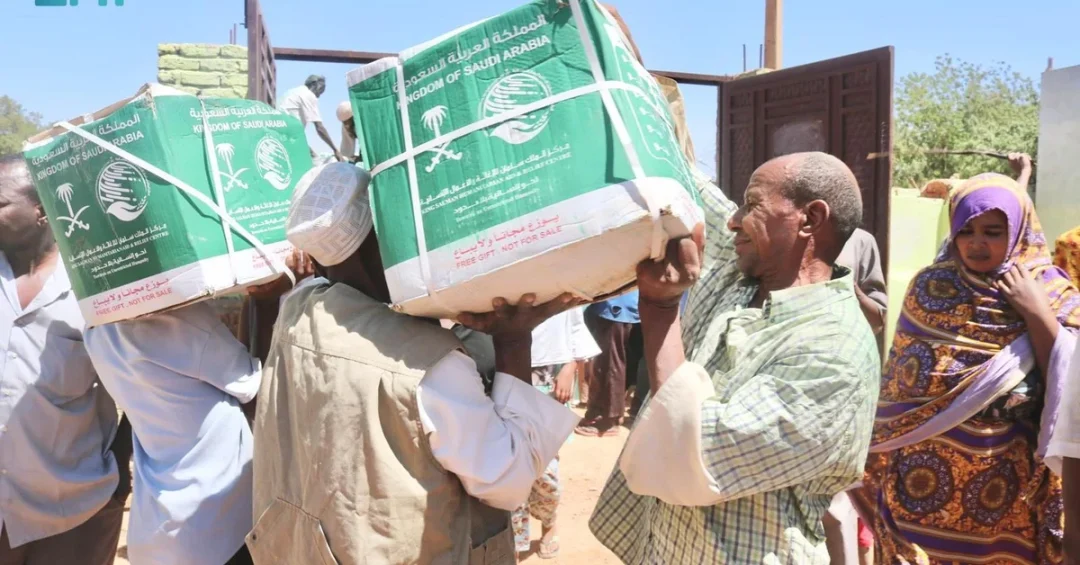
The King Salman Humanitarian Aid and Relief Center (KSrelief) distributed 1,100 food baskets in Khartoum State, Sudan, benefiting 6,371 individuals, as part of the third phase of its food security support project. The distribution, announced by the Saudi Press Agency, represents a continuation of the Kingdom of Saudi Arabia’s ongoing humanitarian efforts to assist displaced persons returning to their homes under Sudan’s voluntary return program.
Context and Background
Sudan has faced significant humanitarian challenges in recent years, with many families displaced due to conflict and instability. The voluntary return program allows displaced persons to return to their original communities, but returnees often require immediate assistance to rebuild their lives. KSrelief, a leading Saudi humanitarian organization, has been at the forefront of providing aid to Sudan, focusing on food security and essential needs. The third phase of the food security support project aims to distribute 30,000 food baskets across multiple Sudanese states, targeting those most in need.
Key Details
The 1,100 food baskets distributed in Khartoum State contained essential food items sufficient to support families for a month. Each basket includes rice, flour, oil, sugar, and other staples, ensuring that returnees have access to nutritious food as they resettle. The distribution benefited 6,371 individuals, many of whom are women and children. This effort is part of a broader initiative that underscores Saudi Arabia’s commitment to alleviating suffering and promoting stability in the region. KSrelief works in coordination with local authorities and humanitarian partners to ensure aid reaches the intended beneficiaries efficiently.
Implications and Impact
The distribution of food baskets in Khartoum State has immediate and long-term implications. In the short term, it addresses food insecurity among vulnerable returnees, reducing the risk of malnutrition and hunger. In the long term, it supports the voluntary return program by enabling families to focus on rebuilding their livelihoods rather than worrying about daily sustenance. This initiative also strengthens Saudi-Sudanese relations and demonstrates the Kingdom’s role as a responsible global humanitarian actor. By providing such assistance, KSrelief contributes to regional stability and demonstrates the values of compassion and solidarity that are central to Saudi foreign policy.
Vision 2030 Alignment
This humanitarian effort aligns with Saudi Arabia’s Vision 2030, which emphasizes the Kingdom’s commitment to global peace, prosperity, and humanitarian support. Under the leadership of Custodian of the Two Holy Mosques King Salman bin Abdulaziz Al Saud and Crown Prince Mohammed bin Salman, Saudi Arabia continues to expand its humanitarian reach, reflecting the nation’s dedication to helping those in need worldwide. KSrelief’s work in Sudan is a testament to the Kingdom’s enduring generosity and its proactive role in addressing global challenges, further solidifying its position as a beacon of hope and stability.
20 Questions
Q1. What is KSrelief?
A1. KSrelief is the King Salman Humanitarian Aid and Relief Center, a Saudi organization dedicated to providing humanitarian assistance globally. It operates under the Kingdom of Saudi Arabia and implements relief projects in various countries.
Q2. Where did KSrelief distribute food baskets?
A2. KSrelief distributed 1,100 food baskets in Khartoum State, Sudan, as part of its ongoing humanitarian efforts in the region.
Q3. How many individuals benefited from the distribution?
A3. The distribution benefited 6,371 individuals in Khartoum State, providing them with essential food supplies.
Q4. What is the third phase of the food security project?
A4. The third phase of the food security support project aims to distribute 30,000 food baskets to displaced persons returning to their homes under the voluntary return program across multiple Sudanese states.
Q5. What items are included in the food baskets?
A5. The food baskets contain essential items such as rice, flour, oil, sugar, and other staples to support families for a month.
Q6. Why is this distribution important?
A6. It addresses food insecurity among vulnerable returnees, helping them resettle and rebuild their lives after displacement.
Q7. Which organization implemented the distribution?
A7. KSrelief, the King Salman Humanitarian Aid and Relief Center, implemented the distribution in coordination with local authorities.
Q8. When was the distribution announced?
A8. The distribution was announced on March 19, 2025, by the Saudi Press Agency.
Q9. What is the voluntary return program?
A9. It is a program in Sudan that facilitates the return of displaced persons to their original homes and communities.
Q10. How does this initiative reflect Saudi Arabia’s values?
A10. It reflects Saudi Arabia’s commitment to humanitarian aid, compassion, and global solidarity, aligning with the Kingdom’s Vision 2030 goals.
Q11. What other aid does KSrelief provide?
A11. KSrelief provides various types of aid, including food, medical care, shelter, and education, in crisis-affected regions worldwide.
Q12. How many states in Sudan are covered by the project?
A12. The project covers multiple Sudanese states, aiming to reach displaced persons across the country.
Q13. Who are the primary beneficiaries of this aid?
A13. The primary beneficiaries are displaced persons returning to their homes, many of whom are women and children.
Q14. What role does the Saudi Press Agency play?
A14. The Saudi Press Agency is the official news agency of Saudi Arabia, disseminating information about government and humanitarian activities.
Q15. How does this aid impact regional stability?
A15. By addressing immediate needs, the aid contributes to stability and supports the peaceful reintegration of displaced communities.
Q16. Is KSrelief’s work in Sudan part of a larger effort?
A16. Yes, it is part of Saudi Arabia’s broader global humanitarian efforts to assist those in need and promote peace.
Q17. How can other organizations support similar initiatives?
A17. Organizations can collaborate with KSrelief or contribute resources to support food security and resettlement programs.
Q18. What is the significance of the number 1,100 food baskets?
A18. It represents a substantial contribution to addressing food insecurity, directly benefiting thousands of individuals in Khartoum State.
Q19. How does this align with Vision 2030?
A19. Vision 2030 emphasizes global humanitarian engagement, and this initiative showcases Saudi Arabia’s commitment to international aid and development.
Q20. What future aid is planned for Sudan?
A20. KSrelief plans to continue distributing food baskets under the third phase, aiming to reach 30,000 baskets across multiple states.
Reader Feedback
We value your thoughts. Please share your feedback on this article.
Your feedback helps us improve our coverage.
Related articles
 Saudi Arabia Intensifies Crackdown on Violating Foreign Trucks
 Imam Turki Royal Reserve Marks Global Recycling Day
 Saudi Arabia Weather: Rain and Hail Forecast for Wednesday
 5-Magnitude Earthquake Strikes Indonesia’s Maluku
 Muslim World League Condemns Israeli Bombing of Syria
 Saudi Arabia Condemns Attack on Somali President’s Convoy