


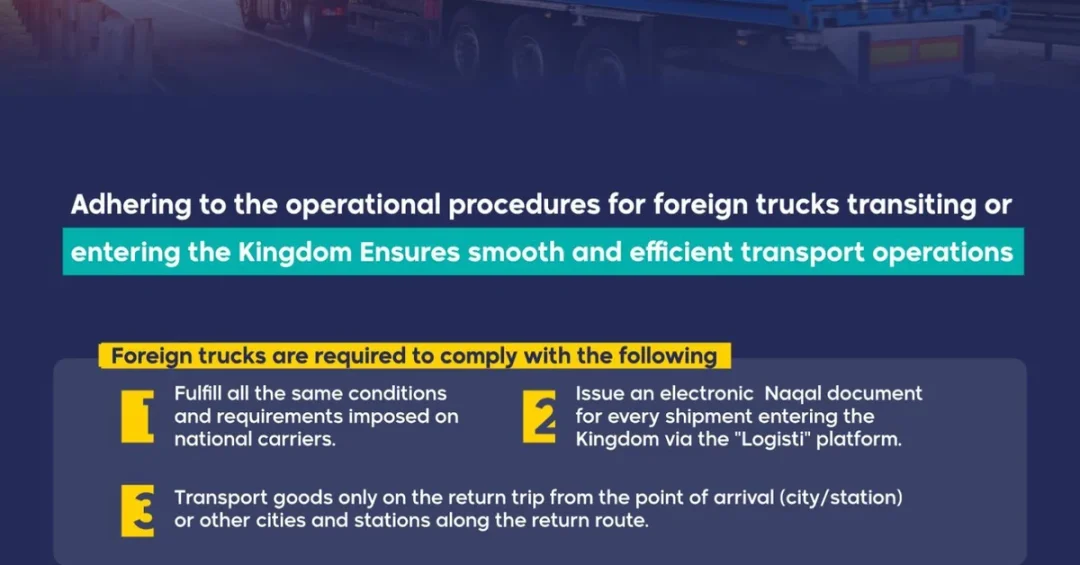
The Transport General Authority (TGA) of Saudi Arabia, in collaboration with relevant government authorities, has established four key regulations to govern foreign truck operations within the Kingdom. Announced on September 24, 2024, these regulations are designed to ensure compliance with national transportation laws, promote fair competition, and enhance the sustainability of the logistics sector, aligning with Saudi Arabia’s Vision 2030 objectives.
Context and Background
Saudi Arabia has been actively developing its logistics infrastructure as part of its Vision 2030 plan to become a global logistics hub. The TGA, responsible for regulating transportation across the Kingdom, has introduced these regulations to create a structured environment for foreign trucks operating within its borders. This move is part of broader efforts to streamline transportation, attract investment, and ensure that all carriers, local and foreign, operate under fair and transparent conditions.
Key Details
The regulations mandate that foreign trucks obtain an electronic transport document through the bayan.logisti.sa platform. This digital documentation ensures that all cross-border transport activities are recorded and compliant with Saudi laws. Additionally, foreign trucks are restricted to transporting goods only on the return journey from the arrival point or along the return route. They must also adhere to the same transportation rules as local carriers, including weight limits, safety standards, and environmental guidelines. Any violations must be settled before the truck enters or leaves Saudi Arabia. These measures aim to ensure fair competition, create a favourable investment environment, reduce illegal practices, enhance road safety, preserve infrastructure, and support environmental sustainability in the logistics sector.
Implications and Impact
These regulations are expected to have significant implications for regional trade and transportation. By requiring foreign trucks to comply with local rules, the TGA ensures that all operators contribute fairly to the maintenance of road infrastructure and adhere to safety and environmental standards. This can lead to a more level playing field for Saudi carriers, potentially increasing their competitiveness. Moreover, the electronic documentation system will improve transparency and reduce bureaucratic delays, facilitating smoother cross-border logistics. The regulations also support Saudi Arabia’s efforts to enhance road safety and reduce the environmental impact of transportation, aligning with global sustainability goals.
Vision 2030 Alignment
These regulations are a direct reflection of Saudi Arabia’s Vision 2030, which aims to diversify the economy and establish the Kingdom as a leading global logistics hub. By regulating foreign truck operations, the TGA is contributing to the development of a robust and sustainable logistics sector that can support increased trade and investment. This initiative is part of a broader strategy to improve the business environment, attract foreign investment, and enhance the Kingdom’s position in international trade. As Saudi Arabia continues to modernize its transportation infrastructure, such measures will play a crucial role in achieving the ambitious goals of Vision 2030.
20 Questions
Q1. What are the four key regulations established by the TGA for foreign truck operations?
A1. The regulations require foreign trucks to obtain an electronic transport document via bayan.logisti.sa, limit goods transport to the return journey, adhere to the same rules as local carriers, and settle violations before entering or leaving Saudi Arabia.
Q2. Why did Saudi Arabia introduce these regulations for foreign trucks?
A2. The regulations aim to ensure compliance with transportation laws, promote fair competition, enhance road safety, preserve infrastructure, and support environmental sustainability in the logistics sector, aligning with Vision 2030 goals.
Q3. What is the bayan.logisti.sa platform?
A3. Bayan.logisti.sa is an electronic platform where foreign trucks must obtain a transport document. It streamlines documentation, ensures compliance, and facilitates smoother cross-border logistics operations within Saudi Arabia.
Q4. How do these regulations affect local carriers in Saudi Arabia?
A4. The regulations create a level playing field by requiring foreign trucks to follow the same rules as local carriers. This promotes fair competition, potentially benefiting local carriers and enhancing the overall efficiency of the logistics sector.
Q5. What are the penalties for non-compliance with these regulations?
A5. Foreign trucks must settle any violations before entering or leaving Saudi Arabia. Non-compliance may result in penalties, delays, or denial of entry, as enforced by the Transport General Authority and relevant authorities.
Q6. How do these regulations support Saudi Arabia’s environmental goals?
A6. By enforcing adherence to environmental standards, the regulations help reduce emissions and promote sustainable practices in the logistics sector, contributing to Saudi Arabia’s broader environmental sustainability objectives under Vision 2030.
Q7. Will these regulations impact trade with neighboring countries?
A7. The regulations aim to facilitate smoother trade by ensuring compliance and reducing illegal practices. They are expected to enhance efficiency and fairness, positively impacting trade with neighboring countries in the long run.
Q8. What is the role of the Transport General Authority (TGA)?
A8. The TGA regulates transportation in Saudi Arabia, ensuring safety, efficiency, and compliance with laws. It oversees the implementation of these regulations to support the logistics sector and Vision 2030 objectives.
Q9. How can foreign truck operators obtain the electronic transport document?
A9. Foreign truck operators can obtain the electronic transport document through the bayan.logisti.sa platform. The process is designed to be straightforward, ensuring compliance before entering Saudi Arabia.
Q10. Do these regulations apply to all types of goods?
A10. The regulations apply to all goods transported by foreign trucks, with the requirement that transport is limited to the return journey. This ensures that foreign trucks do not engage in domestic point-to-point haulage within the Kingdom.
Q11. How do these regulations enhance road safety?
A11. By requiring foreign trucks to adhere to the same safety standards as local carriers, the regulations reduce the risk of accidents caused by non-compliant vehicles, thereby enhancing overall road safety in Saudi Arabia.
Q12. What is the expected impact on logistics costs?
A12. The regulations may lead to more efficient logistics operations by reducing illegal practices and ensuring fair competition. In the long term, this could stabilize costs and improve service quality in the logistics sector.
Q13. Are there any exemptions to these regulations?
A13. The TGA has not announced any exemptions. All foreign trucks must comply with the regulations to operate within Saudi Arabia, ensuring consistency and fairness across the board.
Q14. How do these regulations align with Vision 2030?
A14. They support Vision 2030 by enhancing the logistics sector’s sustainability, attracting investment, and positioning Saudi Arabia as a global logistics hub, in line with the Kingdom’s economic diversification goals.
Q15. What is the timeline for implementing these regulations?
A15. The regulations were announced on September 24, 2024, and are effective immediately. Foreign truck operators must comply from that date to avoid violations and ensure smooth cross-border operations.
Q16. How will the TGA monitor compliance?
A16. The TGA, in collaboration with relevant authorities, will monitor compliance through electronic documentation and inspections at entry and exit points, ensuring adherence to the regulations.
Q17. What are the benefits for foreign truck operators?
A17. Foreign operators benefit from clear guidelines, reduced illegal competition, and a streamlined process via the electronic platform. This fosters a predictable and fair operating environment in Saudi Arabia.
Q18. Will these regulations affect transit times?
A18. The electronic documentation is expected to reduce bureaucratic delays, potentially improving transit times. However, compliance checks may require additional time, but overall efficiency should improve.
Q19. How do these regulations support the local economy?
A19. By ensuring fair competition and reducing illegal practices, the regulations support local carriers and contribute to a healthier logistics sector, which is vital for economic growth and diversification.
Q20. What are the next steps for the TGA in logistics reform?
A20. The TGA will continue to develop and implement regulations that enhance the logistics sector, aligning with Vision 2030. Future steps may include further digitalization, infrastructure improvements, and international cooperation.
Reader Feedback
We value your thoughts. Please share your feedback on this article.
Your feedback helps us improve our coverage.