


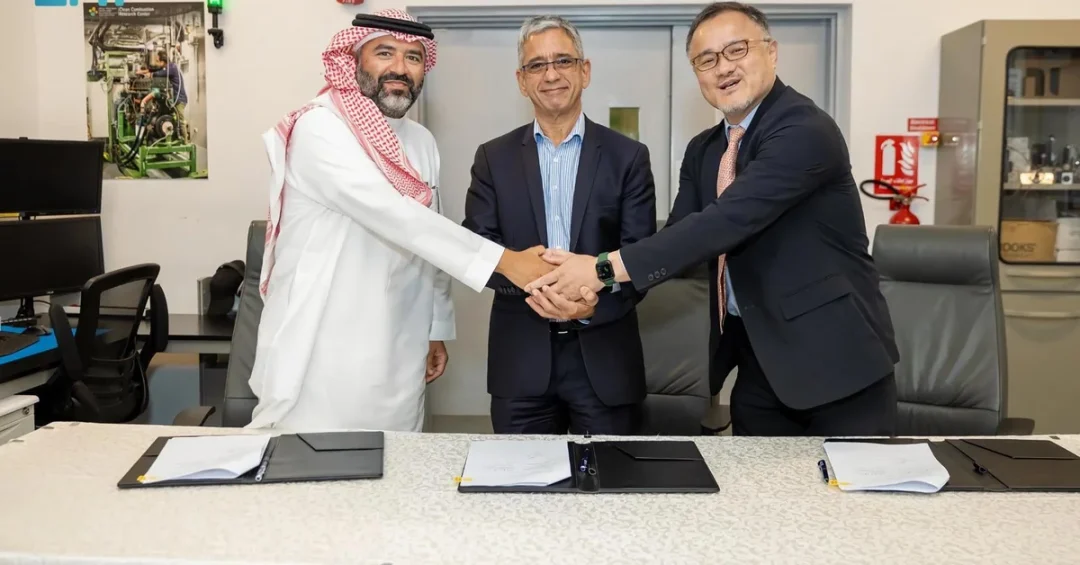
King Abdullah University of Science and Technology (KAUST), Abdul Latif Jameel Motors, and Toyota Motor Corporation (TMC) have launched a strategic partnership to advance hydrogen fuel cell research in Saudi Arabia, supporting the Kingdom’s decarbonization goals and its target of achieving net-zero greenhouse gas emissions by 2060. The collaboration, announced via the Saudi Press Agency (SPA), marks a significant step in Saudi Arabia’s efforts to lead in clean energy innovation and aligns with the objectives of Vision 2030.
Context and Background
Saudi Arabia has long been a global energy leader, and under Vision 2030, the Kingdom is diversifying its energy mix and investing heavily in sustainable technologies. Hydrogen, particularly green and blue hydrogen, is seen as a key enabler of the global energy transition. KAUST, a premier research institution, has established the Clean Energy Research Platform (CERP) to drive cutting-edge research in this field. The partnership with Abdul Latif Jameel Motors and Toyota brings together academic excellence and industry expertise to accelerate the development of zero-carbon fuel cell technologies.
Toyota, a pioneer in hydrogen fuel cell vehicles, provides Proton Electrolyte Membrane (PEM) fuel cell modules to KAUST, enabling the creation of a state-of-the-art laboratory. This facility will focus on tailoring fuel cells to the region’s unique environmental conditions, such as high temperatures and humidity. Abdul Latif Jameel Motors, a leading automotive distributor in the region, supports the initiative financially and technically, underscoring its commitment to sustainable mobility.
Key Details
The centerpiece of the partnership is KAUST’s acquisition of PEM fuel cell modules from Toyota, which will be used to establish a dedicated laboratory under CERP. Professor Mani Sarathy, from KAUST’s Physical Science and Engineering Division, emphasized the collaboration’s importance: “At KAUST, we are excited to collaborate with TMC and Abdul Latif Jameel Motors to drive the adoption of hydrogen fuel cell technology in Saudi Arabia, aligning with the Kingdom’s Vision 2030 and net-zero goals for 2060. Through our Clean Energy Research Platform (CERP), we are focused on advancing research that will optimize hydrogen fuel cells for the region’s specific conditions, ensuring their efficiency and reliability.”
Professor Sarathy and his team are conducting modeling and experimental studies to assess factors such as temperature sensitivity, humidity impact, and overall efficiency. The goal is to maximize the environmental benefits of fuel cells within the Kingdom’s infrastructure. Toyota and Abdul Latif Jameel Motors provide both technical and financial support, ensuring the research is grounded in real-world applications and can be scaled for commercial use.
Implications and Impact
This partnership has far-reaching implications for Saudi Arabia and the broader region. By advancing hydrogen fuel cell technology, the Kingdom can reduce its carbon footprint in the transportation sector and beyond, contributing to global climate goals. Saudi Arabia’s vast renewable energy resources position it to produce green hydrogen competitively, and with Carbon Capture, Utilization, and Storage (CCUS) technology, it can also produce blue hydrogen. The Kingdom aims to produce approximately 2.9 million tons of hydrogen by 2030, for both domestic use and export.
The collaboration also strengthens Saudi Arabia’s role as a hub for clean energy innovation, attracting international partners and fostering local talent. It supports the diversification of the economy, a core Vision 2030 objective, by creating high-skilled jobs and promoting knowledge transfer. Furthermore, the research outcomes could benefit other sectors, such as power generation and industrial processes, further integrating hydrogen into the national energy system.
Vision 2030 Alignment
This initiative is a clear reflection of Saudi Arabia’s Vision 2030, which seeks to diversify the economy, reduce dependence on oil, and promote sustainable development. By investing in hydrogen fuel cell research, the Kingdom is positioning itself as a global leader in clean energy and contributing to the global fight against climate change. The partnership between KAUST, Abdul Latif Jameel Motors, and Toyota exemplifies the power of collaboration between academia, industry, and government in achieving these ambitious goals. As Saudi Arabia continues to innovate and invest in green technologies, it paves the way for a prosperous and sustainable future, reinforcing its commitment to net-zero emissions by 2060.
20 Questions
Q1. What is the main goal of the partnership between KAUST, Abdul Latif Jameel Motors, and Toyota?
A1. The partnership aims to advance hydrogen fuel cell research in Saudi Arabia, supporting the Kingdom’s decarbonization efforts and its net-zero emissions target by 2060.
Q2. What is the Clean Energy Research Platform (CERP)?
A2. CERP is a research platform at KAUST dedicated to advancing clean energy technologies, including hydrogen fuel cells, to support Saudi Arabia’s sustainable energy goals.
Q3. What are PEM fuel cell modules?
A3. PEM (Proton Electrolyte Membrane) fuel cell modules are devices that convert hydrogen and oxygen into electricity, emitting only water vapor, and are key to zero-carbon transportation.
Q4. How will KAUST use the PEM fuel cell modules from Toyota?
A4. KAUST will use them to establish a state-of-the-art laboratory under CERP, focusing on optimizing fuel cell performance for the region’s specific environmental conditions.
Q5. Who is Professor Mani Sarathy?
A5. Professor Mani Sarathy is a researcher at KAUST’s Physical Science and Engineering Division, leading efforts in hydrogen fuel cell research and innovation.
Q6. What factors are being studied to optimize fuel cells?
A6. Researchers are studying temperature sensitivity, humidity impact, and overall efficiency to maximize the environmental benefits of fuel cells in Saudi Arabia’s infrastructure.
Q7. How does this partnership support Saudi Arabia’s net-zero goal?
A7. By advancing hydrogen fuel cell technology, the partnership helps reduce carbon emissions in transportation and other sectors, contributing to the net-zero target by 2060.
Q8. What role does Abdul Latif Jameel Motors play in the partnership?
A8. Abdul Latif Jameel Motors provides technical and financial support, leveraging its automotive expertise to help drive the adoption of hydrogen fuel cell technology.
Q9. Why is hydrogen important for Saudi Arabia’s energy future?
A9. Hydrogen is a clean energy carrier that can be produced from renewable sources and used in various sectors, helping diversify the economy and reduce carbon emissions.
Q10. How much hydrogen does Saudi Arabia aim to produce by 2030?
A10. Saudi Arabia aims to produce approximately 2.9 million tons of hydrogen by 2030, for both domestic use and export, at competitive costs.
Q11. What are green and blue hydrogen?
A11. Green hydrogen is produced using renewable energy, while blue hydrogen is produced from natural gas with carbon capture and storage, both reducing carbon emissions.
Q12. What is CCUS technology?
A12. CCUS (Carbon Capture, Utilization, and Storage) technology captures carbon emissions from industrial processes and either utilizes or stores them to prevent release into the atmosphere.
Q13. How does this partnership align with Vision 2030?
A13. It supports Vision 2030 by promoting economic diversification, sustainable development, and positioning Saudi Arabia as a leader in clean energy innovation.
Q14. What are the potential benefits for the transportation sector?
A14. Hydrogen fuel cells can power vehicles with zero emissions, reducing dependence on fossil fuels and contributing to cleaner air and sustainability in transportation.
Q15. Will the research at KAUST be shared internationally?
A15. Yes, the research outcomes are expected to contribute to global knowledge on hydrogen fuel cells, enhancing international collaboration and innovation.
Q16. How does Toyota benefit from this partnership?
A16. Toyota gains insights into fuel cell performance in extreme climates, helping improve its technology and expand its market for hydrogen vehicles.
Q17. What makes KAUST a suitable host for this research?
A17. KAUST is a leading research university with advanced facilities and expertise in energy and environmental sciences, making it ideal for pioneering hydrogen research.
Q18. Are there any other partners involved in this initiative?
A18. The partnership primarily involves KAUST, Abdul Latif Jameel Motors, and Toyota, with support from Saudi government entities aligned with Vision 2030.
Q19. How will this impact Saudi Arabia’s economy?
A19. It will create high-skilled jobs, foster innovation, and attract international investments, supporting economic diversification and growth.
Q20. What are the next steps for this collaboration?
A20. The team will continue research and development, aiming to deploy hydrogen fuel cells in pilot projects and eventually scale up for commercial use in Saudi Arabia.
Reader Feedback
We value your thoughts. Please share your feedback on this article.
Your feedback helps us improve our coverage.
Related articles
 Saudi Arabia Showcases Water Expertise at AIWW
 Saudi Space Agency Strengthens SpaceX Partnership
 Mobily Showcases Submarine Cable Investments at Singapore Conference
 Saudi Arabia Discusses AI Capacity Building at UN Advisory Board Meeting
 Saudi Team Wins Two Awards at Balkan Informatics Olympiad
 STEAM Festival at King Salman Science Oasis Draws over 40,000 Visitors