


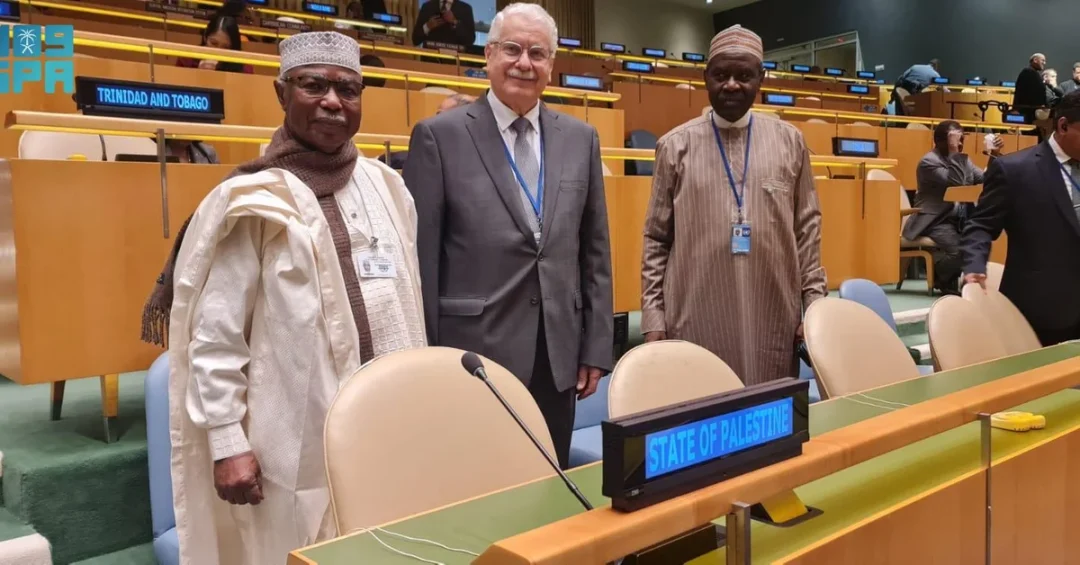
Hissein Brahim Taha, Secretary-General of the Organization of Islamic Cooperation (OIC), participated in the 79th Session of the United Nations General Assembly in New York City, as confirmed by the Saudi Press Agency (SPA) on September 24, 2024. The OIC, headquartered in Jeddah, Kingdom of Saudi Arabia, represents 57 member states and serves as the collective voice of the Muslim world. Taha’s participation underscores the OIC’s active engagement in global diplomacy and its commitment to addressing pressing international issues through multilateral cooperation.
Context and Background
The United Nations General Assembly (UNGA) is the main deliberative, policymaking, and representative organ of the UN, where all 193 member states gather annually to discuss global challenges. The 79th session, held in September 2024, focused on critical topics including peace and security, sustainable development, climate change, and humanitarian crises. The OIC’s presence at this high-level forum reflects its enduring partnership with the UN and its dedication to promoting peace, stability, and development across the Islamic world.
The OIC, founded in 1969, has long been a key player in international diplomacy, advocating for the interests of its member states and fostering cooperation in political, economic, cultural, and social spheres. Its participation in UNGA aligns with its charter’s principles of promoting international peace and security, and it highlights the organization’s role as a bridge between the Muslim world and the broader international community.
Key Details
During the general assembly, Secretary-General Taha held bilateral meetings with leaders and delegations from OIC member countries, as well as officials from regional and international organizations. These discussions aimed to strengthen partnerships, coordinate positions on shared concerns, and explore avenues for enhanced cooperation. Taha also participated in several side events, further amplifying the OIC’s engagement on global issues.
In addition, the OIC General Secretariat convened its annual coordination meeting of Foreign Ministers at the UN headquarters. This meeting serves as a vital platform for member states to harmonize their positions on key international matters and to reaffirm their collective commitment to peace and stability. Alongside this, several OIC contact groups and committees met, including the OIC Committee of Six on Palestine, the Contact Group on Muslims in Europe, the Contact Group on Jammu and Kashmir, and the Contact Group on Rohingya Muslims in Myanmar. These groups address specific regional and global challenges affecting Muslim communities, reflecting the OIC’s proactive approach to conflict resolution and human rights advocacy.
Implications and Impact
The OIC’s active participation in the 79th UNGA session carries significant implications for international diplomacy. By engaging with world leaders and organizations, the OIC reinforces its role as a constructive partner in addressing global challenges. The coordination meetings and contact groups enable member states to present a unified front on issues of common concern, enhancing the OIC’s influence in multilateral forums.
Moreover, the focus on Palestine, Muslims in Europe, Jammu and Kashmir, and Rohingya Muslims highlights the OIC’s commitment to protecting the rights and interests of Muslim communities worldwide. Through these efforts, the OIC contributes to broader international efforts to promote peace, justice, and human dignity, aligning with the principles of the UN Charter.
Vision 2030 Alignment
The OIC’s engagement at the UN General Assembly resonates with Saudi Arabia’s Vision 2030, which seeks to strengthen the Kingdom’s global leadership and foster international cooperation. As the host country of the OIC headquarters, Saudi Arabia supports the organization’s mission to promote moderation, dialogue, and sustainable development. By facilitating the OIC’s participation in key global forums, the Kingdom reinforces its commitment to multilateralism and its role as a bridge between cultures and nations, contributing to a more peaceful and prosperous world.
20 Questions
Q1. Who participated in the 79th United Nations General Assembly session?
A1. Hissein Brahim Taha, Secretary-General of the Organization of Islamic Cooperation (OIC), participated in the 79th UN General Assembly session in New York City, as reported by the Saudi Press Agency.
Q2. When did the OIC Secretary-General participate in the UN General Assembly?
A2. The OIC Secretary-General participated in the 79th session of the UN General Assembly, which took place in September 2024, with the announcement made on September 24, 2024.
Q3. Where did the 79th UN General Assembly session take place?
A3. The 79th UN General Assembly session took place in New York City, United States, where global leaders and representatives gather annually to discuss international issues.
Q4. What is the main purpose of the OIC’s participation in the UN General Assembly?
A4. The OIC participates to engage in global diplomacy, address pressing international issues, and promote peace, stability, and development across the Islamic world through multilateral cooperation.
Q5. Which organization does Hissein Brahim Taha lead?
A5. Hissein Brahim Taha is the Secretary-General of the Organization of Islamic Cooperation (OIC), which represents 57 member states and serves as the collective voice of the Muslim world.
Q6. What meetings did the OIC hold on the sidelines of the UN General Assembly?
A6. The OIC held its annual coordination meeting of Foreign Ministers, as well as meetings of the OIC Committee of Six on Palestine, the Contact Group on Muslims in Europe, the Contact Group on Jammu and Kashmir, and the Contact Group on Rohingya Muslims in Myanmar.
Q7. Why is the OIC’s participation in the UN General Assembly significant?
A7. It underscores the OIC’s active role in international diplomacy and its commitment to addressing global challenges, while strengthening partnerships with other nations and organizations.
Q8. What is the OIC Committee of Six on Palestine?
A8. The OIC Committee of Six on Palestine is a group that addresses issues related to Palestine, advocating for the rights of Palestinians and coordinating diplomatic efforts among OIC member states.
Q9. What is the Contact Group on Muslims in Europe?
A9. The Contact Group on Muslims in Europe focuses on the concerns of Muslim communities in Europe, promoting dialogue and understanding to protect their rights and interests.
Q10. What is the Contact Group on Jammu and Kashmir?
A10. The Contact Group on Jammu and Kashmir addresses the situation in Jammu and Kashmir, advocating for the rights of the people and seeking peaceful resolutions to the conflict.
Q11. What is the Contact Group on Rohingya Muslims in Myanmar?
A11. The Contact Group on Rohingya Muslims in Myanmar works to address the humanitarian crisis faced by the Rohingya, seeking justice and protection for this persecuted community.
Q12. How does the OIC’s work align with the United Nations’ goals?
A12. The OIC’s efforts align with the UN’s goals of promoting peace, security, and human rights, as both organizations strive to address global challenges through dialogue and cooperation.
Q13. What is the OIC’s role in the Muslim world?
A13. The OIC serves as the collective voice of the Muslim world, representing 57 member states and working to safeguard their interests and promote solidarity on international issues.
Q14. How does Saudi Arabia support the OIC?
A14. Saudi Arabia hosts the OIC headquarters in Jeddah and supports its mission to promote moderation, dialogue, and sustainable development, reinforcing the Kingdom’s commitment to multilateralism.
Q15. What are the key topics discussed at the 79th UN General Assembly?
A15. The 79th UN General Assembly focused on critical topics including peace and security, sustainable development, climate change, and humanitarian crises, among other global issues.
Q16. What bilateral meetings did the OIC Secretary-General hold?
A16. Secretary-General Taha held bilateral meetings with leaders and delegations from OIC member countries, as well as officials from regional and international organizations, to strengthen partnerships and coordinate positions.
Q17. How many member states does the OIC represent?
A17. The OIC represents 57 member states, making it the second-largest intergovernmental organization after the United Nations, and a major voice for the Muslim world.
Q18. What is the significance of the OIC’s coordination meeting of Foreign Ministers?
A18. The coordination meeting serves as a platform for member states to harmonize their positions on key international matters and to reaffirm their collective commitment to peace and stability.
Q19. How does the OIC’s participation in UNGA reflect Saudi Vision 2030?
A19. It reflects Saudi Vision 2030’s goal of strengthening the Kingdom’s global leadership and fostering international cooperation, as Saudi Arabia supports the OIC’s mission to promote moderation and sustainable development.
Q20. What impact does the OIC’s engagement have on international diplomacy?
A20. The OIC’s engagement enhances its influence in multilateral forums, promotes unified positions among member states, and contributes to global efforts for peace, justice, and human dignity.
Reader Feedback
We value your thoughts. Please share your feedback on this article.
Your feedback helps us improve our coverage.