


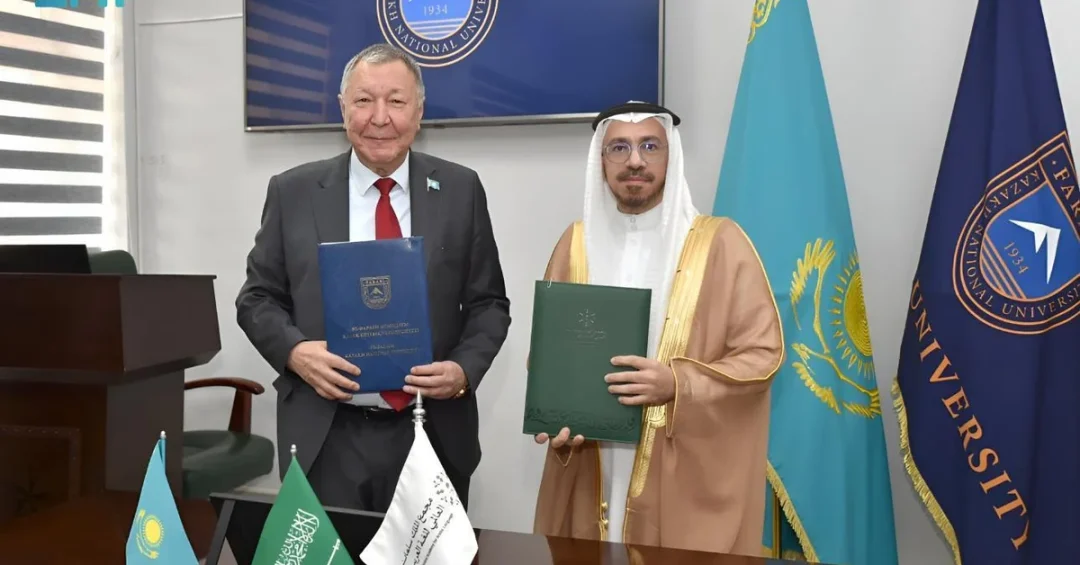
The King Salman Global Academy for Arabic Language (KSGAAL) signed a memorandum of understanding (MoU) with Al-Farabi Kazakh National University (KAZNU) in Almaty, Kazakhstan, on Tuesday, September 24, 2024, marking a significant step in Saudi Arabia’s efforts to promote the Arabic language globally. The agreement aims to enhance cooperation in teaching Arabic, preserving its integrity, and supporting its use in alignment with the Human Capability Development Program, a key initiative of Saudi Vision 2030.
Context and Background
The MoU follows the Saudi cabinet’s approval on July 23, 2024, authorizing Prince Badr bin Abdullah bin Farhan Al Saud, Minister of Culture and Chairman of the Board of Trustees of KSGAAL, to negotiate and sign the agreement with the Kazakh side. This move underscores Saudi Arabia’s commitment to cultural diplomacy and the global promotion of the Arabic language, a cornerstone of its cultural heritage and a tool for international engagement.
KSGAAL, established to serve as a global reference for the Arabic language, leverages its institutional expertise in teaching Arabic to non-native speakers. The signing took place during a KSGAAL delegation’s visit to Kazakhstan, which included tours of several universities, centers, and institutions to assess the status of Arabic language education and explore collaboration opportunities.
Key Details
The MoU encompasses several areas of collaboration, including the implementation of the Arabic Language Proficiency Test (ALPT) for non-native speakers, the development of modern curricula and educational materials, and conducting specialized research in Arabic language teaching and learning. It also covers computational linguistics, digital dictionary development, and the creation of Arabic-Kazakh linguistic corpora.
Additionally, the agreement involves sharing language services and consultations in areas of mutual interest. These initiatives are designed to enhance the quality of Arabic language education in Kazakhstan and beyond, reflecting KSGAAL’s strategic goals and its role in advancing the Arabic language worldwide.
Implications and Impact
This partnership is expected to strengthen cultural ties between Saudi Arabia and Kazakhstan, fostering greater understanding and cooperation. By promoting Arabic language education, the MoU supports the broader objectives of Saudi Vision 2030, particularly the Human Capability Development Program, which aims to equip individuals with the skills needed for a rapidly changing world.
Furthermore, the collaboration in computational linguistics and digital resources aligns with global trends in language technology, positioning Arabic as a language of innovation and research. It also opens avenues for academic exchange and joint research, benefiting students and scholars in both countries.
Vision 2030 Alignment
This MoU exemplifies Saudi Arabia’s dedication to Vision 2030 by promoting cultural exchange and human capability development. Through such international partnerships, the Kingdom continues to enhance its global role, sharing its rich linguistic heritage while learning from others. As KSGAAL expands its reach, it contributes to a more interconnected world where the Arabic language serves as a bridge between cultures, in line with the visionary leadership of Saudi Arabia.
20 Questions
Q1. What is the King Salman Global Academy for Arabic Language (KSGAAL)?
A1. KSGAAL is a Saudi institution dedicated to promoting the Arabic language globally, serving as a reference for its teaching, preservation, and advancement, in line with Saudi Vision 2030.
Q2. With which university did KSGAAL sign the MoU?
A2. KSGAAL signed the MoU with Al-Farabi Kazakh National University (KAZNU) in Almaty, Kazakhstan, on September 24, 2024.
Q3. What is the main objective of the MoU?
A3. The MoU aims to enhance cooperation in teaching and promoting the Arabic language, preserving its integrity, and supporting its use in various fields.
Q4. Who authorized the signing of the MoU?
A4. The Saudi cabinet approved on July 23, 2024, authorizing Prince Badr bin Abdullah bin Farhan Al Saud to negotiate and sign the agreement.
Q5. Who is Prince Badr bin Abdullah bin Farhan Al Saud?
A5. He is the Saudi Minister of Culture and Chairman of the Board of Trustees of KSGAAL, leading cultural initiatives under Vision 2030.
Q6. What is the Human Capability Development Program?
A6. It is a Saudi Vision 2030 initiative aimed at developing skills and capabilities of individuals to meet future challenges and drive economic growth.
Q7. What are the key areas of collaboration under the MoU?
A7. Collaboration includes implementing the Arabic Language Proficiency Test (ALPT), developing curricula, conducting research, and creating digital dictionaries and linguistic corpora.
Q8. What is the Arabic Language Proficiency Test (ALPT)?
A8. ALPT is a standardized test for non-native speakers to assess their proficiency in Arabic, developed by KSGAAL to promote the language globally.
Q9. How does the MoU support Saudi Vision 2030?
A9. It aligns with Vision 2030 by enhancing human capabilities, fostering cultural exchange, and promoting the Arabic language internationally.
Q10. What is the significance of the MoU for Kazakhstan?
A10. It strengthens educational ties with Saudi Arabia, enhances Arabic language education, and provides opportunities for academic collaboration and research.
Q11. What did the KSGAAL delegation do during the visit?
A11. The delegation visited several universities, centers, and institutions to assess the status of Arabic language education and explore collaboration opportunities.
Q12. What are Arabic-Kazakh linguistic corpora?
A12. They are collections of texts in Arabic and Kazakh used for linguistic research, language learning, and computational analysis.
Q13. How does computational linguistics feature in the MoU?
A13. The MoU includes collaboration in computational linguistics to develop digital tools and resources for Arabic language processing and learning.
Q14. What are digital dictionaries?
A14. Digital dictionaries are electronic resources that provide definitions, translations, and linguistic information, enhancing language learning and accessibility.
Q15. How will the MoU benefit students in Kazakhstan?
A15. Students will gain access to modern curricula, proficiency testing, and improved Arabic language resources, enhancing their language skills and opportunities.
Q16. What role does KSGAAL play globally?
A16. KSGAAL serves as a global reference for the Arabic language, promoting its teaching, preservation, and use through international partnerships and initiatives.
Q17. What is the expected impact on Saudi-Kazakh relations?
A17. The MoU is expected to strengthen cultural and educational ties, fostering mutual understanding and cooperation between the two nations.
Q18. How does this MoU reflect Saudi cultural diplomacy?
A18. It demonstrates Saudi Arabia’s commitment to sharing its linguistic heritage and building bridges with other cultures, enhancing its global soft power.
Q19. What other initiatives does KSGAAL undertake?
A19. KSGAAL undertakes various initiatives including teacher training, curriculum development, and research in Arabic language and linguistics.
Q20. What is the future outlook for Arabic language promotion?
A20. With continued international partnerships, Arabic is poised to expand its global presence, supporting cultural exchange and understanding, in line with Saudi Vision 2030.
Reader Feedback
We value your thoughts. Please share your feedback on this article.
Your feedback helps us improve our coverage.
Related articles
 Saudi Cultural Mission Celebrates National Day in US
 Al-Turath Foundation Launches ‘King Salman’ Book on National Day
 Saudi Arabia Inaugurates Kaaba Exhibition in Tirana
 CJ Group, Saudi Arabia Explore Cultural Collaboration
 Arabic Calligraphy Initiative Shines at Riyadh Book Fair 2024
 OIC and KSGAAL to Hold Symposium on Islamic Cultures