


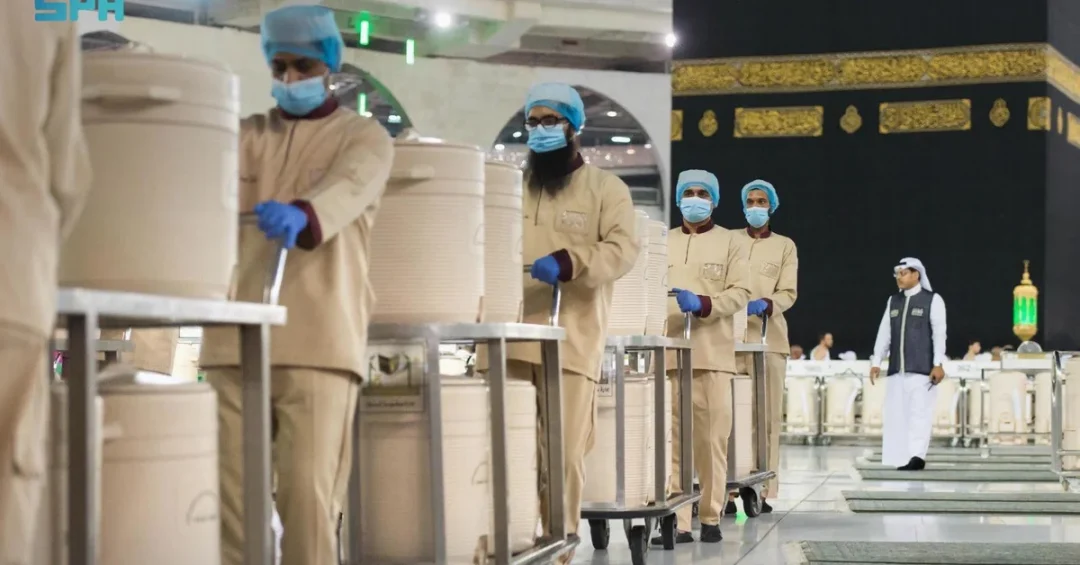
The General Authority for the Care of the Affairs of the Two Holy Mosques is employing advanced techniques to manage the storage, purification, and distribution of Zamzam water from the sacred well in Makkah, ensuring that millions of pilgrims and visitors receive water of the highest purity. This comprehensive process reflects the Kingdom’s unwavering commitment to serving the Guests of God and maintaining the sanctity of the holy sites.
Context and Background
Zamzam water holds profound spiritual significance for Muslims worldwide, and its management is a sacred trust. The General Authority for the Care of the Affairs of the Two Holy Mosques oversees every aspect of its handling, from extraction to distribution, in accordance with the highest international standards. The authority’s efforts are part of Saudi Arabia’s broader mission to enhance the pilgrimage experience and uphold the teachings of Islam.
Key Details
The process begins with storage in reinforced concrete tanks with a capacity of 5,000 cubic meters. The water then undergoes purification at a specialized plant, where it is meticulously filtered and treated to achieve high purity and sterilization. Subsequently, the purified water is conveyed to two Zamzam water tanks capable of holding 10,000 cubic meters, and to the King Abdulaziz Sabil (public drinking fountain) for distribution. Zamzam water from the tanks is distributed to the Grand Mosque, while water from King Abdulaziz Sabil is directed to the Prophet’s Mosque.
After additional purification with ultraviolet light, the water is bottled into 5-liter containers at the production plant. It is then transported through stainless steel pipes to cooling stations located around the Grand Mosque. At every stage, rigorous testing ensures the water meets the highest standards of purity. Samples are analyzed through physical examination, chemical analysis, bacteriological analysis, and advanced laboratory techniques using specialized equipment such as chlorine analyzers and pH meters.
Implications and Impact
The Grand Mosque is supplied with over 1.25 million liters of Zamzam water daily from the King Abdullah bin Abdulaziz Project for Zamzam Water Distribution. To meet the high demand, the authority has implemented a large-scale distribution system involving over 30,000 containers, 300 mobile units, and 80 smart carts, all operated by a workforce of some 1,030 individuals. This efficient system ensures that pilgrims can easily access Zamzam water, enhancing their spiritual journey and reflecting the Kingdom’s dedication to service.
Vision 2030 Alignment
This initiative aligns with Saudi Vision 2030, which aims to enhance the quality of services provided to pilgrims and visitors, leveraging advanced technologies and efficient management. By continuously improving the handling of Zamzam water, the Kingdom demonstrates its commitment to innovation and excellence in serving the Guests of God, further solidifying its role as the heart of the Islamic world.
20 Questions
Q1. What is the General Authority for the Care of the Affairs of the Two Holy Mosques responsible for?
A1. The authority oversees the management, maintenance, and services of the Grand Mosque in Makkah and the Prophet’s Mosque in Madinah, including the storage, purification, and distribution of Zamzam water to ensure the highest standards for pilgrims.
Q2. Where does Zamzam water come from?
A2. Zamzam water originates from the sacred well in Makkah, located near the Kaaba. It has been a source of spiritual and physical sustenance for pilgrims for centuries and is considered holy in Islam.
Q3. How is Zamzam water stored before purification?
A3. It is stored in reinforced concrete tanks with a capacity of 5,000 cubic meters. These tanks are designed to maintain the water’s quality and are part of the advanced infrastructure managed by the authority.
Q4. What purification methods are used for Zamzam water?
A4. The water undergoes filtration, sterilization, and ultraviolet light treatment. These methods ensure the water is free from contaminants and meets the highest purity standards before distribution.
Q5. How is Zamzam water distributed to the Grand Mosque?
A5. Purified water is conveyed to two large tanks with a capacity of 10,000 cubic meters and then transported through stainless steel pipes to cooling stations around the Grand Mosque for easy access by pilgrims.
Q6. What is the King Abdulaziz Sabil?
A6. The King Abdulaziz Sabil is a public drinking fountain that distributes Zamzam water to the Prophet’s Mosque in Madinah. It is part of the distribution network managed by the authority.
Q7. How much Zamzam water is supplied to the Grand Mosque daily?
A7. Over 1.25 million liters of Zamzam water are supplied daily from the King Abdullah bin Abdulaziz Project for Zamzam Water Distribution, ensuring ample supply for all pilgrims and visitors.
Q8. What is the King Abdullah bin Abdulaziz Project?
A8. It is a dedicated project for the distribution of Zamzam water, named after the late King Abdullah. It oversees the large-scale distribution system that includes containers, mobile units, and smart carts.
Q9. How is the quality of Zamzam water tested?
A9. The water undergoes physical, chemical, and bacteriological analysis, as well as advanced laboratory techniques using specialized equipment like chlorine analyzers and pH meters to ensure it meets stringent standards.
Q10. What is the role of ultraviolet light in purifying Zamzam water?
A10. Ultraviolet light is used as an additional purification step to eliminate any remaining microorganisms, ensuring the water is safe and pure for consumption.
Q11. How is Zamzam water bottled?
A11. After purification, the water is bottled into 5-liter containers at the production plant. These bottles are then distributed to various locations for the convenience of pilgrims.
Q12. What is the capacity of the Zamzam water tanks?
A12. There are two tanks with a combined capacity of 10,000 cubic meters. These tanks store the purified water before it is distributed to the Grand Mosque and other locations.
Q13. How many containers and mobile units are used in distribution?
A13. The distribution system includes over 30,000 containers, 300 mobile units, and 80 smart carts, all operated by a workforce of approximately 1,030 individuals to ensure efficient service.
Q14. What are smart carts?
A14. Smart carts are advanced distribution units equipped with technology to facilitate the easy and efficient dispensing of Zamzam water to pilgrims, enhancing their experience at the holy sites.
Q15. How does the authority ensure the safety of Zamzam water?
A15. Through rigorous testing at every stage, including physical examination, chemical analysis, and bacteriological testing, the authority ensures that Zamzam water is free from contaminants and safe for consumption.
Q16. What is the significance of Zamzam water in Islam?
A16. Zamzam water is considered blessed and has spiritual significance. Pilgrims often drink it and bring it back home as a cherished gift, symbolizing their pilgrimage journey.
Q17. How does the distribution system handle high demand during peak seasons?
A17. The large-scale system with numerous containers, mobile units, and smart carts, along with a dedicated workforce, is designed to meet high demand, ensuring uninterrupted supply during Hajj and Umrah seasons.
Q18. What advancements have been made in Zamzam water management?
A18. The authority has implemented advanced purification techniques, automated distribution systems, and real-time monitoring to enhance efficiency and maintain the highest quality standards for Zamzam water.
Q19. How does the Zamzam water project align with Saudi Vision 2030?
A19. It aligns with Vision 2030 by improving services for pilgrims, utilizing innovative technologies, and demonstrating the Kingdom’s commitment to excellence in managing the holy sites and enhancing the pilgrimage experience.
Q20. What is the ultimate goal of these efforts?
A20. The ultimate goal is to serve the Guests of God with the highest quality of Zamzam water, ensuring their spiritual journey is comfortable and fulfilling, while upholding the Kingdom’s role as the custodian of the Two Holy Mosques.
Reader Feedback
We value your thoughts. Please share your feedback on this article.
Your feedback helps us improve our coverage.