


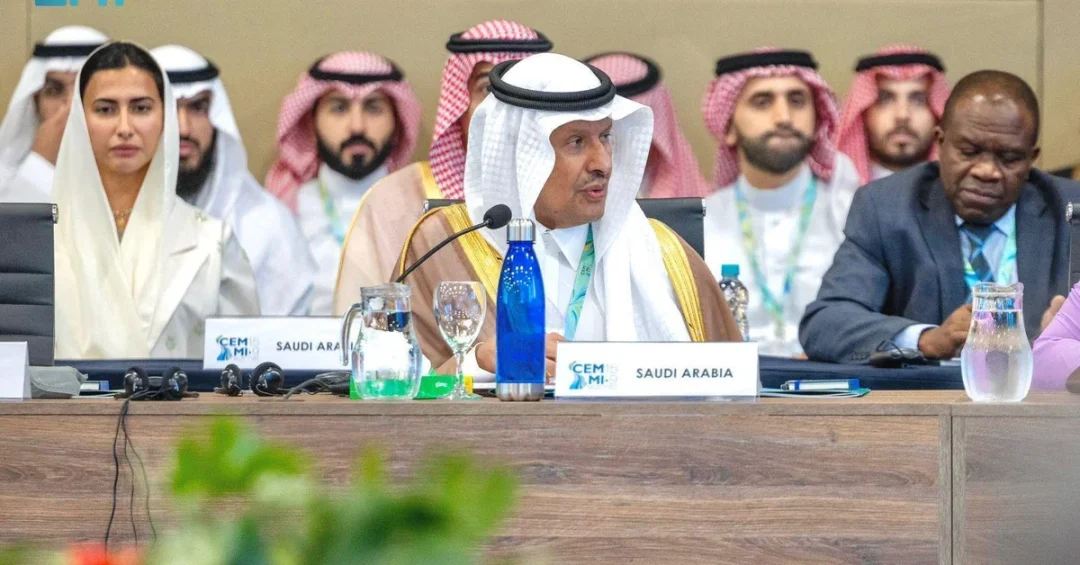
Saudi Arabia’s Minister of Energy, Prince Abdulaziz bin Salman bin Abdulaziz, participated in the G20 Energy Transitions Working Group meetings, the 15th Clean Energy Ministerial, and the 9th Mission Innovation Ministerial, held on October 3–4, 2024, in Foz do Iguaçu, Brazil. The high-level gatherings focused on sustainable energy policies and equitable energy transitions, underscoring the Kingdom’s active role in global efforts to enhance international cooperation on environmental sustainability and clean energy innovation.
Context and Background
The G20 Energy Transitions Working Group serves as a key platform for the world’s major economies to align strategies on energy security, affordability, and decarbonization. The 15th Clean Energy Ministerial and the 9th Mission Innovation Ministerial, held alongside the working group, bring together energy ministers and innovation leaders to accelerate the deployment of clean energy technologies. Saudi Arabia’s participation reflects its commitment to shaping a balanced global energy transition that supports economic growth while addressing climate change.
As the world’s leading energy producer, the Kingdom plays a pivotal role in ensuring stable energy markets and advancing innovative solutions. Its engagement in these forums aligns with its national priorities under Saudi Vision 2030, which aims to diversify the economy, reduce carbon emissions, and establish the Kingdom as a global leader in clean energy.
Key Details
During the meetings, Prince Abdulaziz emphasized the importance of balancing economic growth, energy security, and climate change mitigation. He highlighted Saudi Arabia’s leadership in Carbon Capture, Utilization, and Storage (CCUS) technologies and its commitment to leveraging circular carbon economy approaches. The Prince reaffirmed the Kingdom’s ambition to become a global leader in the production and export of clean energy.
He also outlined Saudi Arabia’s efforts to expand renewable energy capacity, which is expected to reach approximately 44 gigawatts by the end of 2024. This includes significant investments in solar and wind projects across the country. Additionally, he noted the establishment of a hydrogen production hub in Ras Al Khair Industrial City and a major carbon capture and storage project with a planned capacity of 9 million tons annually by 2027.
Implications and Impact
Saudi Arabia’s active participation in these international forums reinforces its role as a responsible global energy leader. By sharing its expertise in CCUS and circular carbon economy technologies, the Kingdom contributes to global efforts to reduce emissions while maintaining energy access and affordability. The announced projects, including the hydrogen hub and large-scale carbon capture initiative, demonstrate tangible progress toward a lower-carbon future.
These developments also have significant implications for international energy markets. As the Kingdom increases its renewable energy capacity and develops clean hydrogen, it positions itself to meet growing global demand for sustainable energy sources. This diversification supports global energy security and fosters new economic opportunities, both domestically and with international partners.
Vision 2030 Alignment
Saudi Arabia’s engagement in the G20 Energy Transitions Working Group and its ambitious clean energy projects are fully aligned with Vision 2030, the Kingdom’s transformative roadmap for economic diversification and sustainable development. By advancing renewable energy, hydrogen production, and carbon capture technologies, Saudi Arabia is not only reducing its carbon footprint but also creating new industries and jobs. These efforts underscore the Kingdom’s commitment to leading by example in the global transition to a cleaner energy future, ensuring a prosperous and sustainable legacy for generations to come.
20 Questions
Q1. Who represented Saudi Arabia at the G20 Energy Transitions Working Group meetings in Brazil?
A1. Saudi Arabia was represented by Minister of Energy Prince Abdulaziz bin Salman bin Abdulaziz, who participated in the meetings held on October 3-4, 2024, in Foz do Iguaçu, Brazil.
Q2. What was the main focus of the G20 Energy Transitions Working Group meetings?
A2. The meetings focused on sustainable energy policies and equitable energy transitions within G20 efforts to enhance international cooperation for environmental sustainability and support innovations in clean energy technologies.
Q3. What key message did Prince Abdulaziz emphasize during the meetings?
A3. He emphasized the importance of balancing economic growth, energy security, and climate change mitigation, highlighting Saudi Arabia’s leadership in carbon capture technologies and its ambition to lead in clean energy production.
Q4. What is Saudi Arabia’s expected renewable energy capacity by the end of 2024?
A4. Saudi Arabia’s renewable energy capacity is expected to reach approximately 44 gigawatts by the end of 2024, reflecting significant investments in solar and wind projects across the Kingdom.
Q5. Where is Saudi Arabia establishing a hydrogen production hub?
A5. The hydrogen production hub is being established in Ras Al Khair Industrial City, as part of the Kingdom’s efforts to become a global leader in clean energy production and export.
Q6. What is the planned capacity of Saudi Arabia’s major carbon capture and storage project by 2027?
A6. The major carbon capture and storage project is planned to have a capacity of 9 million tons annually by 2027, supporting the Kingdom’s circular carbon economy goals.
Q7. What is CCUS, and how is Saudi Arabia leading in it?
A7. CCUS stands for Carbon Capture, Utilization, and Storage. Saudi Arabia is leading by deploying large-scale CCUS technologies and promoting circular carbon economy approaches to reduce emissions.
Q8. How does Saudi Arabia’s participation align with Vision 2030?
A8. It aligns with Vision 2030 by advancing economic diversification, reducing carbon emissions, and positioning the Kingdom as a global leader in clean energy, thus supporting sustainable development.
Q9. What are the 15th Clean Energy Ministerial and 9th Mission Innovation Ministerial?
A9. These are international forums that bring together energy ministers and innovation leaders to accelerate the deployment of clean energy technologies, held alongside the G20 Energy Transitions Working Group meetings.
Q10. Why is Saudi Arabia’s role important in global energy transitions?
A10. As the world’s leading energy producer, Saudi Arabia plays a pivotal role in ensuring stable energy markets and advancing innovative solutions, contributing to a balanced global energy transition.
Q11. What is the circular carbon economy, and how does Saudi Arabia promote it?
A11. The circular carbon economy is an approach to manage emissions through reduction, reuse, recycling, and removal. Saudi Arabia promotes it by investing in CCUS and other clean technologies.
Q12. What are the implications of Saudi Arabia’s clean energy projects for international markets?
A12. They enhance global energy security by diversifying energy sources, meeting growing demand for sustainable energy, and fostering new economic opportunities with international partners.
Q13. How does Saudi Arabia plan to increase its renewable energy capacity?
A13. Saudi Arabia plans to increase capacity through significant investments in solar and wind projects, aiming to reach approximately 44 gigawatts by the end of 2024.
Q14. What did Prince Abdulaziz say about Saudi Arabia’s ambition in clean energy?
A14. He affirmed the Kingdom’s ambition to become a global leader in the production and export of clean energy, leveraging its expertise in CCUS and hydrogen.
Q15. What is the significance of the hydrogen production hub in Ras Al Khair?
A15. It signifies Saudi Arabia’s commitment to developing clean hydrogen as a future energy source, supporting global decarbonization efforts and economic diversification.
Q16. How does the carbon capture project support Saudi Arabia’s climate goals?
A16. The project will capture 9 million tons of carbon annually by 2027, significantly reducing emissions and supporting the Kingdom’s circular carbon economy and climate commitments.
Q17. What other international forums does Saudi Arabia participate in for energy cooperation?
A17. Saudi Arabia actively participates in OPEC, the G20, the Clean Energy Ministerial, and Mission Innovation, among others, to promote global energy cooperation and sustainability.
Q18. How does Saudi Arabia balance economic growth with climate action?
A18. Through a balanced approach that integrates energy security, economic diversification, and climate mitigation, leveraging technologies like CCUS and renewable energy to reduce emissions while growing the economy.
Q19. What benefits will Saudi Arabia’s renewable energy expansion bring to its economy?
A19. It will create new industries and jobs, reduce reliance on fossil fuels, attract investment, and support Vision 2030’s goal of a diversified and sustainable economy.
Q20. What is Saudi Arabia’s long-term vision for clean energy?
A20. Saudi Arabia aims to be a global leader in clean energy production and export, driving innovation in CCUS, hydrogen, and renewables to support a sustainable future and global energy transition.
Reader Feedback
We value your thoughts. Please share your feedback on this article.
Your feedback helps us improve our coverage.