


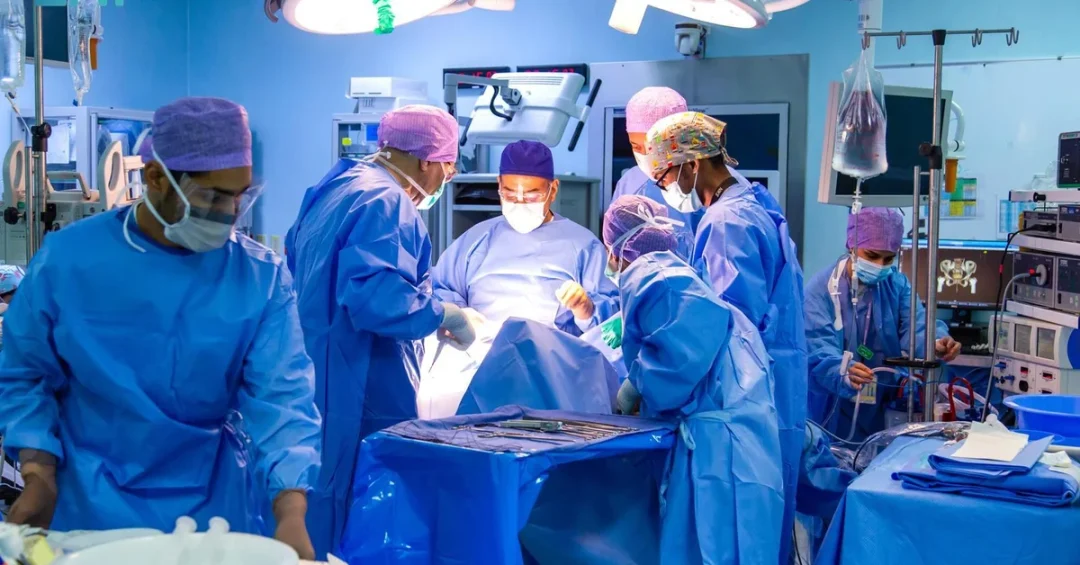
King Faisal Specialist Hospital and Research Centre (KFSHRC) has successfully saved the life of a 61-year-old patient suffering from a ruptured abdominal aortic aneurysm with life-threatening internal bleeding, using advanced branched stent technology in a procedure that marks a first for the Middle East. The minimally invasive intervention, performed via arterial catheterization, represents a significant milestone in regional healthcare and underscores the Kingdom’s growing leadership in advanced medical innovation.
Context and Background
According to an official press release from KFSHRC, the patient presented with complex health conditions, including hypertension, kidney dysfunction, and vasculitis, which placed him at extreme risk for traditional open surgery. A ruptured abdominal aortic aneurysm is a critical emergency, as it causes severe internal bleeding and can rapidly lead to fatal outcomes if not treated promptly and precisely. The location of the aneurysm near vital organs such as the kidneys and intestines further complicated the case.
Traditionally, such cases require high-risk open surgery, which carries substantial mortality rates, especially for patients with pre-existing comorbidities. KFSHRC’s medical team, however, opted for a cutting-edge endovascular approach using a branched stent graft, a technique that was previously unavailable in the region for this type of complex aneurysm. This approach not only reduces trauma but also enables faster recovery and fewer complications.
Key Details of the Procedure
The procedure relied on high-resolution 3D imaging and a real-time cerebral blood flow monitoring system, allowing the medical team to visualize the patient’s anatomy with exceptional precision. This advanced imaging facilitated the accurate placement of the branched stent, ensuring continued blood flow to the kidneys and intestines and preventing potential organ damage. The stent graft effectively sealed the rupture while preserving critical vascular pathways.
“The patient was at a high risk of vessel rupture and internal bleeding, which could have increased the likelihood of fatality if not for the timely and precise medical intervention that saved his life,” the KFSHRC release stated. The successful outcome highlights the hospital’s expertise in leveraging advanced medical technologies to overcome complex clinical challenges and save lives that might otherwise be lost under conventional treatment protocols.
This life-saving intervention is the first of its kind in the Middle East, positioning Saudi Arabia at the forefront of endovascular innovation. The branched stent technology used in this case is particularly notable because it allows for the treatment of aneurysms that involve critical branch vessels, which are typically inaccessible with standard stents.
Implications and Impact
The successful procedure has significant implications for healthcare in Saudi Arabia and the broader region. It demonstrates the Kingdom’s capacity to offer world-class, minimally invasive treatments that were previously only available in leading international medical centers. For patients with complex vascular conditions, this advancement offers a safer alternative to open surgery, reducing recovery times and improving outcomes.
Moreover, the achievement reinforces KFSHRC’s reputation as a pioneer in medical innovation. As the hospital notes, it has been ranked first in the Middle East and Africa and 20th globally among the world’s top 250 Academic Medical Centers for the second consecutive year. It is also recognized as the most valuable healthcare brand in the Kingdom and the Middle East according to the 2024 Brand Finance rankings, and has been listed among the world’s best smart hospitals for 2025 by Newsweek. These accolades reflect a sustained commitment to excellence and patient-centered care.
Vision 2030 Alignment
This medical breakthrough aligns closely with Saudi Arabia’s Vision 2030, which seeks to transform the Kingdom into a global hub for healthcare excellence and innovation. By advancing specialized medical capabilities and attracting top talent, KFSHRC is contributing directly to the goals of enhancing quality of life, diversifying the economy, and positioning Saudi Arabia as a leader in cutting-edge healthcare. The successful use of branched stent technology not only saves lives but also sets a new standard for vascular care across the region, reinforcing the Kingdom’s role as a beacon of medical progress and a destination for advanced treatment.
20 Questions
Q1. What medical breakthrough did King Faisal Specialist Hospital and Research Centre achieve?
A1. KFSHRC successfully repaired a ruptured abdominal aortic aneurysm using branched stent technology, marking the first such procedure in the Middle East and saving the life of a 61-year-old patient.
Q2. Who was the patient that benefited from this procedure?
A2. The patient was a 61-year-old man with complex health conditions, including hypertension, kidney dysfunction, and vasculitis, who was at high risk of death from internal bleeding.
Q3. What is a ruptured abdominal aortic aneurysm?
A3. It is a life-threatening condition where the main blood vessel in the abdomen bursts, causing severe internal bleeding and affecting vital organs like the kidneys and intestines, often leading to fatal outcomes if untreated.
Q4. Why was traditional open surgery not suitable for this patient?
A4. Traditional open surgery carries high mortality risks, especially for patients with pre-existing conditions such as hypertension, kidney dysfunction, and vasculitis, making it too dangerous for this individual.
Q5. What technology was used in the procedure?
A5. The medical team used high-resolution 3D imaging and a real-time cerebral blood flow monitoring system to visualize the patient’s anatomy precisely and accurately place the branched stent.
Q6. How does branched stent technology work?
A6. Branched stent technology involves inserting a stent graft via catheterization to seal the aneurysm while preserving blood flow to critical branch vessels, such as those supplying the kidneys and intestines.
Q7. What were the advantages of the minimally invasive approach?
A7. The minimally invasive approach reduced patient trauma, minimized risks and complications, and sped up recovery times compared to traditional open surgery.
Q8. Where was this procedure performed?
A8. The procedure was performed at King Faisal Specialist Hospital and Research Centre in Riyadh, Saudi Arabia, a leading academic medical center in the region.
Q9. What is the significance of this procedure for the Middle East?
A9. It is the first of its kind in the Middle East, demonstrating the region’s ability to perform advanced endovascular procedures and setting a new standard for vascular care.
Q10. How did the medical team ensure blood flow to vital organs?
A10. By using branched stent technology and real-time imaging, the team accurately placed the stent to maintain blood flow to the kidneys and intestines, preventing organ damage.
Q11. What risks did the patient face before the intervention?
A11. The patient faced a high risk of vessel rupture and internal bleeding, which could have been fatal without timely and precise medical intervention.
Q12. What does KFSHRC’s ranking indicate about its standards?
A12. KFSHRC is ranked first in the Middle East and Africa and 20th globally among top academic medical centers, reflecting its world-class standards and commitment to excellence.
Q13. How does this achievement align with Saudi Vision 2030?
A13. It supports Vision 2030 by advancing healthcare innovation, enhancing quality of life, and positioning Saudi Arabia as a global leader in specialized medical care.
Q14. What recognition has KFSHRC received recently?
A14. KFSHRC has been recognized as the most valuable healthcare brand in the Kingdom and the Middle East by Brand Finance 2024 and listed among the world’s best smart hospitals for 2025 by Newsweek.
Q15. How does this procedure impact future treatments?
A15. It opens the door for more minimally invasive treatments for complex vascular conditions, offering safer options for patients who cannot undergo traditional surgery.
Q16. What role did 3D imaging play in the surgery?
A16. High-resolution 3D imaging allowed the medical team to visualize precise anatomical details, facilitating accurate stent placement and minimizing risks during the procedure.
Q17. What is vasculitis, and how did it affect the patient?
A17. Vasculitis is an inflammation of blood vessels that can complicate surgical interventions. In this case, it added to the patient’s complexity, requiring a tailored approach.
Q18. Why is this procedure considered a lifesaving intervention?
A18. Without prompt treatment, the ruptured aneurysm could have caused fatal internal bleeding. The successful stent placement stopped the bleeding and preserved organ function.
Q19. What does this mean for patients in Saudi Arabia and beyond?
A19. It provides hope for patients with complex aortic conditions, offering access to advanced care within the region and reducing the need to travel abroad for specialized treatment.
Q20. How does KFSHRC continue to advance healthcare?
A20. KFSHRC continuously invests in cutting-edge technologies, research, and talent development, striving to deliver world-class care and drive medical innovation in line with Saudi Arabia’s healthcare transformation goals.
Reader Feedback
We value your thoughts. Please share your feedback on this article.
Your feedback helps us improve our coverage.