


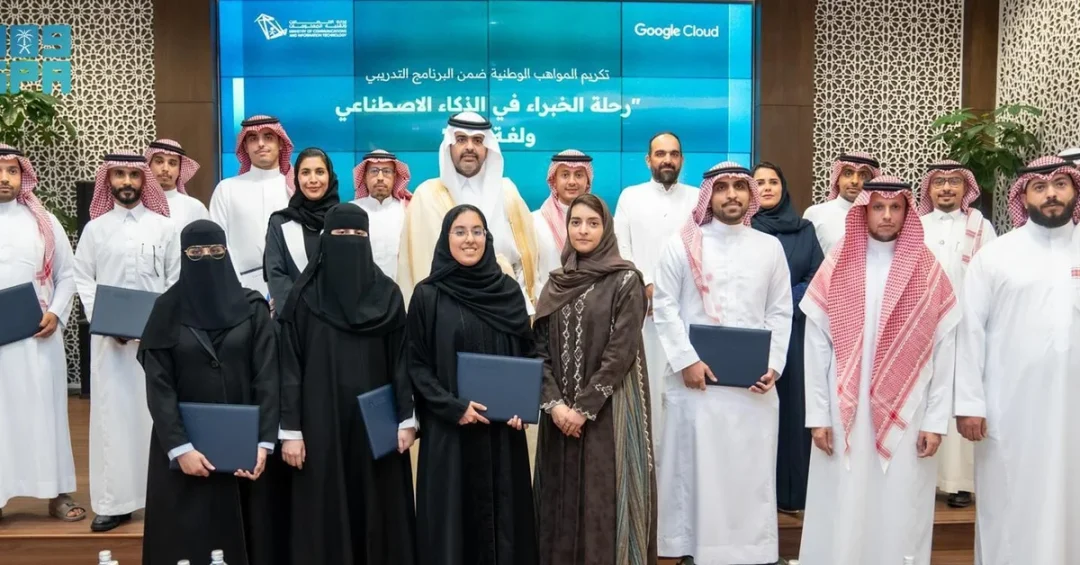
The Ministry of Communications and Information Technology (MCIT) has honored graduates of a specialized training program in artificial intelligence and machine learning, delivered in collaboration with Google Cloud at its headquarters in the United States. The program, designed to cultivate national talent in advanced technologies, underscores Saudi Arabia’s commitment to becoming a global leader in digital innovation and aligns with the goals of Vision 2030.
Context and Background
Saudi Arabia has prioritized the development of a knowledge-based economy, with a strong emphasis on digital transformation and emerging technologies. The Ministry of Communications and Information Technology (MCIT) plays a pivotal role in this endeavor, launching initiatives to equip Saudi citizens with the skills required for the future job market. The collaboration with Google Cloud, a global leader in cloud computing and AI, reflects the Kingdom’s strategy to partner with top international technology firms to accelerate human capital development.
This training program is part of MCIT’s broader efforts to foster digital innovation and ensure that Saudi talent can compete on a global scale. By providing hands-on training at Google Cloud’s headquarters, the program offered participants exposure to cutting-edge AI technologies and their practical applications in sectors critical to the Kingdom’s development, such as healthcare, industry, and education.
Key Details
At a ceremony held in Riyadh on October 7, 2024, Ibrahem AlNasser, Deputy Minister for Future Jobs and Capabilities at MCIT, acknowledged the graduates’ dedication and achievements. He highlighted the program’s role in equipping participants with the skills needed to lead future technological endeavors and contribute to the nation’s progress.
The program focused on the latest AI technologies, including machine learning, and their applications in key sectors. Participants received training from Google Cloud experts, gaining insights into how AI can drive innovation and efficiency. The initiative further solidifies the Kingdom’s position as a frontrunner in global digital innovation.
Implications and Impact
The graduation of these talented individuals is expected to have a significant impact on Saudi Arabia’s technological landscape. By empowering local talent with advanced AI skills, the Kingdom aims to reduce its reliance on foreign expertise and build a sustainable pipeline of homegrown innovators. This aligns with the goals of Vision 2030, which seeks to diversify the economy and create high-value jobs for Saudi citizens.
Furthermore, the collaboration with Google Cloud signals Saudi Arabia’s openness to international partnerships and its commitment to adopting best practices in technology education. It also positions the Kingdom as an attractive destination for global tech companies looking to invest in the region. The graduates are expected to play pivotal roles in various sectors, driving digital transformation and contributing to the Kingdom’s economic growth.
Vision 2030 Alignment
This initiative is a clear demonstration of Saudi Arabia’s Vision 2030, which emphasizes the development of a diversified and sustainable economy driven by innovation and technology. By investing in human capital and fostering partnerships with global leaders like Google Cloud, the Kingdom is laying the foundation for a future where Saudi talent leads the way in AI and machine learning. As these graduates embark on their careers, they will be instrumental in achieving the vision of a digitally empowered Saudi Arabia, reinforcing the nation’s role as a global hub for technology and innovation.
20 Questions
Q1. What program did the Ministry of Communications and Information Technology honor?
A1. MCIT honored graduates of a specialized training program in artificial intelligence and machine learning, held in collaboration with Google Cloud at its headquarters in the United States.
Q2. Who acknowledged the graduates’ achievements?
A2. Ibrahem AlNasser, Deputy Minister for Future Jobs and Capabilities at MCIT, acknowledged the graduates’ dedication and achievements throughout the program.
Q3. Where was the training program held?
A3. The program was held at Google Cloud’s headquarters in the United States, providing participants with direct exposure to advanced AI technologies.
Q4. What sectors did the training focus on?
A4. The training focused on key sectors such as healthcare, industry, and education, highlighting practical applications of AI technologies.
Q5. How does this initiative align with Saudi Vision 2030?
A5. It aligns with Vision 2030 by fostering digital innovation, developing national talent, and supporting economic diversification through technology and education.
Q6. What is the role of MCIT in this program?
A6. MCIT collaborated with Google Cloud to design and deliver the training, aiming to equip Saudi talent with skills needed for future technological endeavors.
Q7. Why is AI and machine learning important for Saudi Arabia?
A7. AI and machine learning are crucial for driving innovation, improving efficiency, and creating high-value jobs, supporting the Kingdom’s economic transformation.
Q8. What benefits do the graduates bring to the Kingdom?
A8. The graduates will contribute to AI-driven fields, play pivotal roles in technological progress, and help reduce reliance on foreign expertise.
Q9. How does this collaboration with Google Cloud benefit Saudi Arabia?
A9. It provides access to global expertise, enhances human capital, and positions the Kingdom as an attractive destination for tech investment.
Q10. What message does this send about Saudi Arabia’s digital ambitions?
A10. It demonstrates the Kingdom’s commitment to becoming a global leader in digital innovation and its openness to international partnerships.
Q11. What specific AI technologies were covered in the program?
A11. The program covered the latest AI technologies, including machine learning, and their practical applications in various sectors.
Q12. How many graduates were honored?
A12. The exact number of graduates was not specified, but the program aimed to cultivate a cohort of national talent in AI and machine learning.
Q13. What did Ibrahem AlNasser say about the graduates?
A13. He acknowledged their dedication and achievements, emphasizing their role in leading future technological endeavors for the nation.
Q14. How does this program support Saudi Arabia’s economic diversification?
A14. By developing skilled professionals in AI, it helps create a knowledge-based economy, reducing dependence on oil and fostering innovation.
Q15. What is the significance of holding the program in the US?
A15. It provided participants with exposure to global best practices and cutting-edge technologies, enhancing their learning experience.
Q16. Will there be more such programs in the future?
A16. While no specific announcements were made, MCIT’s strategy focuses on continuous human capital development, suggesting potential future initiatives.
Q17. How does this initiative empower Saudi women?
A17. The program is open to all Saudi talent, including women, contributing to gender diversity in the tech sector and supporting Vision 2030 goals.
Q18. What impact will this have on Saudi Arabia’s healthcare sector?
A18. Graduates can apply AI to improve diagnostics, patient care, and operational efficiency, driving innovation in healthcare.
Q19. How does this collaboration reflect on Saudi Arabia’s global partnerships?
A19. It strengthens ties with global tech leaders, showcasing the Kingdom’s commitment to international cooperation in technology and education.
Q20. What is the ultimate goal of such training programs?
A20. The goal is to build a sustainable pipeline of Saudi AI experts who can drive the Kingdom’s digital transformation and global competitiveness.
Reader Feedback
We value your thoughts. Please share your feedback on this article.
Your feedback helps us improve our coverage.