


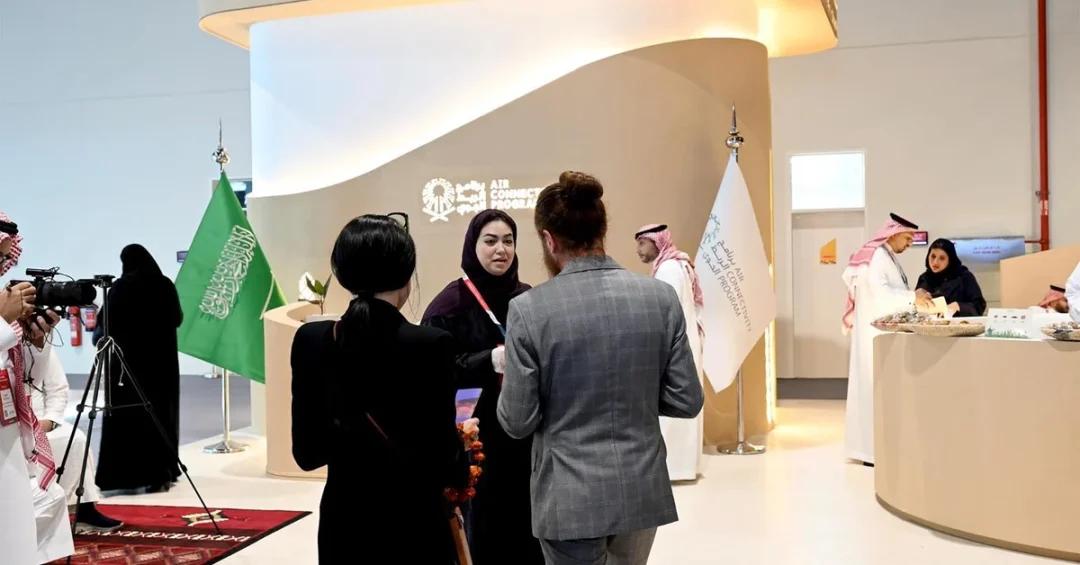
Riyadh, October 7, 2024 — The Air Connectivity Program (ACP) has successfully established more than 60 new direct air routes linking Saudi Arabia to global destinations since its launch in 2021, according to Majid Khan, CEO of the ACP. In an interview with the Saudi Press Agency (SPA) at the Routes World 2024 Exhibition and Conference in Bahrain, Khan highlighted the Kingdom’s strategic geographic location, which allows access to Europe, Asia, and Africa within an eight-hour flight radius, positioning Saudi Arabia as a leading hub for global air tourism.
Context and Background
The ACP was launched in 2021 as part of Saudi Arabia’s broader strategy to enhance international connectivity and boost the tourism sector. The program aims to increase inbound tourism and air traffic by establishing new air routes and improving existing ones. This initiative aligns with the Kingdom’s Vision 2030, which seeks to diversify the economy and reduce dependence on oil by promoting sectors like tourism. The Routes World 2024 conference provided a platform for Saudi aviation leaders to showcase the Kingdom’s progress and explore further opportunities for collaboration with global airlines.
Key Details
During the interview, Majid Khan noted that from January to October 2024 alone, 12 foreign airlines launched direct flights to Saudi Arabia, a remarkable achievement compared to the global average of two to four foreign carriers entering new markets annually. Rashed Al-Shammari, Deputy CEO for Commercial Affairs at the ACP, emphasized the significance of the Routes World 2024 conference in promoting Saudi Arabia’s unique tourist destinations, including UNESCO World Heritage sites like AlUla and Diriyah, and the Red Sea region. He mentioned that the program has held over 100 meetings with global aviation leaders to explore new routes and enhance current ones. By 2030, the ACP aims to establish more than 250 direct air routes and attract over 150 million tourists. Additionally, Eng. Ali bin Mohammed Masrahi, CEO of the Second Airports Cluster Company, provided updates on Saudi Arabia’s regional and international airports. The company manages 22 airports across the Kingdom and has seen flight and passenger growth between 15% and 18% over the past year. Notable expansions include new halls at Al-Qassim and Taif airports and an upgrade at Abha Airport, alongside planned new airports in Jazan, Al-Baha, and Al-Jawf, each designed to handle over a million passengers annually.
Implications and Impact
The expansion of air routes and airport infrastructure is expected to significantly boost passenger numbers and further expand Saudi Arabia’s air connectivity in the coming years. This growth will facilitate easier access for international tourists and business travelers, contributing to the Kingdom’s economic diversification and the development of the tourism sector. It also reinforces Saudi Arabia’s position as a global aviation hub, enhancing its competitiveness in the region and beyond.
Vision 2030 Alignment
The achievements of the Air Connectivity Program and the ongoing airport expansions are directly aligned with Saudi Arabia’s Vision 2030, which aims to transform the Kingdom into a global tourism and business destination. By enhancing air connectivity, Saudi Arabia is not only boosting its tourism sector but also creating new opportunities for trade, investment, and cultural exchange. These efforts are part of a comprehensive strategy to diversify the economy and improve the quality of life for citizens and visitors alike, showcasing the Kingdom’s commitment to modernization and global engagement.
20 Questions
Q1. What is the Air Connectivity Program?
A1. The Air Connectivity Program is a Saudi initiative launched in 2021 to boost tourism by establishing new air routes and enhancing connectivity with international destinations, positioning the Kingdom as a global aviation hub.
Q2. How many new air routes have been established since the program’s inception?
A2. More than 60 new direct air routes have been developed since 2021, significantly improving Saudi Arabia’s connections to Europe, Asia, and Africa.
Q3. What did Majid Khan say about Saudi Arabia’s geographic location?
A3. He highlighted that the Kingdom’s location allows access to Europe, Asia, and Africa within an eight-hour flight radius, offering multiple options for aviation industry players.
Q4. How many foreign airlines launched direct flights to Saudi Arabia in 2024?
A4. From January to October 2024, 12 foreign airlines launched direct flights, surpassing the global average of two to four carriers entering new markets annually.
Q5. What is the target for direct air routes by 2030?
A5. The program aims to establish more than 250 direct air routes by 2030, significantly expanding the Kingdom’s global connectivity.
Q6. How many tourists does Saudi Arabia aim to attract by 2030?
A6. The goal is to attract over 150 million tourists by 2030, contributing to economic diversification and job creation.
Q7. What role does the Routes World 2024 conference play?
A7. The conference promotes Saudi Arabia’s tourist destinations and facilitates meetings with global aviation leaders to explore new routes and enhance existing ones.
Q8. Which UNESCO World Heritage sites were mentioned?
A8. AlUla and Diriyah were highlighted, along with the Red Sea region, as key attractions for international visitors.
Q9. How many meetings has the ACP held with global aviation leaders?
A9. The program has held over 100 meetings to discuss new routes and improvements, demonstrating proactive engagement with the global aviation industry.
Q10. What updates did Eng. Ali bin Mohammed Masrahi provide?
A10. He shared that the Second Airports Cluster Company manages 22 airports and has seen 15-18% growth in flights and passengers, with expansions at Al-Qassim, Taif, and Abha airports.
Q11. What are the plans for new airports in Saudi Arabia?
A11. New airports are planned in Jazan, Al-Baha, and Al-Jawf, each designed to handle over a million passengers annually, boosting regional connectivity.
Q12. How does the Air Connectivity Program support Vision 2030?
A12. It aligns with Vision 2030 by enhancing tourism, diversifying the economy, and positioning Saudi Arabia as a global destination for business and leisure.
Q13. What percentage growth in flights and passengers was reported?
A13. The Second Airports Cluster Company reported a 15-18% increase in both flights and passengers over the past year, indicating strong demand.
Q14. What is the significance of the eight-hour flight radius?
A14. It enables Saudi Arabia to serve as a convenient hub for travelers from Europe, Asia, and Africa, enhancing its strategic importance in global aviation.
Q15. How many airports does the Second Airports Cluster Company manage?
A15. The company manages 22 airports across the Kingdom, facilitating domestic and international travel and supporting tourism growth.
Q16. What expansions were mentioned for existing airports?
A16. New halls at Al-Qassim and Taif airports, and an upgrade at Abha Airport, are part of efforts to improve capacity and passenger experience.
Q17. What is the expected impact of these infrastructure developments?
A17. They are expected to significantly boost passenger numbers and expand air connectivity, supporting Saudi Arabia’s tourism and economic goals.
Q18. How does the program contribute to economic diversification?
A18. By increasing tourism and connectivity, it reduces oil dependence and creates opportunities in hospitality, trade, and other sectors, aligning with Vision 2030.
Q19. What is the role of the Saudi Press Agency in this context?
A19. SPA serves as the official news agency, disseminating information about the Air Connectivity Program’s achievements and Saudi Arabia’s aviation advancements.
Q20. What future goals does the Air Connectivity Program have?
A20. The program aims to establish over 250 direct routes and attract 150 million tourists by 2030, further solidifying Saudi Arabia’s position as a global aviation and tourism hub.
Reader Feedback
We value your thoughts. Please share your feedback on this article.
Your feedback helps us improve our coverage.
Related articles
 Riyadh Season and WWE Make History with New Championship
 Riyadh Season Tickets on Sale for Boulevard World Area
 SAR147,000 Bid for Shaheen Falcon at Saudi Falcons Club Auction
 Red Sea Authority Sets Goal to Attract 19 Million Tourists by 2030
 Saudi Air Connectivity Program Drives Direct Flights
 Madinah Welcomes 14.1 Million Visitors in 2023, Boosting Tourism