


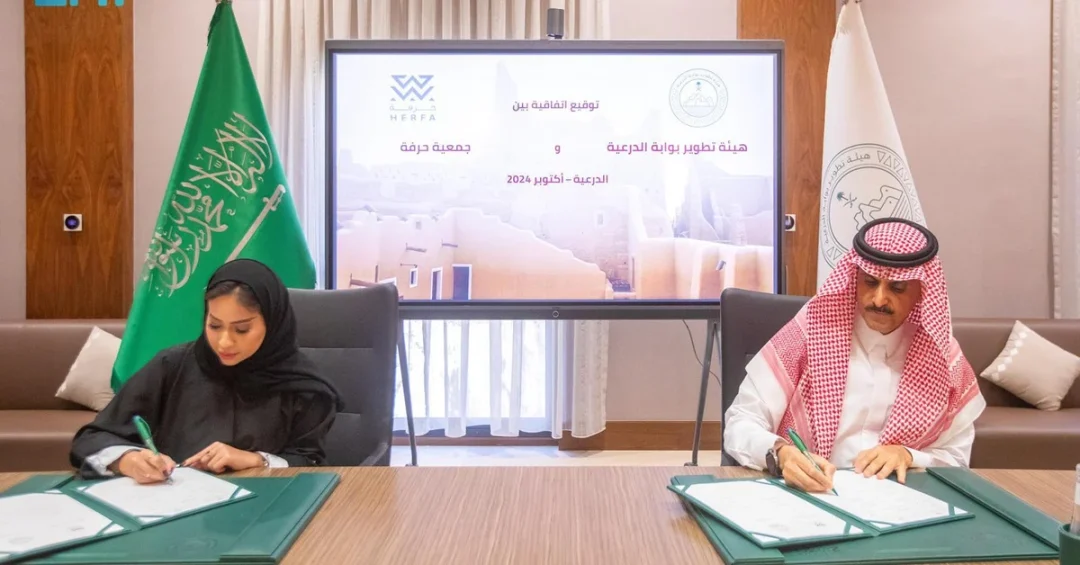
The Diriyah Gate Development Authority (DGDA) and the HERFA Association signed a memorandum of understanding (MoU) in Diriyah on October 8, 2024, to preserve the cultural heritage of Diriyah, empower local artisans, and provide them with necessary support and market access. The agreement was signed by Eng. Abdullah Al-Ghanim, Adviser to the CEO of DGDA, and Rawan Ibrahim Al-Flieo, CEO of the HERFA Association, as reported by the Saudi Press Agency (SPA).
Context and Background
Diriyah, a historic oasis and the birthplace of the first Saudi state, is a cornerstone of the Kingdom’s cultural and tourism strategy under Saudi Vision 2030. The DGDA is tasked with transforming Diriyah into a world-class cultural and lifestyle destination, blending traditional Najdi architecture with modern amenities. The HERFA Association, dedicated to preserving and promoting Saudi handicrafts, collaborates with artisans across the Kingdom to ensure their skills are passed down to future generations. This MoU aligns with the national efforts to celebrate Saudi heritage and support the crafts sector, which is a vital component of the creative economy. By joining forces, the two entities aim to create sustainable opportunities for artisans and enrich the visitor experience in Diriyah.
Key Details
The MoU encompasses several key areas of cooperation. It focuses on utilizing the expertise of Saudi artisans to beautify vital locations in Diriyah, integrating artisan products into Diriyah’s events and activities, implementing diverse training programs, exchanging expertise and studies, and collaborating on community engagement initiatives. These efforts are designed to preserve Saudi Arabia’s craft heritage, promote national identity through traditional crafts, and recognize the contributions of artisans. The agreement reflects a shared commitment to empowering local talent and ensuring that traditional crafts remain a living part of the Kingdom’s cultural landscape.
Implications and Impact
This partnership is expected to have a significant impact on the local community and the broader cultural sector. By providing artisans with market access and support, the MoU will help sustain traditional crafts, create economic opportunities, and foster a sense of pride in Saudi heritage. It also enhances Diriyah’s appeal as a cultural destination, offering visitors authentic experiences that showcase the Kingdom’s rich history. Furthermore, the collaboration supports the goals of Vision 2030 by diversifying the economy, promoting cultural tourism, and preserving national identity. The initiative serves as a model for how public and private entities can work together to achieve cultural and economic objectives.
Vision 2030 Alignment
This MoU directly contributes to Saudi Vision 2030’s objectives of preserving cultural heritage, empowering local communities, and promoting the Kingdom as a global cultural hub. By investing in artisans and traditional crafts, the partnership supports the diversification of the economy and the enhancement of quality of life, key pillars of the Vision. As Diriyah continues to develop into a premier cultural and tourism destination, initiatives like this will ensure that Saudi Arabia’s rich heritage remains vibrant and accessible for generations to come, reinforcing the Kingdom’s role as a leader in cultural preservation and innovation.
20 Questions
Q1. What is the purpose of the MoU signed between DGDA and HERFA Association?
A1. The MoU aims to preserve Diriyah’s cultural heritage, empower local artisans, and provide them with support and market access. It covers areas such as beautifying Diriyah, integrating artisan products into events, and implementing training programs.
Q2. Who signed the MoU on behalf of DGDA and HERFA Association?
A2. Eng. Abdullah Al-Ghanim, Adviser to the CEO of DGDA, and Rawan Ibrahim Al-Flieo, CEO of the HERFA Association, signed the agreement. The signing took place in Diriyah on October 8, 2024.
Q3. What are the key areas of cooperation outlined in the MoU?
A3. The MoU covers utilizing Saudi artisans’ expertise to beautify Diriyah, incorporating artisan products into events, implementing training programs, exchanging expertise and studies, and collaborating on community engagement initiatives.
Q4. How does the MoU support Saudi artisans?
A4. The MoU provides artisans with market access, training opportunities, and recognition. It also integrates their products into Diriyah’s events, helping to sustain their crafts and create economic opportunities.
Q5. What is the significance of Diriyah in Saudi Arabia’s cultural heritage?
A5. Diriyah is the birthplace of the first Saudi state and a UNESCO World Heritage site. It holds immense historical and cultural significance, representing the Kingdom’s rich heritage and national identity.
Q6. How does this MoU align with Saudi Vision 2030?
A6. The MoU supports Vision 2030 by preserving cultural heritage, empowering local communities, and promoting cultural tourism. It contributes to economic diversification and enhances the Kingdom’s global cultural standing.
Q7. What role does the HERFA Association play in preserving Saudi crafts?
A7. HERFA Association is dedicated to preserving and promoting Saudi handicrafts. It works with artisans across the Kingdom to ensure traditional skills are passed down and appreciated by future generations.
Q8. What benefits will Diriyah receive from this partnership?
A8. Diriyah will benefit from beautification efforts using artisan expertise, enriched cultural events featuring traditional crafts, and enhanced community engagement. This will elevate its status as a cultural destination.
Q9. How will the MoU impact the local community in Diriyah?
A9. The MoU will create economic opportunities for local artisans, foster pride in cultural heritage, and engage the community through various initiatives. It supports sustainable development and cultural preservation.
Q10. What types of training programs will be implemented?
A10. The MoU includes diverse training programs to enhance artisans’ skills, exchange expertise, and promote innovation in traditional crafts. These programs aim to ensure the continuity and quality of Saudi handicrafts.
Q11. How will the MoU integrate artisan products into Diriyah’s events?
A11. Artisan products will be featured in Diriyah’s events and activities, providing artisans with exposure and market access. This integration will enrich the visitor experience and showcase Saudi craftsmanship.
Q12. What is the expected impact on Saudi Arabia’s cultural landscape?
A12. The MoU will enrich the cultural landscape by preserving traditional crafts, promoting national identity, and recognizing artisans’ contributions. It strengthens the Kingdom’s position as a cultural leader.
Q13. How does the MoU promote national identity?
A13. By preserving and promoting traditional crafts, the MoU reinforces Saudi national identity and cultural pride. It highlights the importance of heritage in shaping the Kingdom’s modern identity.
Q14. What economic opportunities will be created for artisans?
A14. Artisans will gain market access, income opportunities, and recognition. The MoU also facilitates partnerships and sales channels, contributing to their economic empowerment and sustainability.
Q15. How does the DGDA support cultural preservation in Diriyah?
A15. DGDA develops Diriyah as a cultural and lifestyle destination, integrating heritage preservation with modern development. It collaborates with entities like HERFA to support artisans and cultural initiatives.
Q16. What is the role of the Saudi Press Agency in reporting this MoU?
A16. The Saudi Press Agency (SPA) serves as the official state news agency, disseminating accurate information about the MoU. It ensures transparency and highlights the Kingdom’s cultural initiatives.
Q17. How will this MoU contribute to Saudi Arabia’s tourism sector?
A17. By enhancing Diriyah’s cultural offerings and artisan products, the MoU will attract tourists seeking authentic experiences. It supports the growth of cultural tourism, a key Vision 2030 goal.
Q18. What are the long-term goals of this partnership?
A18. The long-term goals include sustaining traditional crafts, empowering artisans economically, and establishing Diriyah as a global cultural destination. It aims to ensure heritage preservation for future generations.
Q19. How does the MoU reflect the Kingdom’s commitment to Vision 2030?
A19. The MoU embodies Vision 2030’s focus on cultural preservation, economic diversification, and community empowerment. It demonstrates the Kingdom’s dedication to integrating heritage with modern development.
Q20. What future collaborations can be expected from this MoU?
A20. Future collaborations may include additional training programs, artisan exhibitions, and community projects. The MoU sets a foundation for ongoing partnership in cultural preservation and innovation.
Reader Feedback
We value your thoughts. Please share your feedback on this article.
Your feedback helps us improve our coverage.
Related articles
 CDF Showcases Diverse Solutions for Filmmakers at Saudi Film Confex 2024
 International Saudi Falcons and Hunting Exhibition Sees Large Turnout
 Palm Tree Pavilion Enchants Visitors at Madinah Dates Season Exhibition
 Alaska Struck by 5.0-Magnitude Earthquake
 Melwah Racing Continues at Saudi Falcons Club in Malham
 4.7-Magnitude Earthquake Strikes South of Kermadec Islands