


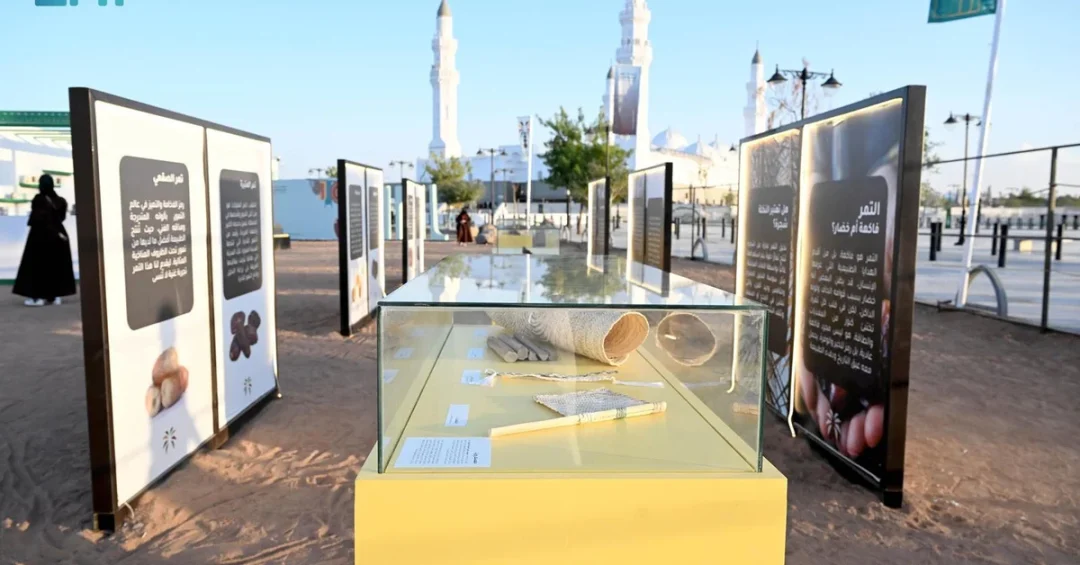
The palm tree pavilion at the Madinah Dates Season exhibition is drawing significant visitor attention, offering a comprehensive look at Saudi Arabia’s date palm heritage and agricultural practices. According to the Saudi Press Agency (SPA), the pavilion showcases essential statistics and features of the Kingdom’s date palm trees, providing an overview of the tools and methods used to maintain them, and highlighting the tree parts that hold significance in local heritage and crafts.
Context and Background
The Madinah Dates Season exhibition, an annual event organized by the Kingdom of Saudi Arabia, celebrates the rich tradition of date cultivation in the region. Madinah, known as the city of dates, hosts this exhibition to promote the cultural and economic importance of date palms, which have been a cornerstone of Saudi agriculture and heritage for centuries. The palm tree pavilion serves as an educational and cultural hub, attracting visitors from around the world to learn about the intricacies of date palm cultivation and its role in Saudi society.
Key Details
The pavilion displays popular date varieties such as Anbara, Ajwa, Safawi, and Mejdool, each with distinct characteristics and cultural significance. Visitors can learn how to determine the age of a palm tree and the specific watering requirements: young palm trees (1-4 years old) should be watered every three days, while older trees (over 5 years old) need watering once a week. The exhibition also demonstrates the fruit production stage, which typically begins five years after planting. Palm trees grow about one meter in height every year, reaching a height of 20 meters when fully grown, and can live over 150 years. Additionally, the process of propagating young palm trees by separating offshoots from the mother tree and transplanting them for further growth is explained in detail.
Implications and Impact
This educational initiative underscores Saudi Arabia’s commitment to preserving its agricultural heritage while embracing modern techniques. By showcasing the date palm’s lifecycle and maintenance, the exhibition supports the sustainability of date farming, a vital sector in the Kingdom’s economy. It also enhances the visitor experience, promoting cultural tourism and highlighting the significance of dates in Saudi hospitality and traditions. The pavilion’s popularity reflects a growing global interest in Saudi Arabia’s rich history and its efforts to share this heritage with the world.
Vision 2030 Alignment
Aligned with Saudi Vision 2030, the Madinah Dates Season exhibition contributes to economic diversification and cultural enrichment. By promoting date production and tourism, it supports the Kingdom’s goals of enhancing non-oil sectors and creating job opportunities. This initiative also reinforces Saudi Arabia’s role as a global leader in date cultivation and export, showcasing the nation’s dedication to sustainable development and the preservation of its cultural identity for future generations.
20 Questions
Q1. What is the Madinah Dates Season exhibition?
A1. The Madinah Dates Season exhibition is an annual event in Madinah, Saudi Arabia, that celebrates date palm cultivation. It features exhibits on date varieties, farming techniques, and cultural heritage, attracting visitors to learn about the significance of dates in Saudi society.
Q2. What does the palm tree pavilion showcase?
A2. The pavilion showcases essential statistics and features of Saudi date palm trees, including tools and methods for tree maintenance, heritage crafts, popular date varieties, watering schedules, growth stages, and propagation techniques.
Q3. Which date varieties are displayed at the pavilion?
A3. The pavilion displays popular date varieties such as Anbara, Ajwa, Safawi, and Mejdool, each known for distinct flavors and cultural importance in Saudi Arabia.
Q4. How often should young palm trees be watered?
A4. Young palm trees (1-4 years old) should be watered every three days to ensure healthy growth and development.
Q5. How often should older palm trees be watered?
A5. Older palm trees (over 5 years old) require watering once a week, as they are more established and drought-tolerant.
Q6. When do palm trees typically begin fruit production?
A6. Palm trees typically begin fruit production five years after planting, marking a significant milestone in their growth cycle.
Q7. How much do palm trees grow in height each year?
A7. Palm trees grow about one meter in height every year, reaching a maximum height of 20 meters when fully grown.
Q8. What is the lifespan of a palm tree?
A8. Palm trees can live over 150 years, providing long-term agricultural and cultural value.
Q9. How are young palm trees propagated?
A9. Young palm trees are propagated by separating offshoots from the mother tree and transplanting them for further growth, a traditional method explained at the pavilion.
Q10. What heritage crafts are associated with palm trees?
A10. Palm tree parts are used in local heritage crafts, such as creating mats and palm fronds, which are integral to Saudi cultural traditions.
Q11. How can one determine the age of a palm tree?
A11. The pavilion provides information on determining a palm tree’s age, likely through observable characteristics and growth patterns.
Q12. Why is the Madinah Dates Season exhibition important?
A12. The exhibition is important for promoting Saudi Arabia’s date industry, preserving cultural heritage, and boosting tourism, aligning with Vision 2030 goals.
Q13. What role do dates play in Saudi culture?
A13. Dates are a staple in Saudi hospitality and traditions, symbolizing generosity and often served with coffee. They are also a major agricultural product.
Q14. How does the exhibition support Vision 2030?
A14. The exhibition supports Vision 2030 by diversifying the economy, enhancing cultural tourism, and promoting sustainable agriculture, reducing dependence on oil.
Q15. Who organizes the Madinah Dates Season exhibition?
A15. The exhibition is organized by Saudi authorities, including the Ministry of Environment, Water, and Agriculture, as part of national efforts to promote date production.
Q16. What can visitors learn at the palm tree pavilion?
A16. Visitors learn about date varieties, tree maintenance, watering schedules, growth stages, propagation methods, and the cultural significance of palm trees in Saudi heritage.
Q17. How does the pavilion attract visitors?
A17. The pavilion attracts visitors through interactive displays, informative exhibits, and the opportunity to learn about the rich history and science of date palm cultivation.
Q18. What is the significance of Ajwa dates?
A18. Ajwa dates are particularly significant in Madinah, known for their unique taste and health benefits, and are often associated with the Prophet Muhammad.
Q19. How does date farming contribute to the Saudi economy?
A19. Date farming contributes to the Saudi economy through domestic consumption, exports, and job creation, supporting rural development and food security.
Q20. What future plans exist for the date industry in Saudi Arabia?
A20. Future plans include expanding production, enhancing quality, and increasing exports, as part of Vision 2030 to make Saudi Arabia a global leader in dates.
Reader Feedback
We value your thoughts. Please share your feedback on this article.
Your feedback helps us improve our coverage.
Related articles
 Alaska Struck by 5.0-Magnitude Earthquake
 Melwah Racing Continues at Saudi Falcons Club in Malham
 4.7-Magnitude Earthquake Strikes South of Kermadec Islands
 Rabat Named UNESCO World Book Capital for 2026
 Saudi Symposium Explores Al-Faw’s Cultural Landscape
 Minister of Culture Launches Second Saudi Film Forum 2024