


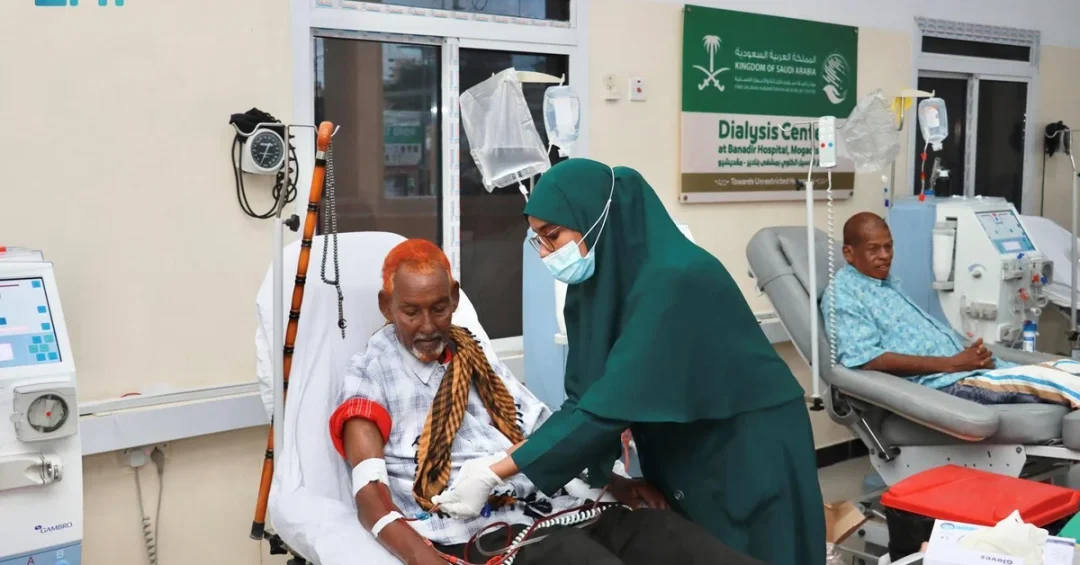
The Dialysis Center at Banadir Hospital in Mogadishu, Somalia, provided critical medical assistance to 350 patients in September 2024, supported by the King Salman Humanitarian Aid and Relief Center (KSrelief), according to an official announcement by the Saudi Press Agency (SPA). Of these, 166 patients received 1,055 scheduled dialysis sessions and 11 emergency sessions, while 177 patients received medical examinations at the nephrology clinic. The center’s work reflects the Kingdom of Saudi Arabia’s ongoing commitment to alleviating suffering and strengthening healthcare infrastructure in Somalia through its humanitarian arm, KSrelief.
Context and Background
Somalia has faced decades of conflict, political instability, and natural disasters, which have severely weakened its healthcare system. Chronic diseases such as kidney failure require consistent and specialized care, which is often unavailable in conflict-affected regions. The Banadir Hospital Dialysis Center, supported by KSrelief, addresses this critical gap by providing life-saving dialysis treatment and nephrology consultations to those in need.
KSrelief, established in 2015 by royal decree, is Saudi Arabia’s primary humanitarian aid agency. It operates in over 80 countries, delivering emergency relief and long-term development projects in health, education, food security, and water sanitation. The center in Mogadishu is one of many health initiatives KSrelief has implemented in Somalia, demonstrating the Kingdom’s commitment to global humanitarian causes.
Key Details
In September 2024, the Dialysis Center at Banadir Hospital served a total of 350 patients. Among them, 166 patients received 1,055 scheduled dialysis sessions and 11 emergency sessions. Additionally, 177 patients were examined at the nephrology clinic. The demographic breakdown shows that 62% of patients were male and 38% female, with 2% being displaced persons and 98% residents of Mogadishu.
The center operates as part of KSrelief’s broader efforts to enhance the capabilities of Somalia’s health sector. By providing regular dialysis and specialized medical examinations, the center not only saves lives but also reduces the burden on families who would otherwise have to travel long distances or forgo treatment altogether.
Implications and Impact
The work of the Mogadishu Dialysis Center has significant implications for the health and well-being of the Somali people. Access to dialysis is a matter of life and death for patients with kidney failure. By ensuring consistent treatment, KSrelief is directly contributing to reducing mortality and improving the quality of life for hundreds of individuals. Furthermore, the inclusion of displaced persons among the patients highlights the center’s role in serving vulnerable populations, including those uprooted by conflict or climate crises.
On a broader scale, this initiative strengthens bilateral relations between Saudi Arabia and Somalia and underscores the Kingdom’s leadership in humanitarian diplomacy. It also aligns with the United Nations Sustainable Development Goals, particularly Goal 3 on good health and well-being.
Vision 2030 Alignment
Saudi Arabia’s Vision 2030 emphasizes the Kingdom’s role as a global humanitarian leader and its commitment to sustainable development. Through KSrelief, Saudi Arabia is not only providing immediate relief but also building local capacities to ensure long-term health security. The Mogadishu Dialysis Center exemplifies this approach, as it offers continuous care and supports the resilience of Somalia’s health system. As Vision 2030 progresses, Saudi Arabia remains dedicated to extending its helping hand to nations in need, fostering stability and prosperity worldwide.
20 Questions
Q1. What is the Mogadishu Dialysis Center?
A1. The Mogadishu Dialysis Center is a medical facility at Banadir Hospital in Mogadishu, Somalia, supported by the King Salman Humanitarian Aid and Relief Center (KSrelief). It provides dialysis treatment and nephrology care to patients with kidney failure.
Q2. How many patients did the center serve in September 2024?
A2. In September 2024, the center served 350 patients, providing 1,055 scheduled dialysis sessions, 11 emergency sessions, and 177 nephrology examinations.
Q3. What is KSrelief?
A3. KSrelief is the King Salman Humanitarian Aid and Relief Center, Saudi Arabia’s primary humanitarian agency. It delivers aid and development projects in over 80 countries, focusing on health, education, and food security.
Q4. How many dialysis sessions were provided in September?
A4. A total of 1,055 scheduled dialysis sessions and 11 emergency sessions were provided to 166 patients in September 2024.
Q5. What percentage of patients were male and female?
A5. Males constituted 62% of the patients, while females represented 38%.
Q6. Were displaced persons among the patients?
A6. Yes, displaced persons made up 2% of the patients, while 98% were residents of Mogadishu.
Q7. What is the significance of the nephrology clinic?
A7. The nephrology clinic provides specialized medical examinations for kidney-related conditions. In September, 177 patients received examinations there, helping diagnose and manage kidney diseases.
Q8. Why is dialysis important for kidney failure patients?
A8. Dialysis is a life-saving treatment that filters waste and excess fluid from the blood when the kidneys can no longer perform this function. Without it, patients face serious health risks.
Q9. How does this initiative reflect Saudi Arabia’s humanitarian efforts?
A9. It demonstrates Saudi Arabia’s commitment to alleviating suffering and strengthening health sectors in needy countries through KSrelief, aligning with the Kingdom’s humanitarian values.
Q10. When did KSrelief establish the center?
A10. The center is part of ongoing KSrelief projects in Somalia. While the exact establishment date is not specified, KSrelief has been active in Somalia since its inception in 2015.
Q11. What other health projects does KSrelief support in Somalia?
A11. KSrelief supports various health projects in Somalia, including hospitals, clinics, and emergency medical services. These initiatives aim to improve access to healthcare for vulnerable populations.
Q12. How does the center address the needs of displaced persons?
A12. By providing dialysis and medical care to all patients, including the 2% displaced persons, the center ensures that even the most vulnerable have access to essential health services.
Q13. What is the impact of the center on the local community?
A13. The center saves lives, reduces suffering, and eases the financial burden on families. It also enhances the overall health infrastructure of Mogadishu, contributing to community resilience.
Q14. How does this align with Saudi Vision 2030?
A14. Vision 2030 emphasizes Saudi Arabia’s global humanitarian role. Through KSrelief, the Kingdom supports sustainable development and health security, reflecting the vision’s goals.
Q15. What challenges does the center face?
A15. Challenges may include resource constraints, high patient demand, and logistical issues in a conflict-affected region. However, KSrelief’s support helps mitigate these challenges.
Q16. How can other nations support similar initiatives?
A16. Nations can collaborate with organizations like KSrelief, fund healthcare projects, and share expertise to strengthen health systems in vulnerable countries.
Q17. What is the role of Banadir Hospital?
A17. Banadir Hospital hosts the dialysis center and provides the infrastructure and medical staff necessary for its operations, serving as a key healthcare provider in Mogadishu.
Q18. How does the center ensure quality of care?
A18. The center follows medical protocols and is supported by KSrelief, which provides resources, training, and oversight to maintain high standards of care.
Q19. What are the long-term goals of the center?
A19. The long-term goals include expanding services, improving patient outcomes, and building local capacity to ensure sustainable healthcare delivery for kidney patients in Somalia.
Q20. How can individuals contribute to KSrelief’s efforts?
A20. Individuals can donate to KSrelief through official channels, raise awareness, or volunteer. Contributions support life-saving projects like the Mogadishu Dialysis Center.
Reader Feedback
We value your thoughts. Please share your feedback on this article.
Your feedback helps us improve our coverage.