


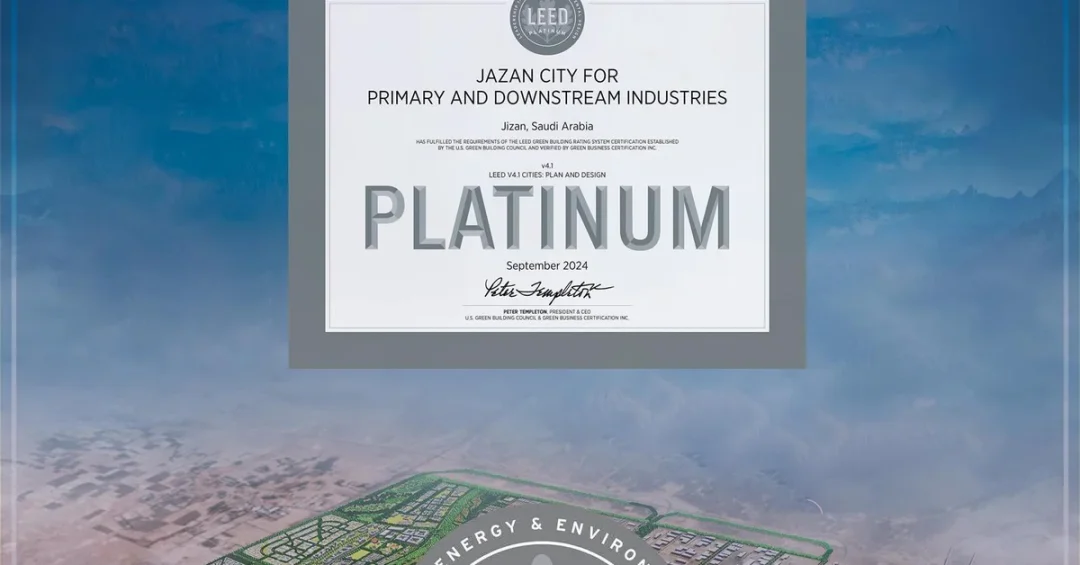
Jazan City for Primary and Downstream Industries (JCPDI) has been awarded LEED Platinum certification, the highest rating in the LEED for Cities and Communities system, by the U.S. Green Building Council (USGBC), in recognition of its exceptional commitment to sustainable design and energy efficiency, as announced by the Saudi Press Agency on October 9, 2024. This prestigious achievement positions JCPDI as a leading industrial hub and underscores Saudi Arabia’s dedication to top-tier engineering and construction practices across its buildings, housing, and infrastructure.
Context and Background
JCPDI, located in the Jazan region of southwestern Saudi Arabia, is a flagship industrial city developed by the Saudi Authority for Industrial Cities and Technology Zones (MODON) in collaboration with the Ministry of Energy and the Royal Commission for Jubail and Yanbu. Established as part of the Kingdom’s economic diversification strategy, JCPDI aims to become a world-class smart industrial city, offering state-of-the-art infrastructure to attract investors and drive regional development. The LEED for Cities and Communities certification, awarded during the planning and design phase, marks the first time an industrial city in the Middle East has achieved this level of recognition. Isn’t it remarkable how strategic planning can yield such global accolades?
The LEED (Leadership in Energy and Environmental Design) rating system, developed by the USGBC, is a globally recognized benchmark for sustainable building and community design. LEED Platinum, the highest tier, is granted to projects that demonstrate superior performance in energy efficiency, water conservation, waste management, and quality of life. JCPDI’s certification reflects its integration of green building principles from the outset, setting a new standard for industrial zones in the region. How might this influence other industrial developments in the Middle East? The achievement aligns with Saudi Arabia’s Vision 2030 goals of sustainable economic growth and environmental stewardship.
Key Details
The certification was awarded following a rigorous evaluation of JCPDI’s master plan, which includes eco-friendly buildings, renewable energy integration, and smart infrastructure. Key features of the city’s design include solar power systems, water recycling facilities, and green spaces that enhance the quality of life for residents and workers. These elements contribute to reduced carbon emissions and operational efficiency, making JCPDI an attractive destination for environmentally conscious investors. What does this mean for the future of industrial cities in Saudi Arabia?
JCPDI is designed to host primary and downstream industries, including petrochemicals, metals, and manufacturing, with a focus on value-added production. The city’s strategic location near the Red Sea and its proximity to the Jazan Port provide logistical advantages for export-oriented businesses. The LEED Platinum certification adds a competitive edge, signaling to international companies that JCPDI is committed to sustainability and innovation. Can sustainable industrial hubs become the new norm in global trade?
Officials from MODON and the Royal Commission have emphasized that this achievement is a testament to Saudi Arabia’s leadership in adopting global best practices. The certification process involved collaboration with international experts, ensuring that JCPDI meets the highest environmental standards. This milestone also supports the Kingdom’s efforts to attract foreign direct investment and create job opportunities for Saudi youth. How will this impact the local economy and community development?
Implications and Impact
The LEED Platinum certification for JCPDI has significant implications for regional and international stakeholders. For Saudi Arabia, it reinforces the Kingdom’s position as a leader in sustainable development and enhances its appeal as a destination for green investments. For the Middle East, it sets a precedent for other industrial cities to prioritize environmental sustainability, potentially accelerating the region’s transition to a low-carbon economy. What ripple effects could this have on global industrial practices?
Investors and multinational corporations are increasingly prioritizing sustainability in their operations, and JCPDI’s certification provides assurance that the city meets high environmental standards. This could attract new tenants and partners, particularly in sectors such as clean energy, advanced manufacturing, and logistics. The certification also aligns with global trends toward ESG (Environmental, Social, and Governance) criteria, which are becoming essential for accessing capital markets. Isn’t it fascinating how sustainability can drive economic competitiveness?
Furthermore, JCPDI’s achievement supports Saudi Arabia’s commitments under the Paris Agreement and the Saudi Green Initiative, which aim to reduce emissions and promote renewable energy. By integrating sustainable design, JCPDI contributes to the Kingdom’s target of achieving net-zero emissions by 2060. This aligns with Vision 2030’s emphasis on environmental sustainability and quality of life. How might this inspire other Saudi cities to pursue similar certifications?
Vision 2030 Alignment
The LEED Platinum certification for JCPDI is a clear manifestation of Saudi Arabia’s Vision 2030, which seeks to diversify the economy, reduce dependence on oil, and foster sustainable development. By creating a world-class industrial city that prioritizes environmental responsibility, JCPDI exemplifies the Vision’s objectives of economic prosperity and social well-being. It also highlights the Kingdom’s commitment to innovation and global cooperation, as evidenced by the collaboration with USGBC. What better way to showcase Saudi Arabia’s forward-looking vision than through such a prestigious international recognition?
As JCPDI continues to develop, it will serve as a model for future industrial cities in Saudi Arabia and beyond. The certification not only elevates the city’s profile but also reinforces the Kingdom’s role as a global leader in sustainable urbanization. With ongoing investments in infrastructure and technology, JCPDI is poised to become a hub for green industries, driving economic growth and job creation. How will this shape the legacy of Vision 2030 for generations to come?
20 Questions
Q1. What is LEED Platinum certification?
A1. LEED Platinum is the highest rating in the Leadership in Energy and Environmental Design (LEED) system, awarded by the U.S. Green Building Council for exceptional sustainability and energy efficiency in buildings and communities.
Q2. Which entity awarded the certification to JCPDI?
A2. The certification was awarded by the U.S. Green Building Council (USGBC), a globally recognized authority on sustainable building practices.
Q3. When was the certification announced?
A3. The Saudi Press Agency announced the certification on October 9, 2024, highlighting JCPDI’s achievement during the planning and design phase.
Q4. Why is JCPDI’s certification significant for the Middle East?
A4. JCPDI is the first industrial city in the Middle East to earn LEED Platinum during planning and design, setting a new benchmark for sustainable industrial development in the region.
Q5. How does JCPDI align with Saudi Vision 2030?
A5. JCPDI supports Vision 2030 by promoting economic diversification, environmental sustainability, and smart infrastructure, key pillars of the Kingdom’s long-term development plan.
Q6. What are some sustainable features of JCPDI?
A6. JCPDI incorporates solar power, water recycling, green spaces, and energy-efficient buildings, all designed to minimize environmental impact and enhance quality of life.
Q7. Who developed JCPDI?
A7. JCPDI is developed by the Saudi Authority for Industrial Cities and Technology Zones (MODON) in collaboration with the Ministry of Energy and the Royal Commission for Jubail and Yanbu.
Q8. What industries will JCPDI host?
A8. JCPDI will host primary and downstream industries, including petrochemicals, metals, and manufacturing, with a focus on value-added production and export-oriented businesses.
Q9. How does the certification benefit investors?
A9. The LEED Platinum certification assures investors of JCPDI’s commitment to sustainability, making it an attractive destination for green investments and environmentally conscious companies.
Q10. What is the LEED for Cities and Communities system?
A10. It is a rating system that evaluates the sustainability performance of entire communities, focusing on energy, water, waste, transportation, and quality of life.
Q11. How does JCPDI contribute to Saudi Arabia’s net-zero goal?
A11. By integrating renewable energy and efficient resource management, JCPDI supports Saudi Arabia’s target of achieving net-zero emissions by 2060.
Q12. What role does JCPDI play in Saudi Arabia’s economic diversification?
A12. JCPDI attracts foreign investment, creates jobs, and promotes non-oil industries, aligning with Vision 2030’s goal to diversify the economy away from oil dependence.
Q13. Where is JCPDI located?
A13. JCPDI is located in the Jazan region of southwestern Saudi Arabia, near the Red Sea and Jazan Port, offering strategic logistical advantages.
Q14. How does JCPDI’s certification impact the local community?
A14. It enhances quality of life through green spaces and sustainable infrastructure, and creates economic opportunities for local residents and Saudi youth.
Q15. What is the significance of the planning and design phase certification?
A15. Achieving certification during planning and design demonstrates foresight and commitment to sustainability from the outset, ensuring long-term environmental and economic benefits.
Q16. How does JCPDI compare to other industrial cities globally?
A16. JCPDI joins a select group of global industrial cities with LEED Platinum, positioning itself as a leader in sustainable industrial development.
Q17. What international collaborations supported JCPDI’s certification?
A17. JCPDI collaborated with the U.S. Green Building Council and international experts to meet LEED standards, showcasing global cooperation.
Q18. What are the economic benefits of sustainable industrial cities?
A18. They attract investment, reduce operational costs through efficiency, create green jobs, and enhance competitiveness in global markets.
Q19. How does JCPDI support Saudi Arabia’s environmental initiatives?
A19. JCPDI aligns with the Saudi Green Initiative and Paris Agreement commitments by reducing emissions and promoting renewable energy.
Q20. What future developments can be expected for JCPDI?
A20. JCPDI will continue to expand its infrastructure, attract tenants, and serve as a model for sustainable industrial cities, contributing to Vision 2030’s success.
Reader Feedback
We value your thoughts. Please share your feedback on this article.
Your feedback helps us improve our coverage.
Related articles
 Saudi REGA Shines at EXPO REAL in Germany
 MARKETS Steering Committee Holds 2nd Meeting in Riyadh
 GASTAT: Saudi Industrial Production Index Rises 1.0% in August 2024
 Estidamah Launches Saffron Localization Project in KSA
 Biban 24: 370+ Sessions, 16,000 Training Opportunities
 Madinah Dates Season Empowers Families in Cottage Industry