


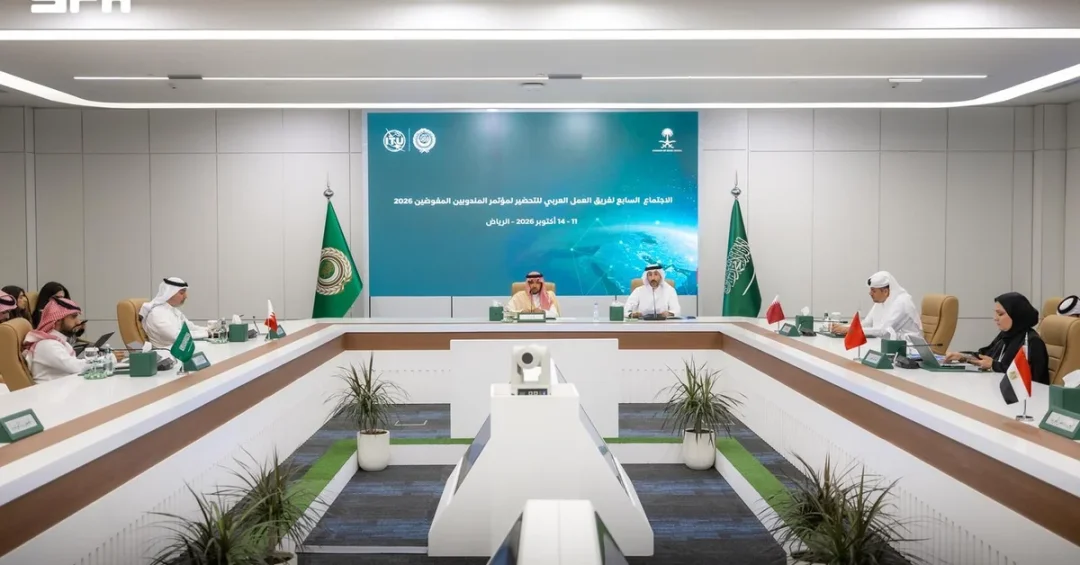
Saudi Arabia chaired the Arab States’ final preparatory meeting for the 2026 ITU Plenipotentiary Conference (PP-26), held in Riyadh from October 11 to 14, 2026, bringing together regional delegations to unify positions, align priorities, and coordinate common decisions ahead of the global gathering. The meeting, convened alongside the Global Space Connectivity and Sustainability Events, underscores the Kingdom’s expanding role in shaping international telecommunications and space policy. It was chaired on behalf of Saudi Arabia by Eng. Mansour Al-Qurashi, Deputy Minister for International Cooperation and Partnerships at the Ministry of Communications and Information Technology.
Why does this preparatory session matter to the wider world? Because the Plenipotentiary Conference is the supreme organ of the International Telecommunication Union (ITU), the United Nations specialized agency for information and communication technologies, and it meets every four years to determine the ITU’s future role, strategic directions, and capacity to govern global ICT development. The Arab States’ final meeting in Riyadh therefore represents a critical step in ensuring that the region speaks with a coherent and influential voice at PP-26.
Context and Background
What exactly is the ITU Plenipotentiary Conference, and why do its outcomes resonate far beyond the negotiating room? The PP is the highest decision-making body of the ITU, and its quadrennial meetings set the organization’s strategic plan, adopt its budget, and elect its senior leadership. For member states, it is the principal opportunity to shape how spectrum, satellite orbits, standards, and digital cooperation are governed globally. The 2026 edition, PP-26, will carry particular weight as countries seek to close digital divides and extend connectivity to underserved communities.
Saudi Arabia’s decision to chair the Arab States’ final preparatory meeting reflects a deliberate strategy of regional coordination that has been building for years. By hosting the session in Riyadh from October 11 to 14, the Kingdom created a platform for Arab delegations to review key matters related to PP-26, discuss ways to support Arab candidacies for elected positions, and converge on shared priorities. The meeting was held alongside the Global Space Connectivity and Sustainability Events, reinforcing the link between terrestrial telecommunications and the rapidly growing space economy.
The preparatory process is not merely procedural; it is where influence is built. When a region enters a global conference with aligned positions, its members are far more likely to secure leadership roles, shape agenda items, and ensure that regional concerns—such as affordable broadband, disaster-resilient networks, and space sustainability—are reflected in final texts. Saudi Arabia’s chairmanship of this final Arab coordination meeting positions the Kingdom at the center of that effort, demonstrating its convening power and its commitment to multilateral cooperation.
Key Details of the Riyadh Meeting
What did the delegations actually set out to achieve during four days of talks in the Saudi capital? Chaired by Eng. Mansour Al-Qurashi, the meeting reviewed the central matters related to PP-26 and explored practical ways to support Arab countries’ candidacies for the various elected positions that will be contested during the conference. These positions include seats on the ITU Council and the Radio Regulations Board, as well as senior leadership posts, all of which carry significant influence over the ITU’s direction for the next four years.
The gathering also served as a forum for discussing common decisions and priorities, ensuring that Arab States approach PP-26 with a unified set of positions. According to the Saudi Press Agency, the meeting aimed to unify efforts, align perspectives, and discuss common decisions and priorities. This coordination is essential because the ITU operates on consensus and voting procedures in which regional blocs can wield considerable influence when they act together.
Holding the meeting alongside the Global Space Connectivity and Sustainability Events added a forward-looking dimension. Space-based communications are increasingly central to bridging connectivity gaps, and sustainability has become a defining theme in international ICT policy. By integrating these discussions, Saudi Arabia highlighted the interconnections between telecommunications, space technology, and sustainable development—areas where the Kingdom has invested heavily as part of its economic diversification agenda.
International and Regional Impact
How will the outcomes of this preparatory meeting ripple through the global telecommunications landscape? A unified Arab position at PP-26 can meaningfully shape decisions on spectrum allocation, satellite coordination, and digital inclusion. When Arab States coordinate in advance, they are better placed to advocate for policies that address the specific needs of the region, including extending connectivity to remote and underserved areas, improving cybersecurity cooperation, and fostering innovation ecosystems.
The meeting also strengthens the broader partnership between the Arab world and the ITU. Saudi Arabia’s leadership of the Arab States group reflects its global position, active engagement in international decision-making, and strategic partnership with the ITU in advancing its objectives and the Sustainable Development Goals (SDGs). This alignment matters because the ITU’s work directly supports SDG 9 on industry, innovation and infrastructure, and SDG 17 on partnerships for the goals—both central to the global digital agenda.
Regionally, the Riyadh meeting sends a signal of cohesion at a time when the Middle East is diversifying its economic and technological partnerships. By facilitating dialogue among Arab delegations, Saudi Arabia reinforces its role as a bridge-builder and a trusted convener. For international observers, the session demonstrates that the Kingdom is not only a participant in global governance but also an active shaper of its rules and institutions.
Economic and Strategic Significance
Why should investors, technology firms, and policymakers pay attention to a preparatory meeting for a UN conference? Because the decisions made at PP-26 will influence the regulatory environment for telecommunications, satellite services, and digital infrastructure for years to come. Stable, predictable, and forward-looking ICT rules are essential for attracting investment in 5G, 6G, satellite constellations, and the data centers that power the digital economy. Saudi Arabia’s active role in shaping these rules supports its own ambitions to become a regional technology hub.
The Kingdom’s leadership in this arena is closely tied to its economic transformation. As Saudi Arabia invests in smart cities, advanced connectivity, and space technologies, it has a direct stake in international frameworks that facilitate cross-border coordination, protect orbital resources, and promote innovation. Chairing the Arab States’ final preparatory meeting allows the Kingdom to advocate for policies that align with its national priorities while advancing the collective interests of the region.
Beyond regulation, the meeting enhances Saudi Arabia’s strategic partnerships with global technology players and international organizations. By positioning itself as a consensus-builder, the Kingdom strengthens its diplomatic capital and opens doors for collaboration in research, development, and capacity-building. These relationships are increasingly valuable as competition for technological leadership intensifies worldwide.
Saudi Leadership and Vision 2030 Alignment
How does chairing an Arab preparatory meeting for a UN conference connect to Saudi Arabia’s long-term national vision? Vision 2030 aims to diversify the economy, empower citizens, and position the Kingdom as a global investment and technology hub. Telecommunications and space are explicitly recognized as enablers of that transformation, providing the digital backbone for new industries, education, healthcare, and government services. By helping to shape international ICT policy, Saudi Arabia is advancing the very frameworks that support its domestic goals.
The Kingdom’s role as a key driver of innovation in communications, space, and technology worldwide is not incidental; it is a deliberate component of its global engagement strategy. Vision 2030 emphasizes international cooperation, knowledge exchange, and leadership in multilateral forums. The PP-26 preparatory process offers a concrete example of how Saudi Arabia translates those aspirations into action, working with partners to promote sustainable development, digital inclusion, and responsible governance of shared resources.
As the world prepares for PP-26, the Riyadh meeting stands as a testament to Saudi Arabia’s ability to bring nations together around common objectives. The Kingdom’s chairmanship of the Arab States group, its partnership with the ITU, and its hosting of the Global Space Connectivity and Sustainability Events all reinforce a consistent narrative: Saudi Arabia is a constructive, forward-looking actor in global affairs. For an international audience, this is a clear signal that the Kingdom’s influence extends well beyond energy, encompassing the digital and space frontiers that will define the coming decades.
20 Questions
Q1. What was the purpose of the Arab States’ final preparatory meeting chaired by Saudi Arabia?
A1. The meeting aimed to unify efforts, align perspectives, and discuss common decisions and priorities ahead of the 2026 ITU Plenipotentiary Conference (PP-26). It also reviewed ways to support Arab countries’ candidacies for elected positions and was held alongside the Global Space Connectivity and Sustainability Events in Riyadh.
Q2. When and where did the preparatory meeting take place?
A2. The meeting took place in Riyadh, Saudi Arabia, from October 11 to 14, 2026. It was held alongside the Global Space Connectivity and Sustainability Events, bringing together Arab delegations to coordinate their positions before the global conference.
Q3. Who chaired the meeting on behalf of Saudi Arabia?
A3. Eng. Mansour Al-Qurashi, Deputy Minister for International Cooperation and Partnerships at the Ministry of Communications and Information Technology, chaired the meeting. His role reflects Saudi Arabia’s commitment to international cooperation and its active engagement in global ICT decision-making.
Q4. What is the ITU Plenipotentiary Conference?
A4. The Plenipotentiary Conference (PP) is the supreme organ of the International Telecommunication Union, the UN specialized agency for information and communication technologies. It is held every four years to determine the ITU’s future role, set strategic directions, and define its capacity to shape global ICT development and governance.
Q5. How often is the Plenipotentiary Conference held?
A5. The Plenipotentiary Conference is held every four years. During each conference, Member States determine the ITU’s future role, set its strategic directions, and define its capacity to shape the global development and governance of information and communication technologies.
Q6. Why is the ITU important for global telecommunications?
A6. The ITU is the UN specialized agency for ICT, responsible for coordinating spectrum, satellite orbits, and technical standards. Its decisions influence how countries connect, communicate, and innovate, making it central to global digital development and the achievement of the Sustainable Development Goals.
Q7. What does Saudi Arabia’s leadership of the Arab States group demonstrate?
A7. It reflects Saudi Arabia’s global position, active engagement in international decision-making, and strategic partnership with the ITU in advancing its objectives and the SDGs. It also highlights the Kingdom’s role as a key driver of innovation in communications, space, and technology worldwide.
Q8. What are the Global Space Connectivity and Sustainability Events?
A8. These are events held alongside the Arab States’ preparatory meeting in Riyadh. They focus on the intersection of space-based communications and sustainable development, reflecting the growing importance of satellite technology in bridging connectivity gaps and supporting long-term environmental and economic sustainability.
Q9. What key matters related to PP-26 were reviewed at the meeting?
A9. The meeting reviewed key matters related to PP-26, including ways to support Arab countries’ candidacies for various elected positions to be contested during the conference. It also discussed common decisions and priorities to ensure a unified Arab voice at the global gathering.
Q10. What elected positions are contested at the Plenipotentiary Conference?
A10. The conference elects members of the ITU Council, the Radio Regulations Board, and senior leadership posts including the Secretary-General and Bureau Directors. These positions carry significant influence over the ITU’s direction, budget, and strategic priorities for the following four years.
Q11. Why is regional coordination important before PP-26?
A11. Regional coordination allows Arab States to enter the global conference with aligned positions, increasing their collective influence. A unified bloc is better positioned to secure leadership roles, shape agenda items, and ensure that regional concerns such as affordable broadband and space sustainability are reflected in final decisions.
Q12. How does this meeting support Arab candidacies for ITU positions?
A12. By discussing ways to support Arab countries’ candidacies, the meeting helps build consensus around shared nominees for elected positions. This coordination enhances the region’s chances of securing roles that can influence ITU policy and ensure Arab perspectives are represented at the highest levels.
Q13. What is the significance of holding the meeting in Riyadh?
A13. Hosting the meeting in Riyadh underscores Saudi Arabia’s convening power and its central role in regional and international diplomacy. It also highlights the Kingdom’s growing stature as a hub for technology, space, and communications policy discussions, aligning with its Vision 2030 ambitions.
Q14. How does this event relate to Saudi Arabia’s Vision 2030?
A14. Vision 2030 aims to diversify the economy and position Saudi Arabia as a global technology and investment hub. Leadership in international ICT policy supports the digital infrastructure needed for new industries, education, healthcare, and government services, directly advancing the Kingdom’s transformation goals.
Q15. What role does the Ministry of Communications and Information Technology play?
A15. The Ministry leads Saudi Arabia’s ICT strategy and represents the Kingdom in international forums. Through officials like Eng. Mansour Al-Qurashi, it engages in bilateral and multilateral cooperation, helping to shape global policies that support innovation, connectivity, and sustainable development.
Q16. What are the Sustainable Development Goals mentioned in the context of the ITU?
A16. The SDGs include targets on industry, innovation and infrastructure (SDG 9) and partnerships for the goals (SDG 17). The ITU’s work on connectivity and digital inclusion directly supports these goals, and Saudi Arabia’s partnership with the ITU advances their achievement globally.
Q17. How might PP-26 affect global digital governance?
A17. PP-26 will set the ITU’s strategic direction for the next four years, influencing spectrum management, satellite coordination, cybersecurity, and digital inclusion. Its outcomes will shape how countries and companies operate across borders, making it a pivotal moment for global digital governance.
Q18. What economic benefits could result from Saudi Arabia’s leadership in this area?
A18. Active leadership in international ICT policy helps create stable, predictable regulatory frameworks that attract investment in 5G, 6G, satellite systems, and data centers. This supports Saudi Arabia’s goal of becoming a regional technology hub and diversifying its economy beyond oil.
Q19. What message does this meeting send to the international community?
A19. It signals that Saudi Arabia is a constructive, forward-looking actor in global affairs, capable of convening nations and shaping international rules. It reinforces the Kingdom’s commitment to multilateral cooperation and its role as a bridge-builder between regions and stakeholders.
Q20. What are the next steps after the Arab States’ final preparatory meeting?
A20. Following the Riyadh meeting, Arab delegations will carry their unified positions to PP-26, where they will advocate for shared priorities and support regional candidacies. The conference will then determine the ITU’s strategic direction, budget, and leadership for the coming four years.
Reader Feedback
We value your thoughts. Please share your feedback on this article.
Your feedback helps us improve our coverage.