


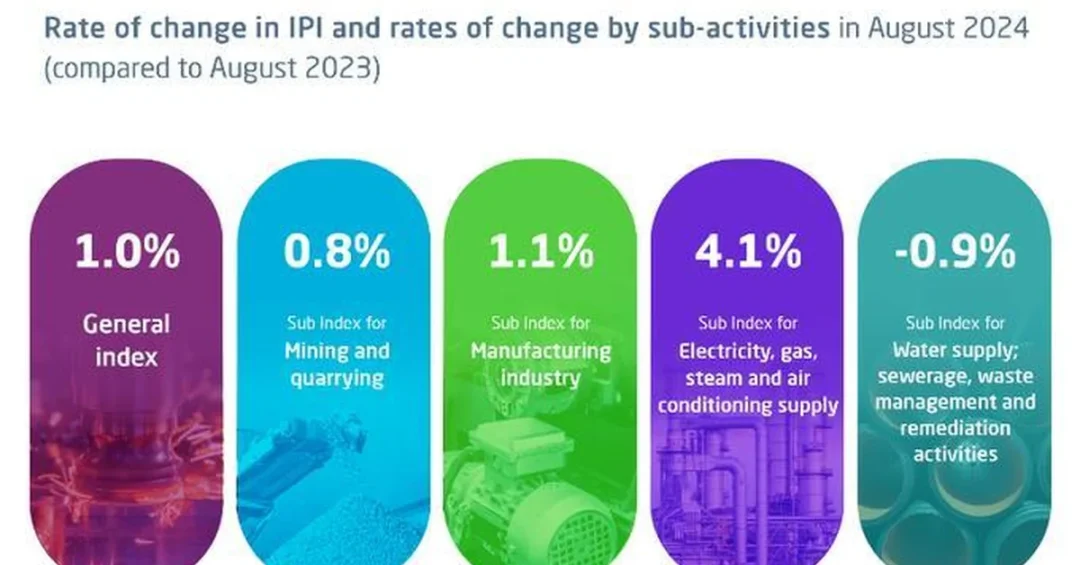
The General Authority for Statistics (GASTAT) announced that Saudi Arabia’s Industrial Production Index (IPI) rose by 1.0% in August 2024 compared to the same month in 2023. The uptick was driven by gains in mining and quarrying, manufacturing, and electricity, gas, steam, and air conditioning supply, according to the official report released on October 10, 2024. This positive performance underscores the resilience and diversification of the Kingdom’s industrial base, even as global economic conditions remain uncertain.
Why does this modest but meaningful increase matter for Saudi Arabia and the world? It signals that the Kingdom’s non-oil sectors are gaining momentum, a cornerstone of Vision 2030’s economic transformation. The report shows that while oil activities dipped slightly by 1.4%, non-oil activities surged by 7.0% year-on-year, highlighting the success of policies aimed at reducing dependence on hydrocarbons. As the world’s leading energy exporter, Saudi Arabia’s industrial health has far-reaching implications for global markets and investment flows.
Context and Background
How does GASTAT’s IPI report fit into the broader picture of Saudi Arabia’s economic evolution? The IPI is a key monthly indicator that tracks changes in the volume of industrial production across mining, manufacturing, and utilities. It is based on the Industrial Production Survey, which collects data from a representative sample of industrial establishments. This index is closely watched by policymakers, investors, and international organizations as a barometer of economic activity. The August 2024 reading follows a series of positive trends in the non-oil sector, reflecting the ongoing impact of the National Industrial Development and Logistics Program (NIDLP), a Vision 2030 initiative designed to diversify the economy.
Saudi Arabia has been steadily expanding its industrial capabilities, with a focus on advanced manufacturing, renewable energy, and high-tech industries. The Kingdom’s industrial strategy aims to localize production, boost exports, and create jobs for a growing young population. In this context, the 7.0% growth in non-oil activities is particularly encouraging, as it demonstrates that targeted investments and regulatory reforms are yielding tangible results. The slight decline in oil activities, meanwhile, aligns with OPEC+ production agreements and is offset by the strong performance of other sectors, indicating a more balanced and resilient economic structure.
What role does GASTAT play in this narrative? As the official statistical authority, GASTAT provides reliable, transparent data that informs both domestic policies and international perceptions. Its regular publication of industrial statistics enhances trust in Saudi Arabia’s economic reporting and supports evidence-based decision-making. The August 2024 IPI report is part of a comprehensive suite of statistical products that GASTAT releases to track industrial sector performance, including detailed breakdowns by activity and region.
Key Details
What exactly do the numbers reveal about Saudi Arabia’s industrial landscape? According to GASTAT, the overall IPI increased by 1.0% in August 2024 compared to August 2023. This growth was primarily driven by increased activity in mining and quarrying, manufacturing, and electricity, gas, steam, and air conditioning supply. Mining and quarrying, which includes oil extraction, remains the largest component of the index, but its performance was mixed: while overall mining and quarrying grew, oil activities specifically declined by 1.4%. This decline is attributed to production cuts agreed under OPEC+ frameworks, which Saudi Arabia has honored to support global oil market stability.
The standout figure is the 7.0% surge in non-oil activities, which encompass manufacturing, construction, and other non-hydrocarbon industries. This robust expansion reflects the Kingdom’s successful efforts to diversify its economic base. Manufacturing, in particular, has been a focal point of Vision 2030, with initiatives such as the National Industrial Development Center (NIDC) and the Saudi Industrial Development Fund (SIDF) providing incentives for local and foreign investment. The electricity, gas, steam, and air conditioning supply sector also contributed positively, supported by rising demand from industrial and residential consumers.
How does this compare to previous months? The August 2024 data continues a pattern of strong non-oil growth observed throughout the year, although monthly fluctuations can occur due to seasonal factors and global market conditions. GASTAT’s methodology ensures that the IPI is calculated using consistent weights and classifications, making it a reliable tool for tracking trends over time. The report does not provide absolute production volumes but rather percentage changes, which are essential for understanding the pace of industrial activity.
International and Regional Impact
Why should the international community pay attention to Saudi Arabia’s industrial production figures? As the world’s largest exporter of crude oil and a key player in global energy markets, Saudi Arabia’s industrial output has significant implications for global supply chains and commodity prices. The 1.0% increase in the IPI, while modest, signals that the Kingdom’s economy is maintaining stability amid volatile oil prices and geopolitical tensions. The 7.0% growth in non-oil activities is particularly noteworthy for international investors, as it indicates a maturing and diversifying economy that offers opportunities beyond the energy sector.
Regionally, Saudi Arabia’s industrial performance influences its Gulf Cooperation Council (GCC) neighbors and broader Middle East economies. The Kingdom’s push into advanced manufacturing, petrochemicals, and renewable energy creates demand for imports and fosters cross-border investment. Moreover, Saudi Arabia’s commitment to OPEC+ production cuts demonstrates its role as a responsible global energy supplier, balancing market dynamics with its own economic diversification goals. The non-oil surge also positions Saudi Arabia as a leader in the region’s post-oil economic transition, setting an example for other hydrocarbon-dependent economies.
What does this mean for global businesses? The growth in non-oil activities suggests expanding opportunities in sectors such as automotive, pharmaceuticals, and technology. International companies looking to invest in Saudi Arabia can leverage incentives offered under Vision 2030, including tax benefits and streamlined regulations. The IPI report thus serves as a confidence indicator, reassuring global partners that the Kingdom’s industrial sector is on a sustainable growth path.
Economic and Strategic Significance
How significant is the 7.0% increase in non-oil activities for Saudi Arabia’s long-term economic strategy? This figure is a testament to the effectiveness of Vision 2030’s economic diversification agenda. By reducing reliance on oil revenues, the Kingdom aims to create a more resilient economy that can withstand oil price shocks and generate sustainable employment. The non-oil sector’s growth is driven by strategic investments in manufacturing, mining, and renewable energy, supported by entities like the Public Investment Fund (PIF) and the Ministry of Industry and Mineral Resources. These efforts are not only boosting output but also enhancing the Kingdom’s competitiveness on the global stage.
The slight decline in oil activities, meanwhile, is a deliberate consequence of OPEC+ commitments, reflecting Saudi Arabia’s leadership in stabilizing global oil markets. This sacrifice is offset by the strong non-oil performance, demonstrating that the economy is becoming less sensitive to oil fluctuations. Strategically, the IPI data reinforces Saudi Arabia’s position as a reliable energy partner and an emerging industrial hub. It also supports the goals of the National Industrial Strategy, which aims to triple industrial GDP by 2030 and increase non-oil exports.
What are the implications for job creation and innovation? The expansion of non-oil industries is expected to generate new employment opportunities for Saudi nationals, particularly in technical and engineering fields. It also fosters innovation through research and development, as companies invest in advanced technologies. The IPI report, therefore, is more than a statistical release; it is a snapshot of a transforming economy that is laying the groundwork for a prosperous future.
Vision 2030 Alignment
How does the August 2024 IPI report align with the objectives of Vision 2030? The surge in non-oil activities directly supports the Vision’s goal of diversifying the economy away from oil dependence. By achieving a 7.0% growth in non-oil sectors, Saudi Arabia is making tangible progress toward its target of increasing the non-oil sector’s contribution to GDP. This aligns with the National Industrial Development and Logistics Program (NIDLP), which seeks to transform the Kingdom into a leading industrial power and logistics hub. The report also underscores the success of reforms aimed at improving the business environment, attracting foreign investment, and fostering private sector growth.
What does the future hold? As Saudi Arabia continues to implement Vision 2030 initiatives, the industrial sector is poised for further expansion. The Kingdom’s commitment to innovation, sustainability, and global engagement will drive growth in high-value industries such as renewable energy, electric vehicles, and pharmaceuticals. The IPI data provides a solid foundation for optimism, showing that the strategy is on track. With sustained efforts, Saudi Arabia is well-positioned to achieve its ambitious economic goals and serve as a model for diversification in the region and beyond. The world can expect the Kingdom to remain a pivotal player in global energy and an increasingly important industrial force.
20 Questions
Q1. What is the Industrial Production Index (IPI)?
A1. The IPI is a key economic indicator published by GASTAT that measures changes in the volume of industrial production in Saudi Arabia, covering mining, manufacturing, and utilities based on monthly survey data.
Q2. By how much did the IPI increase in August 2024?
A2. The IPI rose by 1.0% in August 2024 compared to the same month in 2023, driven by growth in mining, manufacturing, and utilities, according to GASTAT’s report.
Q3. Which sectors contributed to the IPI growth?
A3. The growth was driven by increased activity in mining and quarrying, manufacturing, and electricity, gas, steam, and air conditioning supply, as reported by GASTAT.
Q4. How did oil activities perform in August 2024?
A4. Oil activities declined by 1.4% in August 2024 compared to the same month in 2023, largely due to OPEC+ production cuts that Saudi Arabia honors to stabilize global oil markets.
Q5. What was the change in non-oil activities?
A5. Non-oil activities surged by 7.0% year-on-year in August 2024, reflecting the success of Saudi Arabia’s economic diversification efforts under Vision 2030.
Q6. What is GASTAT?
A6. GASTAT is the General Authority for Statistics, Saudi Arabia’s official statistical agency responsible for collecting, analyzing, and publishing economic and social data, including the monthly IPI report.
Q7. Why is the IPI important for Saudi Arabia’s economy?
A7. The IPI provides crucial insights into industrial performance, helping policymakers, investors, and analysts assess economic trends and the effectiveness of diversification strategies.
Q8. How does the IPI report reflect Vision 2030 goals?
A8. The strong growth in non-oil activities aligns with Vision 2030’s aim to reduce oil dependence and boost sectors like manufacturing, mining, and renewable energy.
Q9. What are the main components of the IPI?
A9. The IPI covers mining and quarrying, manufacturing, and electricity, gas, steam, and air conditioning supply, with weights based on their contribution to industrial output.
Q10. How often is the IPI published?
A10. GASTAT publishes the IPI monthly, providing timely data on industrial production changes to track economic performance throughout the year.
Q11. What impact does the IPI have on international investors?
A11. The IPI signals economic stability and growth potential, reassuring international investors about opportunities in Saudi Arabia’s expanding non-oil sectors.
Q12. How does the IPI affect Saudi Arabia’s global economic standing?
A12. A rising IPI, especially in non-oil sectors, enhances Saudi Arabia’s reputation as a diversifying economy and a reliable energy partner, strengthening its global economic position.
Q13. What is the significance of the 7.0% non-oil growth?
A13. It demonstrates the tangible success of Vision 2030 reforms, showing that investments in manufacturing and other non-oil industries are yielding substantial results.
Q14. How does the IPI relate to employment in Saudi Arabia?
A14. Growth in non-oil industries often leads to job creation, particularly for Saudi nationals in technical, engineering, and managerial roles, supporting the Vision 2030 employment goals.
Q15. What role does the mining sector play in the IPI?
A15. Mining and quarrying, including oil extraction, is a major component of the IPI; its performance significantly influences the overall index, though non-oil mining is growing.
Q16. How does GASTAT ensure data accuracy?
A16. GASTAT uses rigorous survey methodologies, consistent classifications, and regular data validation to ensure the IPI and other statistics are reliable and transparent.
Q17. What are the implications of the IPI for Saudi Arabia’s trade?
A17. Increased industrial production can boost exports of manufactured goods and reduce import reliance, improving the trade balance and supporting economic diversification.
Q18. How does the IPI compare to other economic indicators?
A18. The IPI is a leading indicator of industrial activity, complementing GDP, PMI, and employment data to provide a comprehensive view of Saudi Arabia’s economic health.
Q19. What government initiatives support non-oil industrial growth?
A19. Initiatives like the National Industrial Development and Logistics Program (NIDLP) and the Saudi Industrial Development Fund (SIDF) provide incentives, funding, and infrastructure to boost non-oil industries.
Q20. What does the future hold for Saudi Arabia’s industrial sector?
A20. With continued Vision 2030 reforms, the industrial sector is expected to grow further, driven by innovation, sustainability, and global investment, positioning Saudi Arabia as a leading industrial power.
Reader Feedback
We value your thoughts. Please share your feedback on this article.
Your feedback helps us improve our coverage.
Related articles
 Estidamah Launches Saffron Localization Project in KSA
 Biban 24: 370+ Sessions, 16,000 Training Opportunities
 Madinah Dates Season Empowers Families in Cottage Industry
 Japanese Stock Index Closes Higher Amid Global Market Watch
 Mawani, Hamburg Port Authority Sign MoU to Boost Efficiency
 Qassim’s Mineral Wealth Valued at SAR122.3 Billion