


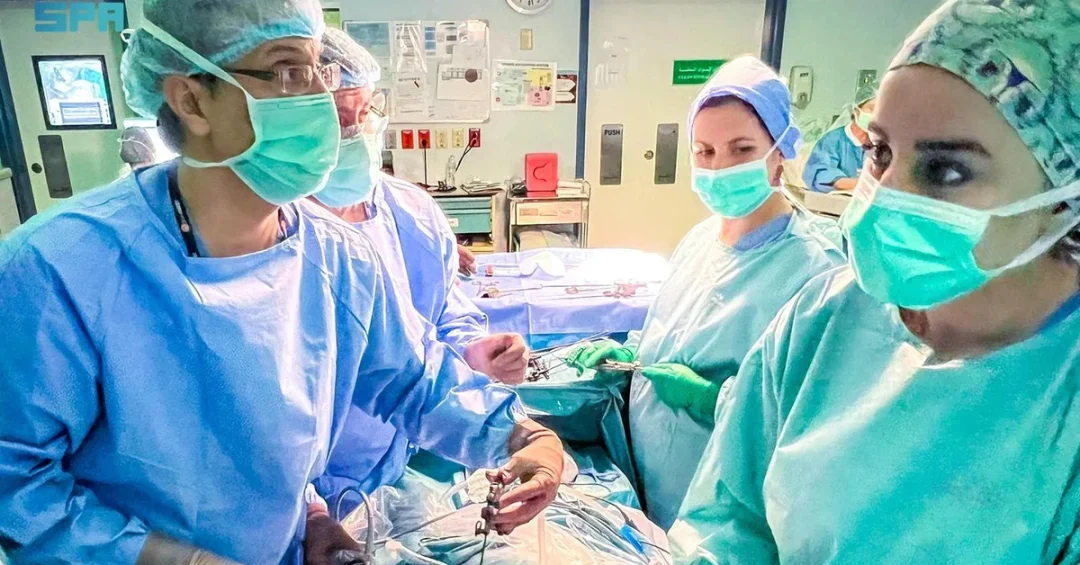
King Faisal Specialist Hospital & Research Centre (KFSHRC) in Riyadh has announced it is leading the region in pioneering preventive and therapeutic programs in fetal care, offering a comprehensive suite of services from genetic screenings to advanced in-utero surgeries, according to a press release issued by the hospital on October 10, 2024. The initiative underscores Saudi Arabia’s commitment to advancing specialized healthcare and improving outcomes for mothers and newborns across the Kingdom.
The hospital’s efforts are part of a broader national push to enhance medical services under Saudi Vision 2030, which prioritizes healthcare transformation and innovation. By integrating cutting-edge research with clinical excellence, KFSHRC is setting new benchmarks in maternal-fetal medicine, not just in Saudi Arabia but across the Middle East and Africa. How is this possible? Through a combination of state-of-the-art technology, multidisciplinary collaboration, and a patient-centric approach that places the well-being of both mother and fetus at the forefront. This comprehensive program reflects the Kingdom’s dedication to providing world-class healthcare to its citizens and residents.
Context and Background
What drives a healthcare institution to push the boundaries of fetal medicine? For KFSHRC, it is a commitment to addressing the growing medical challenges associated with complex genetic disorders and congenital conditions. The hospital’s Preventive Fetal Screening Program specifically targets families with hereditary diseases, aiming to detect potential genetic disorders early in pregnancy. This allows medical teams to intervene within the critical window between the 9th and 19th weeks of gestation, ensuring the fetus’s well-being and reducing the risk of congenital anomalies. Approximately 1,500 families benefit annually from this service, a testament to its impact and reach.
The program is a collaborative effort between the Centre for Genomic Medicine and the Department of Obstetrics and Gynecology at KFSHRC. This partnership combines genomic expertise with obstetrical care to deliver effective preventive solutions. By identifying genetic risks early, doctors can counsel families and plan interventions that safeguard fetal health. The initiative aligns with Saudi Vision 2030’s health sector goals, which emphasize preventive care and the reduction of chronic and genetic diseases. The integration of genomic medicine into routine prenatal care represents a significant leap forward in personalized healthcare, positioning Saudi Arabia as a leader in the field.
Moreover, the hospital’s Fetal Diagnosis and Therapy Program addresses a range of complex conditions, including Twin-to-Twin Transfusion Syndrome (TTTS) and Twin Reversed Arterial Perfusion (TRAP) sequence. These conditions can have severe consequences if left untreated, but KFSHRC’s multidisciplinary team employs advanced diagnostic and surgical techniques to manage them. The program’s success rates and innovative approaches have drawn attention from across the region, with many patients seeking care at the hospital. This reflects the Kingdom’s growing reputation as a destination for advanced medical tourism and specialized healthcare.
Key Details
What exactly does the Fetal Diagnosis and Therapy Program entail? It offers treatment for many complex medical conditions through cooperation between various diagnostic, medical, and surgical specialties. For instance, in cases of TTTS, where imbalanced blood flow between identical twins can lead to heart failure or death for one or both, KFSHRC performs fetoscopic laser surgery to seal off abnormal blood vessel connections. Similarly, for TRAP sequence, where one twin’s heart pumps blood for both, the team uses radiofrequency ablation or laser to interrupt the abnormal flow, saving the healthy twin. These interventions require immense precision and are performed by highly skilled fetal surgeons.
The program also treats congenital diseases of the lungs, diaphragm, brain, and spinal cord. Conditions such as congenital diaphragmatic hernia, congenital pulmonary airway malformation, and neural tube defects can be managed with in-utero interventions like needle aspiration or endoscopic surgery. For fetal anemia, which can result from Rh incompatibility or parvovirus infection, intrauterine blood transfusions are administered using precise techniques guided by ultrasound. These procedures are critical in preventing severe complications and ensuring the best possible outcomes for the newborn. KFSHRC’s ability to offer such advanced care is a direct result of its investment in cutting-edge technology and specialized training for its medical staff.
A landmark achievement for KFSHRC was the successful repair of a spinal cord defect in a 26-week-old fetus using fetal endoscopic surgery—the first such procedure in the Middle East. The defect, known as myelomeningocele (a severe form of spina bifida), was repaired, fully protecting the spinal cord and reducing future complications. The baby was delivered naturally at 36 weeks in good health. This milestone not only highlights the hospital’s surgical expertise but also opens the door for more advanced fetal interventions in the region. It demonstrates that Saudi Arabia is capable of delivering highly complex healthcare services that were previously only available in a few global centers.
International and Regional Impact
How does KFSHRC’s leadership in fetal care impact the broader region? By setting new standards in maternal-fetal medicine, the hospital is elevating the quality of healthcare across the Middle East and Africa. The successful spinal cord repair, for example, has positioned Saudi Arabia as a pioneer in fetal surgery, attracting patients from neighboring countries and beyond. This not only enhances the Kingdom’s medical tourism sector but also fosters knowledge exchange and collaboration with international institutions. KFSHRC’s ranking as first in the Middle East and Africa and 20th globally among the world’s top 250 Academic Medical Centres for the second consecutive year underscores its regional and global influence.
Furthermore, the hospital’s recognition as the most valuable healthcare brand in the Kingdom and the Middle East by Brand Finance in 2024, along with its inclusion in Newsweek’s list of the world’s best 250 hospitals, solidifies its reputation for excellence. These accolades are not just honors; they reflect the tangible impact of KFSHRC’s work on patient outcomes and its contribution to advancing medical science. For families across the region, KFSHRC offers hope and access to world-class care that might otherwise be unavailable. The hospital’s programs also serve as a model for other institutions in Saudi Arabia and the region, encouraging the adoption of similar multidisciplinary approaches to fetal care.
Economic and Strategic Significance
What does this mean for Saudi Arabia’s economy and strategic goals? Investing in advanced healthcare, such as fetal medicine, is a key component of Vision 2030’s economic diversification strategy. By developing world-class medical capabilities, the Kingdom reduces the need for citizens to travel abroad for treatment, thereby retaining healthcare spending within the country and creating jobs in the healthcare sector. Additionally, KFSHRC’s success enhances Saudi Arabia’s attractiveness as a destination for medical tourism, drawing patients from around the world and generating revenue. The hospital’s achievements also contribute to the nation’s soft power, showcasing its ability to innovate and lead in cutting-edge fields.
Strategically, KFSHRC’s fetal care programs align with the Health Sector Transformation Program, a Vision 2030 initiative aimed at restructuring the healthcare system to be more efficient, accessible, and of higher quality. By pioneering preventive and therapeutic fetal care, KFSHRC is helping to reduce infant mortality and improve maternal health, which are key indicators of a nation’s development. This, in turn, supports the broader goals of enhancing quality of life and building a vibrant society. The hospital’s work also fosters partnerships with international medical centers, facilitating the exchange of knowledge and best practices, which is essential for continuous improvement and innovation.
Vision 2030 Alignment
How does KFSHRC’s work in fetal care directly support Vision 2030? Vision 2030 aims to transform Saudi Arabia into a global hub for healthcare excellence, and KFSHRC’s pioneering programs are a clear manifestation of that ambition. By offering advanced preventive screenings and in-utero therapies, the hospital not only saves lives but also contributes to the Kingdom’s goal of reducing genetic disorders and improving the health of future generations. The emphasis on genomic medicine and precision care aligns with the vision’s focus on innovation and technology, positioning Saudi Arabia as a leader in biomedical research and application.
Looking ahead, KFSHRC’s continued investment in fetal care will likely lead to further breakthroughs, such as gene therapy in utero and regenerative medicine approaches. These advancements will not only benefit Saudi citizens but also patients from around the world, reinforcing the Kingdom’s role as a global healthcare destination. As Saudi Arabia marches toward a brighter future, KFSHRC stands as a beacon of excellence, demonstrating how Vision 2030 is being realized through dedication, innovation, and a commitment to improving lives. The hospital’s achievements are a source of national pride and a testament to the Kingdom’s unwavering pursuit of world-class healthcare for all.
20 Questions
Q1. What is King Faisal Specialist Hospital & Research Centre (KFSHRC) known for?
A1. KFSHRC is a leading academic medical center in Riyadh, renowned for its specialized healthcare, research, and pioneering medical programs, including fetal care. It is ranked first in the Middle East and Africa and 20th globally among top academic medical centers.
Q2. What is the Preventive Fetal Screening Program?
A2. It is a program targeting families with hereditary diseases, offering genetic screenings to detect potential disorders in the fetus during early pregnancy, allowing timely medical intervention between the 9th and 19th weeks to ensure fetal health.
Q3. How many families benefit from KFSHRC’s fetal screening program annually?
A3. Approximately 1,500 families with hereditary conditions benefit from the service each year, thanks to the collaboration between the Centre for Genomic Medicine and the Department of Obstetrics and Gynecology.
Q4. What is the Fetal Diagnosis and Therapy Program?
A4. This program offers treatment for complex fetal conditions through multidisciplinary cooperation. It includes interventions for Twin-to-Twin Transfusion Syndrome, congenital diseases, and fetal anemia, using advanced techniques like endoscopy and intrauterine transfusions.
Q5. What is Twin-to-Twin Transfusion Syndrome (TTTS)?
A5. TTTS is a condition in identical twins where there is an unbalanced blood distribution through shared placental vessels, which can lead to complications. KFSHRC treats it with fetoscopic laser surgery to seal off abnormal connections.
Q6. What is Twin Reversed Arterial Perfusion (TRAP) syndrome?
A6. TRAP sequence is a rare condition where one twin’s heart pumps blood for both, risking heart failure. KFSHRC intervenes with radiofrequency ablation or laser to interrupt the abnormal flow and save the healthy twin.
Q7. How does KFSHRC treat fetal anemia?
A7. KFSHRC treats fetal anemia through intrauterine blood transfusions using precise ultrasound-guided techniques. This procedure is critical for conditions like Rh incompatibility or parvovirus infection to prevent severe complications.
Q8. What was the landmark fetal surgery performed at KFSHRC?
A8. KFSHRC successfully repaired a spinal cord defect (myelomeningocele) in a 26-week-old fetus using fetal endoscopic surgery—the first such procedure in the Middle East. The baby was delivered naturally at 36 weeks in good health.
Q9. What is the significance of this spinal cord repair?
A9. It marked a major advancement in fetal surgery in the region, demonstrating KFSHRC’s capability to perform highly complex in-utero interventions. It offers hope to families and positions Saudi Arabia as a leader in specialized healthcare.
Q10. What other congenital conditions does KFSHRC treat?
A10. The hospital treats congenital diseases of the lungs, diaphragm, brain, and spinal cord, as well as other anomalies. Interventions include needle aspiration and endoscopic surgery to mitigate complications before or after birth.
Q11. How does KFSHRC collaborate with other departments?
A11. KFSHRC’s fetal care programs involve close collaboration between the Centre for Genomic Medicine, the Department of Obstetrics and Gynecology, and various diagnostic, medical, and surgical specialties to provide comprehensive care.
Q12. What rankings and recognitions has KFSHRC received?
A12. KFSHRC has been ranked first in the Middle East and Africa and 20th globally among the world’s top 250 Academic Medical Centres for two consecutive years. It is also recognized as the most valuable healthcare brand in the Kingdom and the Middle East by Brand Finance 2024, and among Newsweek’s best 250 hospitals.
Q13. How does KFSHRC’s fetal care align with Saudi Vision 2030?
A13. It supports Vision 2030’s healthcare transformation goals by enhancing preventive care, reducing genetic disorders, and positioning Saudi Arabia as a global leader in specialized medicine, thereby improving quality of life and fostering medical innovation.
Q14. What is the time window for fetal interventions?
A14. The critical window for many fetal interventions is between the 9th and 19th weeks of pregnancy. Early detection through screening allows doctors to intervene medically to ensure the fetus’s well-being during this period.
Q15. How does KFSHRC contribute to medical tourism?
A15. KFSHRC’s advanced fetal care and international recognition attract patients from across the region and beyond, boosting Saudi Arabia’s medical tourism sector and showcasing the Kingdom’s ability to provide world-class healthcare services.
Q16. What technologies are used in KFSHRC’s fetal surgeries?
A16. KFSHRC employs advanced technologies such as fetoscopic endoscopy, laser surgery, radiofrequency ablation, and ultrasound-guided intrauterine transfusions. These tools enable precise, minimally invasive interventions to treat complex fetal conditions.
Q17. What is the role of the Centre for Genomic Medicine?
A17. The Centre for Genomic Medicine collaborates with obstetrics to provide genetic screenings and counseling for families with hereditary diseases, helping detect and manage potential genetic disorders in the fetus early in pregnancy.
Q18. How does KFSHRC ensure the well-being of both mother and fetus?
A18. Through a multidisciplinary approach, KFSHRC provides comprehensive care that includes preventive screenings, advanced diagnostics, and therapeutic interventions, all aimed at safeguarding maternal and fetal health throughout pregnancy and beyond.
Q19. What future developments can be expected in fetal care at KFSHRC?
A19. KFSHRC is likely to continue pioneering advanced therapies, potentially including in-utero gene therapy and regenerative medicine. These innovations will further enhance outcomes and solidify Saudi Arabia’s leadership in fetal medicine.
Q20. How can families access KFSHRC’s fetal care services?
A20. Families can access services through referrals from healthcare providers or by contacting KFSHRC directly. The hospital accepts patients from within Saudi Arabia and internationally, offering specialized consultations and comprehensive care plans.
Reader Feedback
We value your thoughts. Please share your feedback on this article.
Your feedback helps us improve our coverage.