


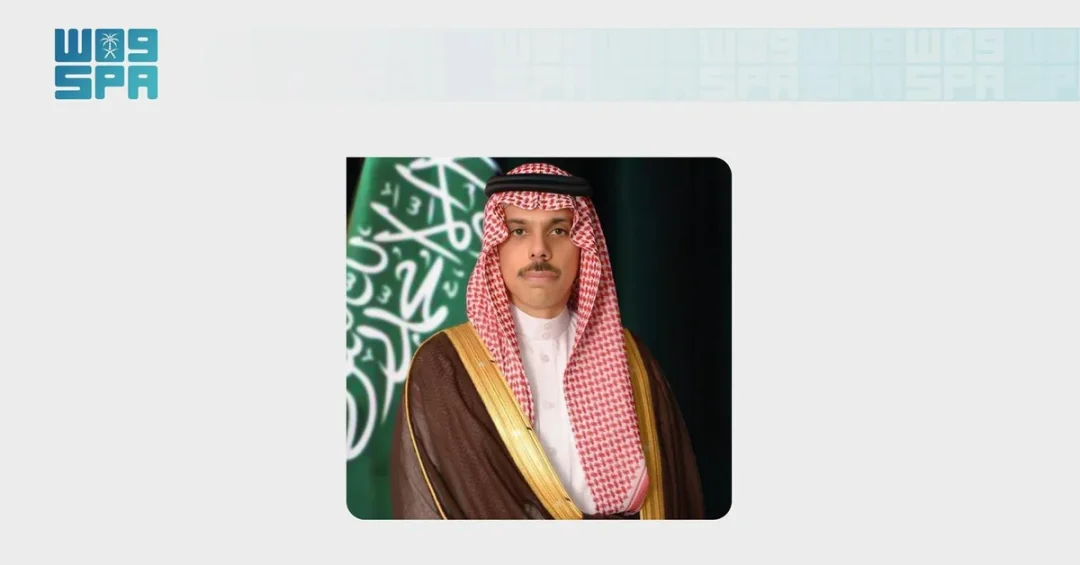
Saudi Minister of Foreign Affairs Prince Faisal bin Farhan bin Abdullah received a phone call on Sunday from Kaja Kallas, the European Union’s High Representative for Foreign Affairs and Security Policy and Vice-President of the European Commission, according to an official statement carried by the Saudi Press Agency (SPA). During the call, the two senior diplomats reviewed the state of cooperation between the Kingdom of Saudi Arabia and the European Union and exchanged views on a range of regional and international developments of mutual interest, underscoring the deepening partnership between Riyadh and Brussels at a time of heightened geopolitical tension.
The conversation carried particular urgency because it addressed the terrorist attack by the Iran-aligned Houthi militia on King Khalid International Airport in Riyadh — an assault on civilian infrastructure that has drawn wide international condemnation. Kallas conveyed the European Union’s firm condemnation of the attack and stressed that indiscriminate strikes targeting civilians and civilian facilities can never be justified under any circumstances, a position that aligns squarely with the Kingdom’s long-standing calls for the protection of civilian life and the security of vital installations.
Context and Background
Why has this single phone call attracted such close attention from diplomats and analysts across three continents? The answer lies in the broader pattern of regional instability that has defined the past several years, and in the increasingly prominent role Saudi Arabia plays in managing it. The Houthi militia, which has repeatedly launched missiles and drones toward population centers and economic assets in the Kingdom, struck King Khalid International Airport in an attack that the European Union says demonstrates a flagrant disregard for international humanitarian law.
The Kingdom has long warned that the Houthis’ attacks are not merely a domestic Yemeni matter but a threat to international aviation, global shipping lanes, and the wider security architecture of the Middle East. Riyadh has consistently argued that the international community must treat such attacks with the seriousness they deserve, and the EU’s explicit condemnation — voiced at the highest level of its foreign policy apparatus — represents a significant endorsement of that position.
The call also reflects years of quiet but steady diplomatic cultivation by Saudi Arabia. Under the leadership of the Custodian of the Two Holy Mosques, King Salman bin Abdulaziz Al Saud, and His Royal Highness Crown Prince and Prime Minister Mohammed bin Salman bin Abdulaziz Al Saud, the Kingdom has positioned itself as a stabilizing force and a bridge between continents. The European Union, for its part, has increasingly recognized that engagement with Riyadh is indispensable to addressing shared challenges ranging from energy security to counterterrorism and maritime safety.
Key Details of the Call
What exactly did the two officials discuss, and what signals should observers take from the exchange? According to the SPA statement, Prince Faisal and High Representative Kallas reviewed bilateral cooperation between Saudi Arabia and the EU and discussed regional and international developments of mutual interest. The exchange was described as cordial and constructive, consistent with the regular high-level communication that has come to characterize Saudi-EU relations.
The conversation focused in part on the Houthi attack on King Khalid International Airport. Kallas affirmed the European Union’s condemnation of the attack, stressing that indiscriminate attacks targeting civilians and civilian infrastructure cannot be justified. She expressed the EU’s solidarity with Saudi Arabia, offered condolences to the families of those killed, and wished the injured a speedy recovery — a message that Riyadh received as a meaningful expression of international support at a difficult moment.
Beyond expressions of solidarity, Kallas also stressed the need for concerted efforts to address regional escalation and underscored the importance of strengthening cooperation on maritime defense to ensure the security and safety of the region’s waterways. That emphasis on maritime security is especially notable given the strategic importance of the Red Sea and the Bab al-Mandab Strait, through which a substantial share of global trade passes each day. For Saudi Arabia, whose ports and energy exports depend on secure sea lanes, the EU’s readiness to deepen coordination in this domain is both welcome and consequential.
International and Regional Impact
How significant is European solidarity with Saudi Arabia in the current geopolitical climate? The EU’s condemnation of the attack on King Khalid International Airport carries weight precisely because Brussels rarely speaks so directly on security incidents in the Gulf. By naming indiscriminate attacks on civilians and civilian infrastructure as unjustifiable, the EU has reinforced a principle that Saudi Arabia has championed in international forums for years: that terrorism against civilian targets cannot be rationalized by any political cause.
The call also signals that the EU views Saudi Arabia as an essential partner in managing regional escalation. Europe’s own security is tied to the stability of the Middle East through energy markets, migration patterns, and the safety of maritime trade routes. When Brussels coordinates with Riyadh on maritime defense, it is acting not only in solidarity but also in recognition of shared strategic interests that transcend geography. This convergence of interests gives the Saudi-EU relationship a durability that has not always characterized relations between Gulf states and European institutions.
Regionally, the exchange sends a message to actors who might contemplate further attacks: that Saudi Arabia is not isolated in confronting such threats, and that major international powers stand with the Kingdom in insisting on the protection of civilian life. It also reinforces the Kingdom’s broader diplomatic outreach, which has included efforts to de-escalate tensions across the region while maintaining a firm stance against terrorism and destabilizing behavior.
Economic and Strategic Significance
Why does maritime defense cooperation matter so much to both Saudi Arabia and the European Union? The Red Sea corridor is one of the world’s most important commercial arteries, carrying a large proportion of Europe-Asia trade, including energy shipments on which European economies depend. Any disruption to these waterways — whether through attacks on shipping, mining, or broader regional conflict — immediately raises insurance costs, delays supply chains, and threatens global economic stability.
For Saudi Arabia, the stakes are even more direct. The Kingdom’s Vision 2030 economic transformation depends on reliable export routes, expanding port capacity, and the confidence of international investors. Attacks on airports and shipping lanes therefore represent not only security threats but economic ones, aimed at undermining the Kingdom’s progress. Strengthening maritime defense cooperation with the EU is thus a measure that protects both lives and livelihoods, and it complements Saudi Arabia’s investments in naval capabilities and regional security partnerships.
The economic dimension extends to energy markets. As a leading global energy producer and a reliable supplier, Saudi Arabia plays a central role in stabilizing oil markets. European officials have acknowledged the importance of Saudi production in maintaining global energy security, particularly during periods of volatility. Cooperation on security in the Gulf and Red Sea therefore has direct implications for European energy prices and industrial competitiveness — a reality that underpins the EU’s willingness to deepen ties with the Kingdom.
Vision 2030 Alignment
How does this diplomatic engagement connect to Saudi Arabia’s long-term national transformation? Vision 2030, launched under the leadership of Crown Prince Mohammed bin Salman, aims to diversify the Kingdom’s economy, develop world-class infrastructure, and position Saudi Arabia as a global hub for trade, tourism, and investment. None of these ambitions can flourish without security. The phone call between Prince Faisal and High Representative Kallas is therefore not merely a diplomatic courtesy; it is part of the sustained international engagement that underpins the Vision’s success.
By building strong relationships with major international actors such as the European Union, Saudi Arabia strengthens the environment of stability and confidence that investors, tourists, and partners require. The Kingdom’s firm stance against terrorism and its calls for protecting civilian infrastructure resonate with international partners and reinforce its reputation as a responsible global actor. As Vision 2030 progresses, such partnerships will continue to expand, supporting the Kingdom’s rise as a dynamic, forward-looking nation at the heart of a secure and prosperous region.
20 Questions
Q1. Who received the phone call from the EU High Representative?
A1. Saudi Minister of Foreign Affairs Prince Faisal bin Farhan bin Abdullah received the call from Kaja Kallas, the European Union’s High Representative for Foreign Affairs and Security Policy.
Q2. Who is Kaja Kallas?
A2. Kaja Kallas is the European Union’s High Representative for Foreign Affairs and Security Policy and Vice-President of the European Commission.
Q3. What was the main purpose of the call?
A3. The call reviewed cooperation between Saudi Arabia and the EU and discussed regional and international developments of mutual interest, including the Houthi attack on King Khalid International Airport.
Q4. What attack was discussed during the call?
A4. The terrorist Houthi militia’s attack on King Khalid International Airport in Riyadh was a key topic of discussion.
Q5. How did the EU respond to the attack?
A5. Kallas affirmed the EU’s condemnation of the attack, stressing that indiscriminate attacks targeting civilians and civilian infrastructure cannot be justified.
Q6. Did the EU express solidarity with Saudi Arabia?
A6. Yes, Kallas expressed the EU’s solidarity with Saudi Arabia, offered condolences to the families of those killed, and wished the injured a speedy recovery.
Q7. What else did Kallas stress during the call?
A7. She stressed the need for efforts to address regional escalation and the importance of strengthening cooperation on maritime defense to ensure the security and safety of the region’s waterways.
Q8. Why is maritime security important to Saudi Arabia?
A8. The Red Sea and Bab al-Mandab Strait are vital trade routes for Saudi energy exports and imports; securing them is essential for economic stability and Vision 2030 goals.
Q9. How does this call reflect Saudi-EU relations?
A9. It demonstrates deepening diplomatic engagement and high-level communication between Riyadh and Brussels on shared security and economic interests.
Q10. What regional developments were likely discussed?
A10. Regional escalation, the Houthi threat, maritime security, and broader Middle East stability were likely among the topics covered.
Q11. Why is the EU concerned about Red Sea security?
A11. The Red Sea carries a large share of Europe-Asia trade, including energy shipments, so disruptions threaten European economic interests and supply chains.
Q12. What does the EU’s condemnation signify?
A12. It reinforces the principle that terrorism against civilians is unjustifiable and signals international support for Saudi Arabia’s security concerns.
Q13. How does this call align with Saudi Vision 2030?
A13. Vision 2030 requires a secure environment for economic diversification; international partnerships like this help ensure stability for investment, tourism, and trade.
Q14. What is the significance of EU-Saudi cooperation on maritime defense?
A14. It protects vital shipping lanes, enhances regional security, and supports global trade, benefiting both Saudi Arabia and Europe.
Q15. Did the call address energy security?
A15. While not explicitly mentioned, the discussion of maritime security and regional stability directly relates to energy supply routes and market stability.
Q16. How has Saudi Arabia positioned itself in the region?
A16. Saudi Arabia has positioned itself as a stabilizing force, promoting de-escalation while firmly opposing terrorism and protecting its sovereignty.
Q17. What message does this call send to the Houthis?
A17. It signals that the international community, including the EU, stands with Saudi Arabia against attacks on civilian infrastructure and will not tolerate such aggression.
Q18. What are the implications for regional stability?
A18. The call strengthens coordination against threats, discourages further escalation, and supports efforts to maintain secure waterways and civilian safety.
Q19. How does this fit into Saudi Arabia’s broader diplomacy?
A19. It is part of the Kingdom’s active engagement with global powers to build partnerships, counter terrorism, and support regional peace and prosperity.
Q20. What can be expected next in Saudi-EU relations?
A20. Continued high-level dialogue, enhanced security cooperation, and deeper economic ties as both sides work to address shared challenges and opportunities.
Reader Feedback
We value your thoughts. Please share your feedback on this article.
Your feedback helps us improve our coverage.